

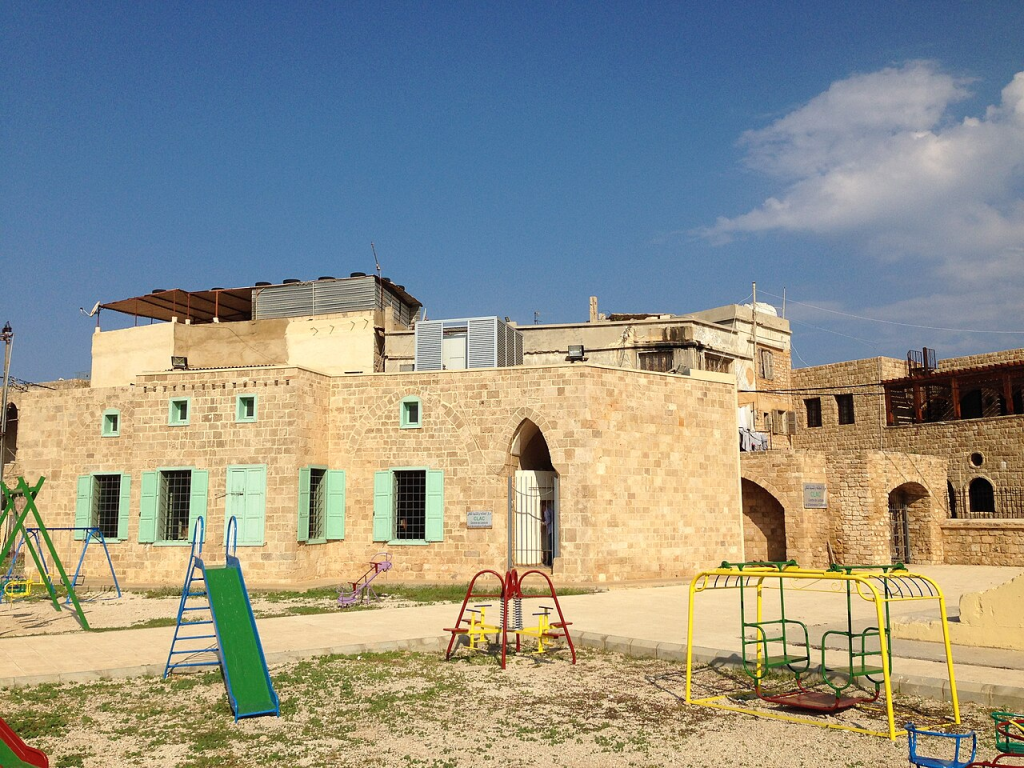
In Sin al-Fil, the revival of a library is also measured by simple gestures: bringing books, renewing material, examining what is lacking to readers. On 14 October 2026, the Minister of Culture Ghassan Salamé was visited with representatives of UNESCO and Norway. Works, supplies and equipment were handed over to the public library. A concrete step in a national project that combines renovation of the premises, team formation and reconstruction of collections.
This movement advances on two fronts. On the one hand, the Ministry and its partners are seeking to restore public libraries to better accommodate their users. On the other hand, the Tālīd network mobilizes donations for institutions affected by the war. Initiatives are taking action for those who wish to help, both in Lebanon and in the diaspora. They also require a distinction between promised books, equipment delivered and services actually accessible.
Fifteen libraries in a first phase
Presented in June 2026 at the Sanayeh National Library, the rehabilitation project is led by the Ministry of Culture with UNESCO. It is supported by the Norwegian Embassy, the Chris « Loops » Seikali Foundation and the MCN Build Foundation. The programme covers infrastructure, equipment and services, as well as staff skills.
In its presentation of 24 June, UNESCO announced a first phase involving 15 public libraries, out of a total of 53 in the governorates. Interventions must be based on the needs of each institution. Libraries destroyed are not excluded: the minister had announced that they would be taken into account in a third phase, when circumstances permitted. This timetable is therefore not a review of completed reconstructions.
Train teams to live the place
A first result is documented: 52 professionals from 34 public libraries participated in four training days on 1, 2, 8 and 9 September 2026. The UNESCO report describes work on preparing activities, identifying local expectations and relations with schools, associations and partners.
The sessions also focused on digital resources, responsible use of the Internet and the course of books: choosing acquisitions, cataloging works, organizing their circulation, evaluating collections and removing titles that had become unsuitable. This less visible work conditions the possibility of finding a book and making it available to the right public.
Among the participants were Rima Charara, from the destroyed Bint Jbeil public library. His testimony published by UNESCO expresses the desire to continue working with the inhabitants despite the disappearance of the place. Participation in training does not mean that its library has reopened; It shows that the skills necessary for its reconstruction continue to be maintained.
From equipment to services rendered
Another concrete trace appears in United Nations procurement. On 15 September 2026, UNESCO published a tender for the purchase of goods for 15 public libraries in Lebanese regions. The deadline was 5 October. This opinion confirms an equipment procedure; It does not, on its own, make it possible to say that all purchases have been delivered.
In Sin al-Fil, the visit of 14 October documented a handover of equipment and the signing of a protocol with the municipality. Ghassan Salamé explained the variety of applications: some libraries need computers, others have not bought books for a long time, others are looking for artists. The utility of the project thus depends on local diagnostics, rather than on an identical batch distributed everywhere.
A collection of books across the regions
At the same time, the « A Million Pounds for Lebanon » campaign aims at rebuilding damaged or destroyed funds. It is supported by Tālīd, the national network for the protection of libraries, archives and cultural heritage. Presented in Tripoli in August, it took place at the Baakline National Library on 17 September and then in Barja. The announced million remains a collection target, not an acquired result.
Mobilization involves cultural institutions, publishers and neighbourhoods. In Beirut, Barzakh, in the Hamra neighbourhood, was announced as a point of donation. The Baakline library also relayed the campaign in the Chouf. For a donor, these relays make it possible to get closer to a local team before organising the transport of cartons.
Sorting and destination count as much as giving
During the presentation of the campaign at the headquarters of the press union in Beirut in October, alongside the Amel association, Tālīd’s coordinator, Hadi Bakdash, detailed the announced method of sorting, classifying and documenting books, and then distributing them according to the needs of the affected libraries. The network provides a database of needs and a monitoring of the destination of the works.
Partners cited include the Cultural Movement of Antelias, the Baakline National Library, the Tripoli Cultural League, the Forum 70 in Saida and publishers. This organisation must avoid that an abundant collection produces only unusable stocks. However, the promised traceability will have to be assessed on the basis of actual distributions.
How to make a useful contribution
Before depositing books, it is best to ask at the point of collection which titles, languages and reading levels are sought, in which condition the books are accepted and at which times they can be received. The points announced in September do not guarantee a permanent reception: prior contact avoids unnecessary displacement.
From abroad, the same precaution is necessary before any shipment: agree on a consignee, content and mode of transport. A list of proposed books will allow the library to clarify what is missing. The formation of teams, the delivery of equipment and the reconstruction of collections already show several ways of acting. Their scope will be verified over time, once the books have found their readers and the places will be able to accommodate their neighbourhoods regularly.





Comments