

Naïm Kassem does not propose the disarmament of Hezbollah. In his speech of 11 November, he maintained his refusal to surrender the weapons under Israeli occupation, while agreeing to discuss them after a withdrawal and the end of what he called foreign guardianship. This distinction sheds light on an intervention that seeks to preserve the party’s military capacity, challenge the framework agreement and move the debate towards the order of commitments.
Analysis. The text of the speech was published at 7.54 p.m. by Al-Ahed, a media outlet close to Hezbollah. It is a primary source of the leader’s comments, not an independent audit of his claims.
A conditional discussion, not a promise of arms surrender
On the occasion of the party’s martyr day, Hizbullah’s secretary-general lays down two prerequisites for a discussion on armaments: the Israeli withdrawal and the end of guardianship. In thepublished by Al-Ahedthis openness coexists with a rejection of disarmament under the present conditions.
The difference is decisive. Accepting a subject at a negotiating table does not mean accepting its outcome, a timetable, or a control mechanism. To present this intervention as an acceptance of disarmament would remove the conditions that limit its scope. Presenting it as a refusal to discuss would, conversely, erase the political margin that the leader retains.
Our reading is that of a conditional offer that allows Hezbollah not to completely close the door to dialogue, without abandoning its main means of pressure. The criterion of termination of guardianship remains particularly open: unlike a territorial withdrawal, it is not accompanied here by any procedure to establish its fulfilment.
Disagreement also concerns the order of obligations
Kassem asks to return to the indirect negotiations and rejects the framework agreement. In particular, it invokes the arrangement of 27 November 2024, resolution 1701 and the armistice. But these references cannot be reduced to the sole requirement of an Israeli withdrawal.
Thecessation of hostilities document transmitted to the United Nations in 2024reaffirms the disarmament of armed groups and reserves arms to official forces. It also provides for the cessation of Israeli offensive operations, the prevention of attacks from Lebanon and an Israeli withdrawal coordinated with the deployment of the Lebanese army. The sequence of waiting for withdrawal to begin discussing weapons is therefore a political position of Kassem, not a complete restitution of the text.
This difference contrasts two logics. In the first, Hezbollah retains its armament as a guarantee until Israeli commitments are fulfilled. In the second, withdrawal, deployment of the army and treatment of unauthorized weapons are part of a process to be implemented together. The obstacle is therefore not limited to the lack of confidence: it concerns the very definition of what must be achieved first.
Defend the army without immediately recognizing the exclusivity of weapons
The leader salutes the army and its role in civil peace, but refuses conditional aid. He also criticized the five embassies involved in the debate on explosives seized in Dahr al-Baydar. These elements are also reported byEast Today in its report of 11 November.
The issue of this distinction is internal. To support the army as an institution does not mean to accept that it exercises armed force alone. It is possible, in the party’s reasoning, to value the military while contesting the policy that the state asks them to apply. The speech thus tries to separate the legitimacy of the military institution from the requirements of disarmament.
These requirements are not only foreign. Thedecision of the Lebanese government of 2 March 2026, communicated to the UNbans Hezbollah’s military and security activities, calls for the surrender of its weapons and reaffirms the State’s exclusive competence over war and peace. Reducing disarmament to external diplomatic pressure leaves aside a Lebanese decision.
A regional bet that is not worth changing commitments
Kassem presents the political difficulties of Donald Trump and Benjamin Netanyahu as an opportunity. This assessment belongs to his argument. It does not demonstrate the abandonment of the Framework Agreement or the disappearance of international applications.
Theg7 statement issued after its Paris meeting on 9 and 10 Novembermaintains support for resolution 1701 and the trilateral framework. It combines verifiable disarmament, Israeli redeployment and the deployment of the Lebanese army. A change in political power may alter negotiations; it does not, by itself, abolish the commitments set out in those texts.
In the South, the question remains that of concrete guarantees
This intervention occurs while strikes and shots are still reported in the South. The facts of 11 November are followed separately inour direct, with their sources and limits. They give immediate scope to the debate on the protection of the inhabitants, without automatically validating the response of either side.
The speech maintains a readiness to fight, but does not announce the date or operational order of a new war. Most of its political reach lies elsewhere: Hezbollah retains its weapons and agrees to make it a future subject, under its conditions. For the State, the challenge remains to transform the promise of a discussion into verifiable decisions, while securing Israeli withdrawal and the safety of the people. None of these results can be inferred from tonight’s intervention alone.
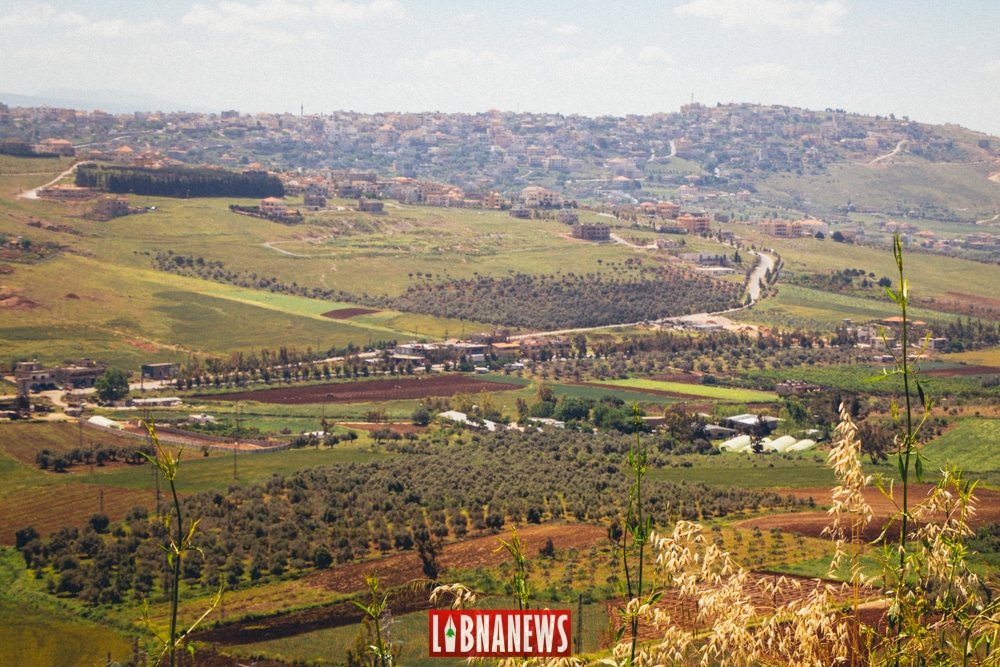
Illustration: Khiam seen from Marjayoun, undated archival photograph. It shows neither the speech nor the events of November 11, 2026. Photo: François el Bacha / Libnanews.





Comments