

Protesters marched Saturday, 31 October in Tel Aviv and several Israeli cities to demand a Judeo-Arab coalition. Their demand is for opposition leaders to transform the results of the legislative process into a majority capable of replacing Benjamin Netanyahu. The mobilisation defends political participation which several formations continue to refuse.
In Tel Aviv, a Judeo-Arab coalition called for in the street
The rally began in Place Habima, in the centre of Tel Aviv. The participants then joined Rabin Square by Ibn Gabirol. According to an Israeli media outlet, about 2,000 people took part in the procession. A news agency reported about 500 participants in the rally. These counts, carried out under different conditions, do not constitute a national balance sheet.
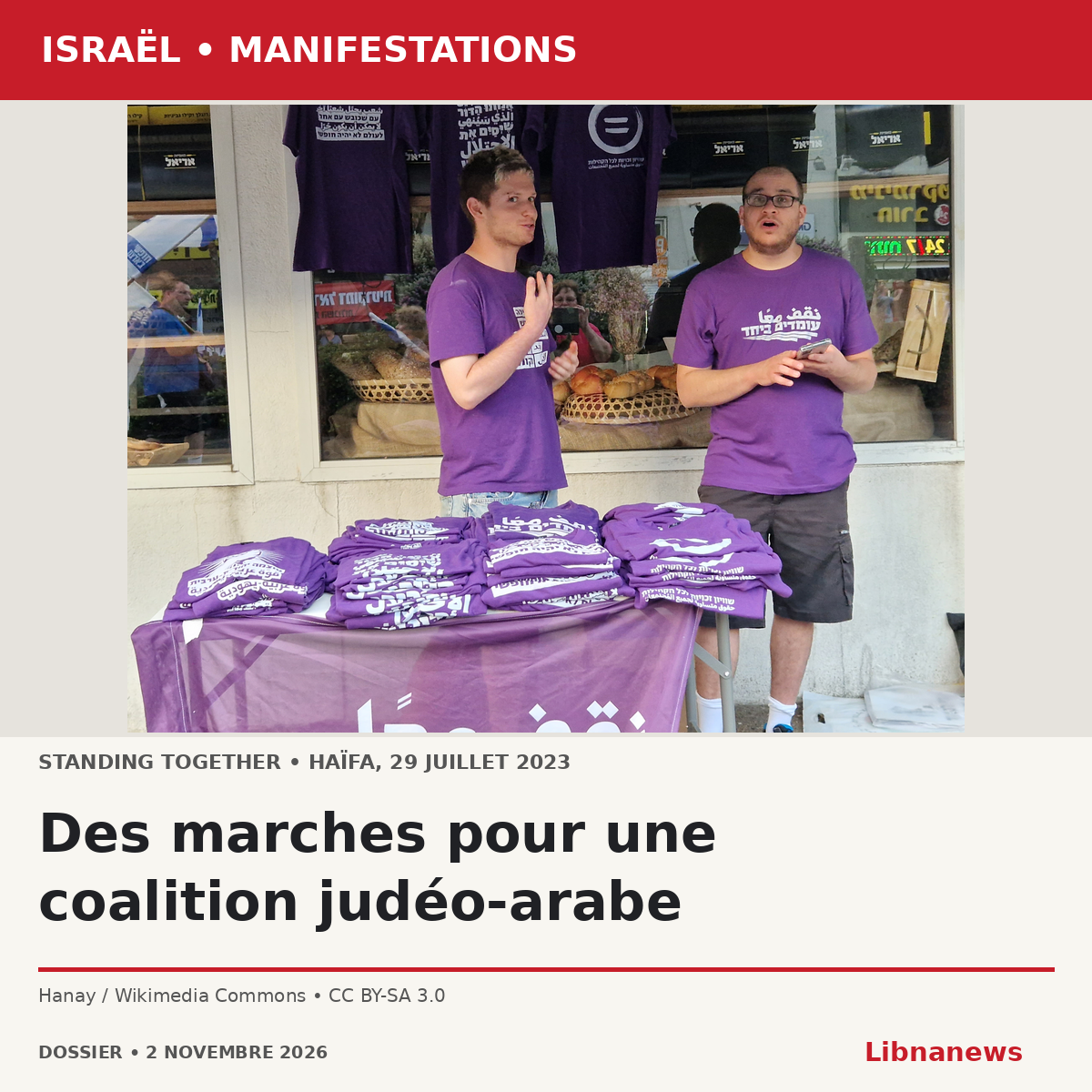
The Judeo-Arab left movement Standing Together led the mobilization. Drums accompanied the walkers. The signs associated change of government and equality, while slogans in Hebrew and Arabic affirmed the rejection of hostility between the two populations. « No to racism, yes to partnership. ».
In Jerusalem, participants gathered in Paris Square. Gatherings were also held in Haifa. Other mobilizations, reported by an Israeli press agency, were held in Beersheba and near Tira and Tayibe. The extent of these last gatherings does not allow for a massive national mobilization.
A request to opponents of Netanyahu
The protesters were not just asking for the Prime Minister to leave. They called on the formations opposed to its continuation to cooperate with Rasam and the Common List. On some signs, the injunction to form a government accompanied the assertion that voters had already brought the necessary votes for change.
Before the rallies, Standing Together had presented this cooperation as the political translation of the election. In an appeal relayed by the Israeli press, the movement insisted on the equal value of Arab and Jewish votes. He called for full participation of Arab citizens in decisions on the future of the country. The organizers sought to move the debate: not only count these voices, but accept the partners they elected.
This message found concrete expression among the participants. A 60-year-old psychologist interviewed in Tel Aviv by a news agency defended the right of the Arab community to participate in political life. In Jerusalem, an artist asked opposition leaders to show courage. These testimonies describe the expectations of protestors, not a unanimous position of Israeli society.
The 67 seats do not constitute an agreement
The results of the 27 October legislative elections explain this pressure. The Netanyahu camp has 53 seats out of 120. The majority Jewish opposition groups hold 48, compared with 19 for the Arab lists. Their addition reaches 67 Members, above the threshold of 61 which allows for an absolute majority. But this addition is not a commitment to govern together.
The demand of the street is precisely that difference. Yair Golan, leader of the Democrats, supports a government supported by Arab parties. On the contrary, Avigdor Liberman, leader of Yisrael Beituten, refuses an alliance that would depend on their support, even outside. The demonstrators are therefore calling for a change of position for some of the officials they hope to agree to.
The modalities also remain distinct. Ra The Common List envisages parliamentary support without entry into government. Recommending a candidate to the President, supporting a firm at Knesset and accepting ministerial responsibilities are three different commitments. Gatherings call for partnership; they do not establish that its terms would already be negotiated.
Anti-Partnership Counter-Demonstration
In Habima, Netanyahu supporters organized a competing rally. Participants rejected cooperation with Arab formations and called for further elections, according to a news agency. The police had planned separate spaces. However, right-wing activists have arrived in the area reserved for the partnership rally, reports the same source.
The allegations of stolen voting in this camp remain accusations. The election authorities indicated that the results remained valid despite investigations into suspected financing. This distinction is important: contesting a possible alliance does not establish any irregularities likely to cancel the vote.
The next step will be with President Isaac Herzog. Consultations with elected groups are scheduled to begin on Wednesday, 4 November. The demonstrators will then have a first indicator of the parties’ response: their choice of the candidate to try to form a government, before any negotiations result in its composition.
Sources
- Times of Israel: November 1st report
- Times of Israel: Call for October 31 rallies
- AFP / Arab News : demonstrations and party positions
- Anadolu: demonstrations and counter-demonstration
- Associated Press: election results
- Associated Press: results and allegations
- Jerusalem Post: Presidential consultations





Comments