

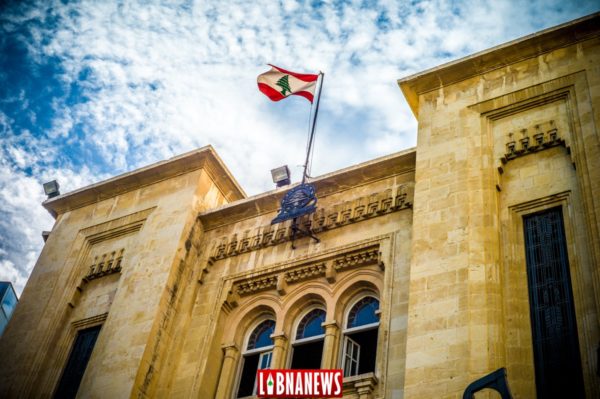
Yes, Lebanon is an Arab country by its Constitution, official language and membership of the Arab League. This reality does not erase its own national identity, its religious diversity or its Mediterranean and Francophone heritage.
The presence of French, the importance of Christian communities and frequent references to Phoenicians can give the impression that Lebanon would be outside the Arab world. At the institutional level, however, the response is not confusing. The country affirms its Arab membership while constituting an independent State. The difficulty comes mainly from the different meanings given to the word « Arab »: a language, a culture, a regional affiliation or, sometimes, a supposed family origin.
What the Lebanese Constitution says
The preamble to the Constitution affirms that Lebanon is « Arab in its identity and membership ». It also recalls its position as a founding member of the League of Arab States. Article 11 designates Arabic as the official national language and provides that a law determines the cases of use of French. French therefore does not have the same status as Arabic.
The same text affirms Lebanon’s sovereignty and independence. These two principles do not conflict: to belong to the Arab world does not mean to be a part of another State, or to renounce institutions, nationality and borders. « Lebanon » and « Arab » do not answer exactly the same question. The first term includes a nationality; the second can describe a cultural and regional affiliation.
A Pre-Taif Membership
Lebanon is one of the founding States of the Arab League, established in Cairo in 1945. Its inclusion in this set is therefore not a recent consequence of regional crises. It accompanies the first years of its independence. The League brings together separate states, not the provinces of the same country: membership in this organization does not imply the uniformity of their political regimes or societies.
The 1989 Taif Agreement, which laid the foundations for the exit from the civil war, explicitly takes over Lebanon’s Arab identity and belonging. At the same time, he claims that he constitutes a definitive homeland for his citizens. The compromise thus brings together two often opposed demands in political debates: the Arab anchor and the sustainability of a sovereign Lebanese State. He does not ask to choose between the two.
Speaking Lebanese, is that Arabic?
In the conversation, « to speak Lebanese » usually refers to Lebanese Arabic, with its vocabulary, pronunciation and expressions. It must be distinguished from the standard Arabic used in many written texts and formal situations. This difference between daily and standard language is not an exclusively Lebanese feature.
The country’s universities also teach both. At the American University of Beirut, the programs distinguish modern standard Arabic and spoken Lebanese Arabic. The Lebanese-American University also offers lessons on the Lebanese dialect for daily communication. Differences in the register do not therefore prevent institutions from enrolling the country in Arabic language learning.
French or English words can enter into a conversation in Lebanese Arabic. The transition from one language to another does not make it a simple mixture without structure. It reflects school paths, family habits and cultural contacts. A person may use more than one language during the day without changing nationality or belonging to each sentence.
Arab does not mean Muslim
One of the main confusions is to treat « Arab » and « Muslim » as synonyms. The first term may refer to a language or culture; the second is a religious affiliation. There are Christian Arabs and Muslims who are not Arabs. Thus, an individual’s religion alone does not determine his or her language, nationality or identity.
In Lebanon, the diversity of religious communities does not contradict the Arab membership of the State. Rather, it requires avoiding a reading that would reduce the country to one community. The Constitution protects freedom of conscience and freedom of worship under the conditions it defines. Its national framework is not based on the requirement that all citizens profess the same religion.
A country that has participated in Arab culture
Lebanon’s link with Arabic goes far beyond institutions. Beirut and the intellectual circles of Mount Lebanon participated in Nahda, the Arab cultural renaissance. Libraries at the American University of Beirut conserve and make available collections of journals from this period, including publications dating back to the 19th century.
Figures such as Boutros al-Boustani have contributed to language work, translation and the flow of knowledge. This story shows why it would be misleading to systematically oppose European influences against Arab culture. In the course of the Nahda intellectuals, foreign language learning, translations and the renewal of Arabic expression could feed each other.
What about the Phoenician legacy?
The Phoenician heritage belongs fully to the history of Lebanese territory. In Byblos, the remains of several civilizations and ancient inscriptions bear witness to a historical depth that does not begin with the appearance of contemporary states. The recognition of this legacy, however, does not address the same issue as the current institutional status of Lebanon.
An ancient heritage does not in itself constitute an exclusive classification of the population of today. Phoenician references, local traditions and Arab belonging can occupy different places in family stories or political sensitivities. Opposing them as if one had to necessarily cancel the other turns a story of continuity and transformation into binary choice.
Francophonie is not a replacement identity
Lebanon has belonged to the institutional Francophonie since 1973. It can therefore be both an Arab State and a member State of the International Organization of la Francophonie. This dual membership is not a legal exception: a linguistic and cultural organisation does not replace the nationality of its members or their other international commitments.
French is part of the country’s cultural and educational life, but it does not define all Lebanese. Conversely, Arab membership does not allow for a summary of all their references. The answer to the initial question is therefore clear: Lebanon is an Arab country, without being culturally uniform. Recognition of this membership and recognition of its plurality are two compatible findings.





Comments