

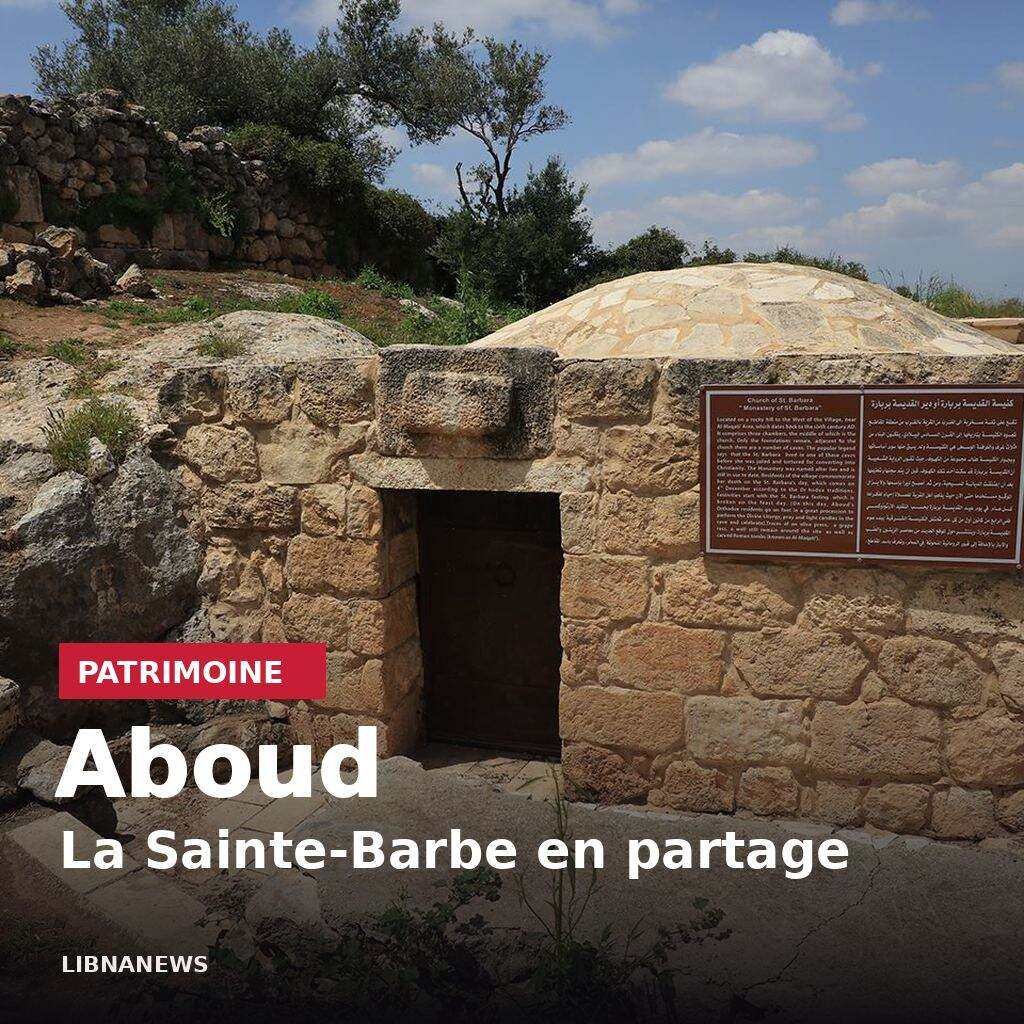
In this Palestinian village northwest of Ramallah, the Greek-Orthodox community celebrates Saint Barbe on December 17. The vigil and the ascent to the sanctuary are accompanied by another gesture: the sharing of burbara, a boiled wheat dish that families prepare for neighbours and relatives.
In Abud, the Holy Barbe is celebrated between two places. In the village, the faithful gather at the Church of the Virgin. About a kilometre west, a stone sanctuary stands on a hill. At the December 2019 festival, after the vespers, participants won the sanctuary on foot. Scouts from the village played bagpipes along the way. That year, the gathering was documented; He did not inform himself of the event in 2026.
Why December 17?
December 17 of the calendar corresponds to December 4 of the Julian calendar, which the Greek Orthodox Patriarchate of Jerusalem follows for this feast. The patriarchate indicates the two dates on his account of the celebration of 17 December 2024 in Jerusalem. In Abud, wheat preparation and vigil can begin the day before. The 2019 account allows us to situate these gestures, without making the date a uniform schedule for all the communities celebrating Saint Barbe.
Boiled wheat for relatives and neighbors
Burbara is a preparation of whole grains cooked in water. The Palestinian Ministry of Tourism and Antiquities describes in Abud a garnish of dried fruits, nuts, pistachios or almonds and cinnamon. In 2019, a resident, Iman Khoury, added ground chickpeas and sweet decorations to her preparation. Toppings change according to families; wheat remains the common base. The ministry notes that the dish is brought to parents and neighbours the day after preparation.
Father Emmanuel Awwad, a Greek-Orthodox priest in Abud, brought this practice closer to the kollyva, the wheat blessed at church during commemorations. This rapprochement illuminates the passage of the same ingredient between the celebration and the family table, without making each dish prepared at home a liturgical offering.
An ancient church, a story passed on to the village
The heritage authorities located the former St.Barbe church in the 6th century and described a three-nave building whose foundations remained mainly. Several cavities are located near the site. Local tradition combines one of them with the sanctuary of the saint. This tradition tells about the memory of the village, but the remains of the church do not allow to establish that Barbe lived in Abud. The photograph accompanying this article shows the small sanctuary in 2021, not the procession.
The local calendar places the party on December 17. Heritage sources describe the vigil, ascent and sharing of wheat, but do not announce a specific public program for December 2026.





Comments