

The olive harvest in the West Bank is also the subject of a hostile Facebook campaign, according to a report published on 16 November by the 7amleh Digital Rights Center. The document examines 52 public publications in Hebrew, mainly distributed in early October 2026. It challenges messages targeting farmers and their supporters, without demonstrating that a particular message has provoked an attack.
Harvesting olives: volunteers targeted
In this sample, 34 publications present solidarity activists as foreign « anarchists ». Thirty-two call for action, including deportation or arrest. There’s a message calling for live gunfire. Three accounts account for 78% of interactions. The centre calls for the removal of violence-inciting content and enhanced protection during collection.
These figures describe a selected set of hostile messages. They do not mean that six out of ten publications on olives, on Facebook as a whole, call for intervention against the harvesters. In order to establish this general proportion, neutral or favourable messages should also be known, and a representative selection method should be available. The denominator chosen therefore radically changes the scope of the result.
Measuring a hearing is not identifying perpetrators
An interaction can be a reaction, comment or sharing. It does not necessarily refer to a different person. It also does not prove a support: a comment can challenge a message. To present the volume of interactions as a number of militants mobilized would thus transform a circulation measure into a conclusion on behaviour.
The concentration around some accounts indicates where attention is gathered in the sample. It is not enough to establish coordination between their officials. An organized campaign would involve other elements: common instructions, preparatory exchanges, financing or concerted publication. Such evidence cannot be replaced by mere similarity of words.
Rapprochement with violence requires the same distinction. An attack after a hostile message can justify an investigation into their possible link. To attribute this attack to the message, however, it should be shown that the authors consulted and contributed to their transition to action. Without this chain, proximity over time remains an indication, not a demonstration.
Meta had announced a detection tool in Hebrew
The debate on moderation did not start with this agricultural season. An independent evaluation published in September 2022 had reviewed Meta’s decisions during the May 2021 crisis in Israel and Palestine. It had noted involuntary biases affecting, inter alia, Palestinian and Arabic-speaking users, without any intentional bias. Its recommendations related to the rules, transparency and functioning of the monitoring teams.
In its public response of September 2022, Meta announced that it had launched an automatic tool to detect hostile Hebrew discourses since May 2021. The company explained that it wanted to better identify prohibited content during periods of sharp increase in publications. It also indicated that it was working on the orientation of Arab content towards teams with appropriate language skills.
It would therefore be incorrect to present today the past absence of a Hebrew tool as an unchanged situation. Conversely, announcing its deployment does not measure its effectiveness on the 2026 messages. Useful control covers detected content, errors, processing times and post-report decisions.
This old response is not a response to the 16 November report. No specific reaction of Meta to its results was identified in the public documents consulted. Decisions on the publications identified, as well as their possible withdrawal dates, remain to be documented.
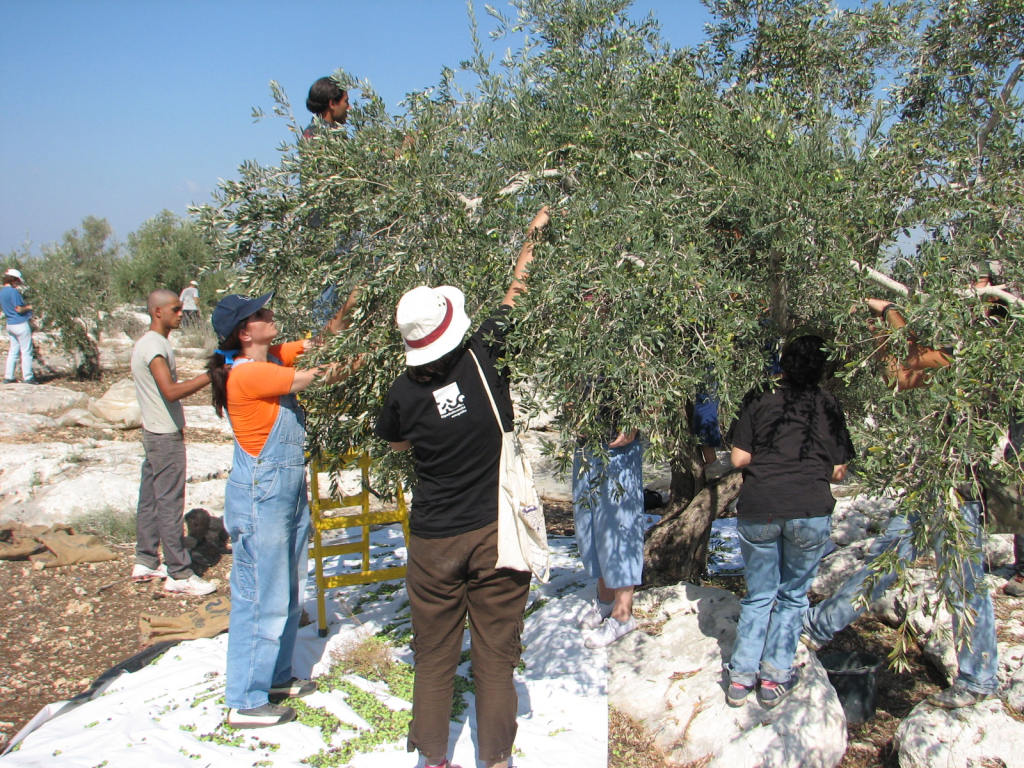
Photo archive: Israeli and Palestinian collectors in Qafin, West Bank, October 2008. This image does not show the facts mentioned in 2026.Orrling / Wikimedia Commons,CC BY-SA 3.0. Image not modified.






Comments