

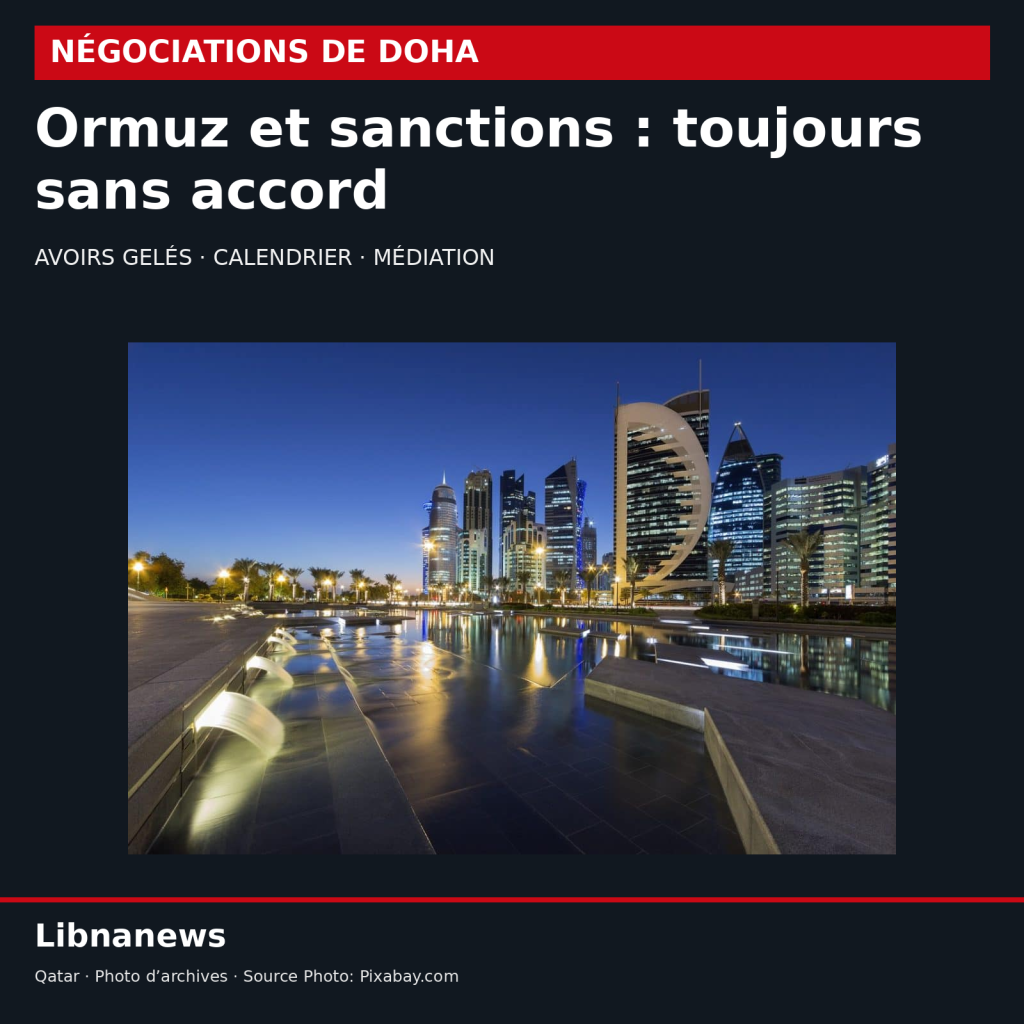
Qatari mediation seeks to transform political commitments into executable steps. In their 2 November 2026 editions, Al Akhbar and Al Binaa describe indirect discussions between Washington and Tehran focused on the Ormuz Strait, oil sanctions and frozen Iranian assets. The progress mentioned has not yet reached a final agreement.
The disagreement is not only about the concessions expected. It also concerns their order: what steps must be taken before the strait reopens, and when should the nuclear issue enter into negotiations? This question explains the place of implementation schedules.
Five, seven or two days: different formulas
Al Akhbar presents a Qatari framework for the progressive implementation of reciprocal commitments within a maximum of five days. The daily distinguishes this from a previous Iranian proposal spread over seven days. Abbas Araghchi then evokes the possibility of compressing the stages to two days.
Al Binaa takes this last perspective by speaking of « two-day plan ». The newspaper reports that the Iranian Foreign Minister is still waiting for American answers to the questions transmitted by Tehran. These deadlines therefore describe proposals and their adjustments, not the timetable for an agreement already signed.
The central point is the coordination of actions. Interlocutors must determine how to articulate the expected US measures and the resumption of maritime traffic. The announced speed does not mean that the substantive differences have disappeared.
What Tehran Asks Before Reopening
In Al Akhbar’s account, Iranian demands include the cessation of war on the various fronts, the lifting of the maritime blockade, the abolition of oil sanctions and the release of frozen assets. The newspaper also mentions the recognition of an Iranian role in the management of Ormuz.
Al Binaa, for its part, reports discussions on the restoration of oil exemptions and on a maritime route agreed with Oman. The nuclear issue would be addressed in a second phase of the formula described.
This sequence remains contested. According to Al Akhbar, who cites Iran’s IRNA agency, Washington wants to put the inspections and stock of enriched uranium on the original agenda. Tehran refuses to discuss nuclear before fulfilling the conditions it places upstream. The exchanges thus concern both the sequence of files and their content.
Indirect mediation, despite sustained contacts
Qatari Prime Minister Mohammed bin Abdelrahmane Al Thani visited Tehran the previous Friday. Al Akhbar refers to about 12 hours of discussions. An Iranian delegation then won Doha, while Qatari intermediaries maintained their exchanges with Washington.
However, Araghchi denied any direct meeting with an American delegation, as well as the existence of an arrangement to organize one. The presence of Iranian representatives in Qatar should therefore not be presented as the opening of direct bilateral talks.
The newspapers also report a letter from JD Vance to Mohsen Rezai, presented as secretary of the Iranian Supreme Security Council. Rezai said he had read and judged his tone more positive, without having answered yet. This signal is not valid for American applications.
Military threats remain in the negotiations
Donald Trump describes useful exchanges while retaining the threat of new strikes. According to the statements taken by Al Binaa, Marco Rubio states that no new attack decision has been taken and that the president favours diplomacy.
At the same time, the daily relayed a story by Barak Ravid, on Israeli channel 12, about a call between Trump and Benjamin Netanyahu. Two anonymous sources describe Israeli pressure to resume war after the US mid-term elections. The leaders’ offices did not comment on this story.
For Lebanon, one question remains open: would any agreement include guarantees applicable to its territory? The information published does not allow automatic protection against escalation to be deduced from the continuation of the discussions alone. In Doha, mediators are still trying to establish reciprocal obligations, their timing and the conditions for their implementation.
Sources
Al Akhbar, 2 November 2026, page 8; Al Binaa, pages 1 and 4; Al Liwaa, pages 1 and 6.





Comments