

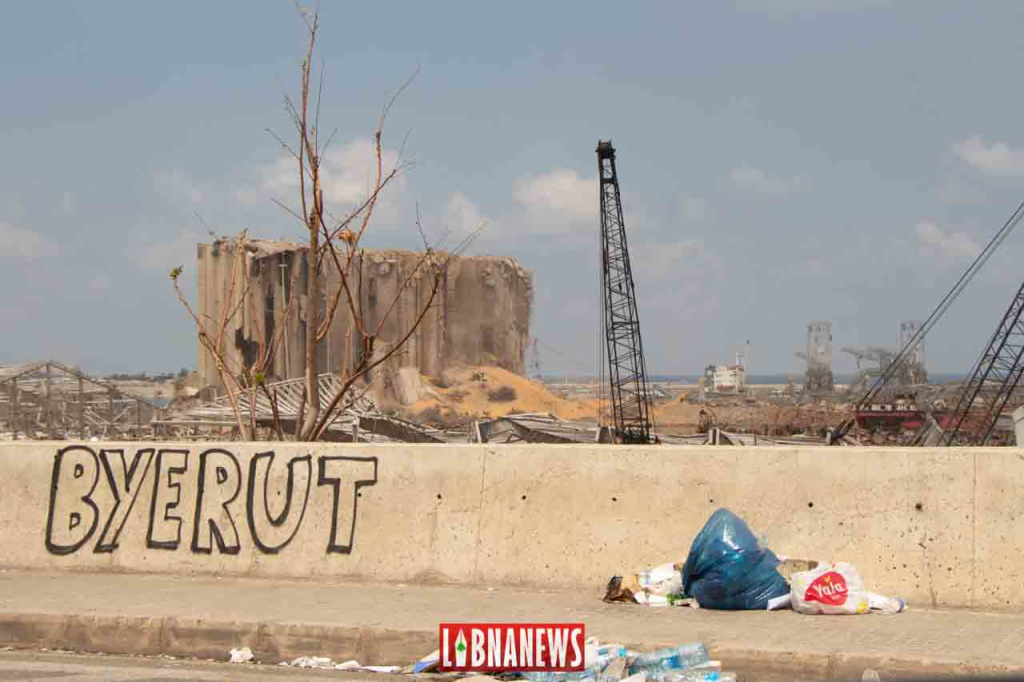
The investigation into the explosion of the port of Beirut is taking another step. Judge Tarek Bitar interrogated and charged four retired Lebanese army officers on Wednesday, 4 November 2026. Among them was former Chief of Staff Walid Salman. These acts take place after the prosecution’s requisitions on their alleged knowledge of the presence of ammonium nitrate in the port.
The other three officers are retired Brigadier General Georges Moussa, Mounir Abu Zeid and Manuel Kirjian. According to a press agency, their interrogations follow on from the background brief prepared by Advocate General Mohammad Saab. He requested that they be questioned and heard on this part of the case.
At this stage, the public information consulted does not detail the criminal qualifications against each individual. Nor can they be presented as a final adversarial decision terminating the investigation. The four men remain presumed innocent. A charge opens or continues a proceeding; it does not constitute a conviction.
Port Explosion Investigation: What Bitar Examines
The point raised by the prosecution is what these officers knew about the dangerous stock. This question refers to one of the central dimensions of the case: the flow of information between administrations. It requires a distinction between knowledge of a cargo, risk assessment and the power to stop storage.
Their rank is therefore not sufficient to establish responsibility. The investigation must determine their duties at the time of the facts, the information received and the decisions taken. The presence of a name in an administrative correspondence does not replace this demonstration. Any responsibilities must be individualized with the defence’s exhibits and arguments.
The minutes consulted do not give the content of the answers provided by the four officers on Wednesday. Nor do they reproduce a statement from their lawyers. No confession can be inferred from it. The question of their knowledge of nitrate remains an investigation, not an established guilt.
The hearings on 4 November thus extended the work on institutional responsibilities. They do not in themselves demonstrate that they were aware of all the risks or had the same means of intervention.
August 4, 2020, a disaster in the heart of Beirut
The file dates back to the explosion of 4 August 2020 in Hangar 12 of the port. A fire precedes a devastating deflagration, linked to the ammonium nitrate stored on site. The shock wave destroys neighbouring installations and strikes many neighbourhoods of the capital.
The cargo had arrived in November 2013 on board the Moldovan flag ship Rhousus. It was landed on 23 and 24 October 2014 and then stored in the hangar. The figure of 2,750 tonnes corresponds to the declared cargo. It should not be confused with a definitive measure of the quantity actually exploded.
Storage was prolonged for almost six years despite warnings. The investigation must reconstitute decisions concerning the landing, custody and fate of this matter. It must also establish the specific circumstances of the fire departure. Assumptions of its origin cannot be presented as judicial findings.
At least 236 deaths in a report published in August 2025
The human balance far exceeds the first figures released during relief operations. The report released on 4 August 2025 by two international human rights organizations reported at least 236 deaths. He also mentions more than 7,000 injured.
This date allows to locate the count used. The reviews published since 2020 vary according to the sources and their updates. Keeping a dated figure avoids juxtaposing different assessments as if they described the same state of knowledge.
In the days following the disaster, UN agencies estimated that about 300 000 people were displaced or deprived of housing. This figure describes the initial impact of the explosion. It does not mean that all these people remain homeless today.
The damage affected homes, shops and health facilities. Medical facilities already requested by the pandemic have suffered serious damage. The disaster occurred as the country was experiencing a major economic and social crisis. For families, the legal expectation has since added to the deaths, injuries and material consequences of the tragedy.
From Fadi Sawan to Tarek Bitar, the first blockages
The first judge in charge of the case, Fadi Sawan, commenced proceedings on 10 December 2020. They include outgoing Prime Minister Hassan Diab and former ministers Ali Hassan Khalil, Ghazi Zeaiter and Youssef Fenianos. The charges then relate to negligence related to the disaster. The parties contest the procedure.
Ali Hassan Khalil and Ghazi Zeaiter requested the magistrate’s disbandment. On 18 February 2021, the Court of Cassation withdrew the case to Fadi Sawan. Tarek Bitar succeeds him. The replacement of the judge does not end jurisdictional challenges and requests for procedural protection.
On 2 July 2021, Bitar requested that the immunity of parliamentarians be lifted, which he wished to pursue. The proceedings concern Ali Hassan Khalil, Ghazi Zeaiter and Nouhad Machnouk. The hearing of senior security officials also encounters the issue of administrative authorizations.
These obstacles go beyond the mere organization of interrogations. They concern the possibility for the judge to examine the actions of political and security leaders. The persons in question invoke their legal protections and challenge the jurisdiction of the magistrate. Families, for their part, denounce procedures that delay access to justice.
December 2021 and January 2023, two major breaks
From December 2021, a succession of appeals paralyzed the investigation. Applications for Bitar and other judges prevent the normal continuation of work. The challenge also becomes political. Hezbollah demands the departure of the judge, whom he accuses of bias.
On 14 October 2021, a demonstration organized in Beirut by Hezbollah and Amal against Bitar culminated in the Tayoune clashes. This episode illustrates the tension surrounding the investigation. It remains distinct from the establishment of criminal responsibility in the explosion itself.
On January 23, 2023, Bitar attempted to resume its investigations after more than a year of suspension. He initiated further prosecutions, including against the then Attorney General, Ghassan Ouedat. An open confrontation broke out at the top of the judiciary.
Wheidat also pursues Bitar and imposes a travel ban on him. It orders the release of persons detained in the file. It also prohibits the services concerned from cooperating with the judge. The announced recovery is thus deprived of some of the means necessary for its implementation.
This sequence explains why hearing announcements are not enough to measure progress. A judge must be able to notify his or her decisions, receive answers and obtain the cooperation of the competent authorities. The release of detainees in 2023 did not constitute an acquittal on the merits.
A resumption in 2025, then the conquisitory of 2026
In January 2025, new summonses marked an attempt to revive. The interrogations then resume. The institutional context changed with Joseph Aoun’s election to the presidency and the arrival of Nawaf Salam as head of government. Both make commitments to justice and its independence.
In March 2025, the interim prosecutor general Jamal Hajjar lifted the measures that prevented the services from cooperating with Bitar. This decision makes it more concrete. Officials are appearing, including Hassan Diab, Abbas Ibrahim and Tony Saliba. Nor does their hearings prejudge their responsibility.
The file then moves towards requisitions at the bottom of the prosecution. In September 2026, Bitar received a 270-page study prepared under the responsibility of Mohammad Saab. Libnanews had described this stage at the beginning of October and the questions still open about appearances and mandates.
Wednesday’s interrogations are part of this sequence. They show that the passage through the public prosecutor ‘ s office can be followed by additional acts. The request for prosecution shall be made; it does not constitute a verdict or automatic adoption of all its conclusions by the judge.
Next decisions are expected
The follow-up will depend on the elements adopted after these hearings and other necessary acts. A possible adversarial decision must specify the facts alleged, their basis and the persons concerned. The Court of Justice is the court to judge this case. Instruction and judgment remain two distinct stages.
The adversarial debate should allow the accused to challenge evidence and qualifications. Victims are waiting for a documented explanation of the decision chain. The length of the case reinforces this expectation without exempting the procedure from respect for the rights of the defence.
For the four officers heard on 4 November, the immediate questions remain specific: what information had been received, when and what follow-up had they given? Details of their responses, individual qualifications and future court decisions were not made public in the information consulted.
Sources and documentary benchmarks
- Naharnet, November 4, 2026: Report quoting the National Agency for Information on the Four Officers and Requisitions of Mohammad Saab.
- Human Rights Watch, August 3, 2021: Documentary survey of nitrate arrival and storage.
- Amnesty International and Human Rights Watch, 4 August 2025: human impact and state of the investigation.
- Amnesty International, 2 August 2021: initial prosecution, divestiture of Sawan and immunities.
- Amnesty International, 3 August 2023: recourse, suspension and judicial confrontation.
- Human Rights Watch, 21 January 2025: new summonses.
- Human Rights Watch, 21 March 2025: recovery and judicial cooperation.
- UNFPA, August 2020: Initial humanitarian consequences.
- WHO, 2020 emergency appeal: damage to health facilities and facilities.
- Libnanews, 5 October 2026: a brief and next steps in the procedure.
- Libnanews Archives: Port photography and chronological reminders.
Article of synthesis and contextualisation, drawn up on the basis of the public information cited. No full document or photograph of third party agency is reproduced. Photography: Libnanews archive, François el Bacha, reuse on Libnanews licensed by the owner. The accused are subject to investigation and are not guilty.





Comments