

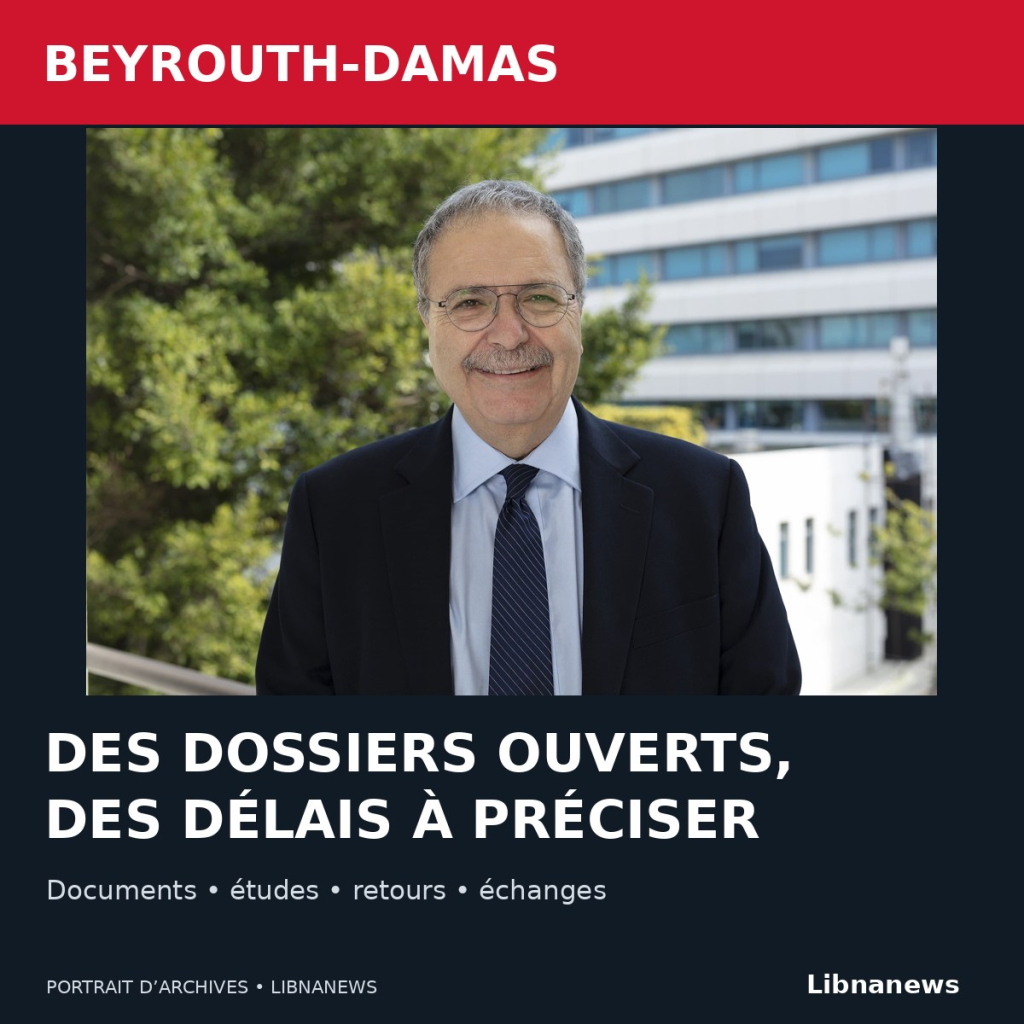
The visit of the delegation led by the Vice-President of the Council, Tarek Mitri, to Damascus on 2 November gave several bilateral dossiers to work. It did not lead, in the announcements available on 4 November, to a set of executive agreements with specific deadlines. Between the opening of discussions and a measure applicable to families, workers or businesses, several steps therefore remain to be taken.
The discussions focused on Syrians in Lebanon and those wishing to return, but also on administrative documents, studies and economic relations. The scope of the visit is measured by this resumption of technical dossiers, rather than by a standardization presented as completed.
Documents that condition daily life
Tarek Mitri reported that the interviews had dealt with identity papers, equivalencies of diplomas and the situation of students from both countries. These questions go beyond the only issue of returns: they also concern Lebanese students in Syria and Syrians who continue their training in Lebanon.
The registration of Syrian children born in Lebanon is one of the administrative problems to be addressed. A discussion between ministers may pave the way for simplification, but it is not enough to create a procedure that can be used at the window. Families need to know which documents will be accepted, which administration will issue them and how incomplete files will be reviewed.
Such arrangements must not be inferred from an intention to cooperate. Until a specific instruction is announced, presenting the steps as already amended could mislead the interested parties. The next verifiable progress would therefore be a rule published and implemented by the services concerned.
Returns are not reduced to border crossing
The interviews also concerned conditions of return, family status and entry and exit procedures. Tarek Mitri spoke of people waiting for an improvement in the economic and social situation before making their decision. He also highlighted the decline in international resources to assist Syrians living in neighbouring countries.
Facilitating a document or formality can remove a concrete obstacle. This alone does not guarantee housing, income or access to services after arrival. Administrative commitments and living conditions should therefore be monitored separately. A simpler border procedure does not amount to the resolution of the entire case.
The work of Syrians in Lebanon is also among the topics discussed. Again, no new employment arrangements can be considered applicable solely on the basis of the visit. The guidelines discussed should be distinguished from the decisions taken by the competent authorities.
Do not confuse judicial records
On the issue of missing persons, Tarek Mitri indicated that existing committees were continuing their work. It distinguished this research from that of criminal responsibility, which falls within a separate framework and is not on the agenda of the interviews. This makes it impossible to present the visit as an announcement of a judicial result that has not been made public.
Movement at borders and security cooperation also remain bilateral issues. But the existence of discussions does not demonstrate a new agreement on all their modalities or a complete convergence of priorities. The implementing acts shall specify the responsibilities of each party.
The next meeting will have to clarify the future
Opportunities were identified to facilitate investment, trade and travel, including by reducing administrative barriers. No final agreement was announced in the available elements. These avenues therefore remain subject to negotiation, not benefits already open to companies.
A meeting of the High Bilateral Committee is expected at the end of November, while a visit by Nawaf Salam is envisaged. These prospects are not yet a definitive appointment. The follow-up should cover the texts adopted, the agencies responsible for implementing them and the deadlines actually announced. It is on this scale that Damascus contacts can produce measurable changes.





Comments