

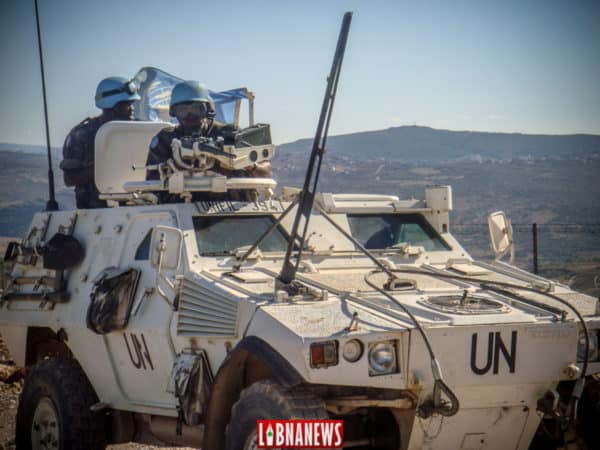
The Israeli ambassador to the UN, Danny Danon, declared on 25 November that Israel was opposed to sending French troops to southern Lebanon after UNIFIL. His objection is not only about the possibility of a French command: he contests the deployment itself in the South and prefers a Lebanese army-based arrangement without additional force. For Beirut, the disagreement raises a question that the departure of the peacekeepers does not resolve: who will see the incidents and liaise between the two armies until the Israeli withdrawal is completed?
What Danny Danon refuses, and what his refusal does not say
In an interview published on Wednesday, Danny Danon distinguished South Lebanon from other areas where French assistance could be considered. He believes that a foreign force deployed in the South would hinder Israeli action without preventing Hezbollah from reconstituting its presence near the Blue Line. The Ambassador said that he preferred coordination with the Lebanese army and quoted the mechanisms Israel had with Egypt and Jordan. This is the position he has publicly defended, not the observation that such a mechanism already exists in this form in Lebanon.
Diplomatic information released on 20 November suggested a narrower refusal: Israel would reject an exclusively European force under French command, but could accept French participation in a broader package. Danon’s interview does not confirm this opening. Nor does it make it possible to conclude that Israel opposes any military cooperation between Paris and Beirut or that negotiations are closed. The distinction is concrete: training or equipping the Lebanese army is not deploying French units in the South to carry out a security mission.
Paris and Rome are preparing a coalition, not an agreed deployment
France and Italy announced in Antibes on 25 June that they would work together on an international coalition to support Lebanon following the departure of UNIFIL. On 18 November, the Quai d’Orsay confirmed that this initiative was still under discussion, first with the Lebanese authorities. Paris presents this support as a means of preventing a security vacuum and strengthening the Lebanese army, not of taking responsibility for it from the territory. The Franco-Italian declaration does not specify the number of personnel, the areas of intervention or the chain of command.
As at 4 November, 608 French military personnel served among the 7,485 UNIFIL peacekeepers. Today they operate under UN authority. This figure measures a contribution to the current mission, not a contingent available for a future operation. The Security Council established 31 December 2026 as the end of the operational mandate of UNIFIL. The withdrawal will then begin, with limited functions, and will have to be completed within one year. That there remain French soldiers under blue helmet at the beginning of 2027 will therefore not mean that Paris has obtained permission to form a new force.
Israel does not have a veto at the UN, but may complicate a succession
Israel does not sit on the Security Council and cannot veto it. A new substantive resolution must receive nine out of fifteen votes and not be vetoed by any of the five permanent members. Washington can therefore weigh on the mandate, even if Paris prepares the text. Conversely, the agreement between France and the United States on drafting would not be sufficient to establish conditions for access or liaison on the ground.
Cooperation concluded at Beirut’s request does not depend on Israeli authorization as such. But a bilateral agreement does not transform foreign troops into peacekeepers and does not pass on UNIFIL’s prerogatives to them. In the area between the Litani and the Blue Line, where resolution 1701 provides for a special regime, a security force must have a legal basis and explicit powers. Even if authorized, a mission intended to communicate with both armies and verify incidents would be limited if one of the parties refused contact or prevented access.
Training the army and checking an incident are two different missions
The support mission established by the European Union on 12 October at the invitation of Lebanon must advise and train the army and the Internal Security Forces. It can strengthen Lebanese capacity to control borders and coastline; It has not been charged with verifying violations of 1701 as UNIFIL does. The trilateral military coordination group resulting from the Washington Framework Agreement of 26 June offers a channel between the parties. Coordinate a discussion and find the facts independently on the spot are not equivalent functions.
The United Nations Secretary-General’s letter of 1 June allows us to measure the difference. It studies three uniformed presence formats, of approximately 5,525, 3,370 and 1,980 personnel, including support staff. In the smallest, the United Nations provides for partial observation and verification, but no interposition between the two armies. These figures are working assumptions, not voted numbers. The letter also stresses that unarmed United Nations observers already present in Lebanon will require protection and logistical support after the departure of UNIFIL.
For Lebanon, the test will be the Israeli withdrawal
By receiving French parliamentarians on 24 November, Joseph Aoun defended a United Nations flag and backed by resolution 1701. The choice does not mechanically oppose a foreign force to Lebanese sovereignty: the army can exercise state authority, while a third party documents incidents, transmits alerts and facilitates contacts. Resolution 2790 calls for Israeli withdrawal south of the Blue Line and the deployment of the Lebanese authorities in the liberated positions. The end of UNIFIL’s mandate does not address this request or the objective of placing the weapons under the exclusive authority of the Lebanese State.
The Israeli preference for coordination without additional force therefore raises a problem of sequence. If the Blue Helmets cease their surveillance prior to the Israeli withdrawal, the Lebanese Army cannot take over the remaining rights of way. And without an independent reporting mechanism, an incident can result in two incompatible versions without on-site verification. For the inhabitants, the issue is measured by more precise facts than the flag of a contingent: a reopened road, a convoy that can pass and a return that does not depend on an improvised agreement at each incident. At this stage, there is no public decision setting both the timetable for Israeli withdrawal and the mechanism for verifying its execution.
Photo archive: UNIFIL French military in At Tiri, 14 July 2009. © Libnanews.





Comments