

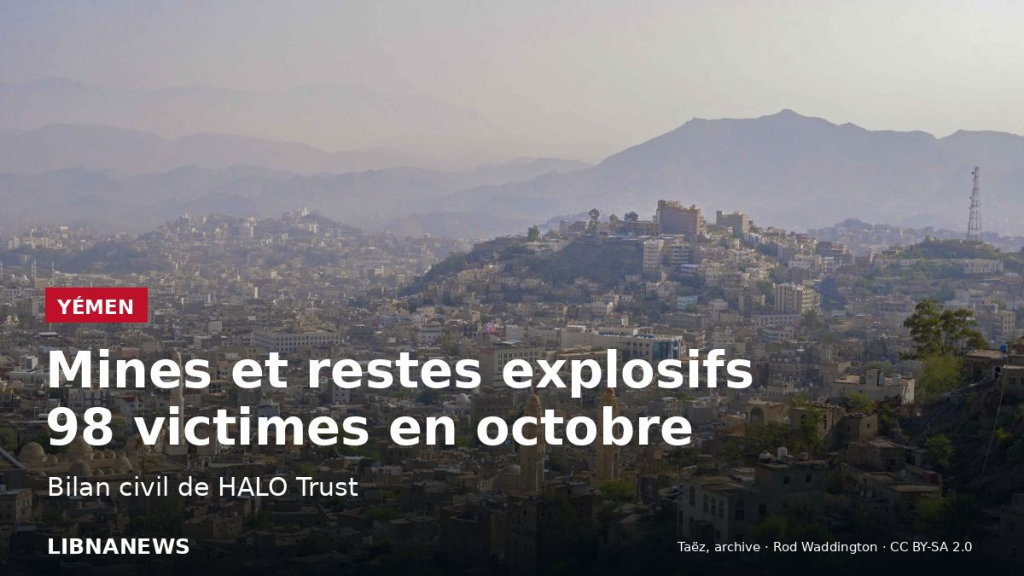
In Yemen, HALO Trust identified 98 civilians killed or injured by mines or other explosive devices in October 2026. This balance sheet, published on 25 November, is more than five times the monthly average recorded by the organisation this year. This is not a comprehensive assessment: the NGO estimates that the actual number of victims is higher.
Two incidents involving vehicles alone resulted in 34 civilian deaths and injuries, according to HALO. The organization has increased in seven governorates, including Taez, Hodeida and Shabwa. It does not provide a breakdown between deaths and injuries for all 98 cases.
The danger adds to forced displacement
Families fleeing the fighting sometimes use roads they do not know. Mines and explosive remnants expose them to additional danger, even away from immediate fighting. In the city of Taëz, HALO teams also report growing difficulties in supplying drinking water, fuel and food, while fighting cuts down important roads.
On Monday, 23 November, the spokesperson for the Secretary-General of the United Nations reported that more than 360,000 people had had to leave their homes in Yemen since early August, according to the International Organization for Migration. Taez governorate was home to the largest number of internally displaced persons. This figure covers persons who have fled since August, not all those displaced by the war in Yemen.
NGOs call for civilian movement
In a joint appeal issued on Tuesday, 32 NGOs, including Save the Children and the Norwegian Refugee Council, called on the parties to protect civilians and allow them to move safely. The signatories also called for assistance to reach those in need. In Taëz, HALO’s demining teams themselves show difficulties in moving around and reaching their loved ones.





Comments