

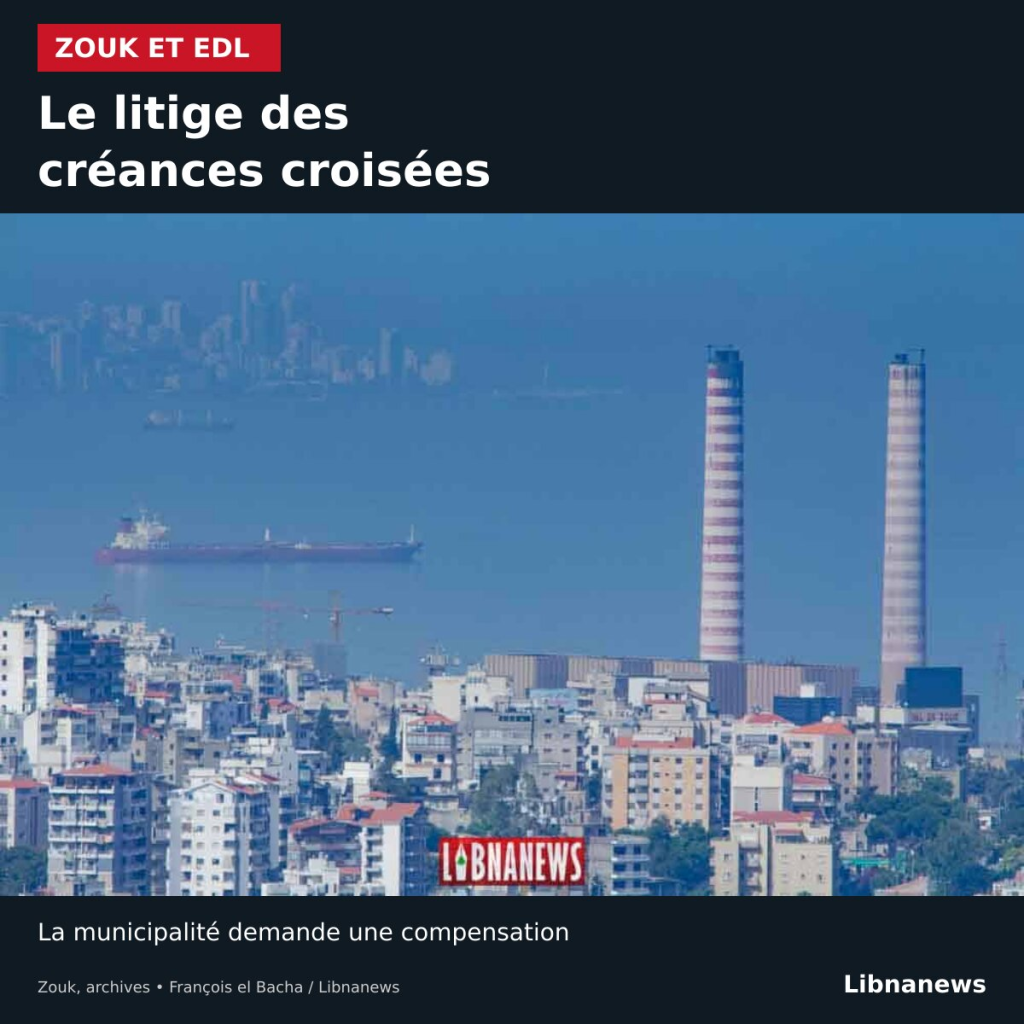
In Zuk Mikael, the dispute with Lebanon’s Electricity concerns accounts as well as invoices. The president of the municipality, Elias Beaino, claims that the municipality also holds claims on EDL and seeks compensation for the sums owed to the establishment. This operation is authorized by the 2004 Finance Act. However, there is no adversarial statement or judgement regulating this case in the material made public.
EDL’s recovery campaign put municipal finances at the forefront. On 2 November, the establishment announced cut-off procedures for public administrations, public bodies and municipalities that had neither paid nor contacted to regularize their situation. This general announcement did not detail all the subscriptions actually private in current.
Zuk Mikael seeks compensation for claims
Elias Beaino contests the idea of a municipality simply seeking to avoid payment. According to him, both parties owed themselves money and their accounts were not reconciled. The municipality reportedly sent an official letter to EDL requesting this operation, without having received a reply at the time of its statements, which were taken up on 10 November.
The mayor also states that a judicial procedure is between the municipality and the institution on clearing and settlement of accounts. It does not mention a final decision. His statement therefore sets out the position of the municipality in a dispute still pending, without establishing alone the amount that EDL should pay it.
What the 2004 text actually provides for
The legal reference invoked deserves clarification. This is Article 67 of Law 583 of 23 April 2004 on the general budget and supplementary budgets for this year. By way of derogation from the rules of public accounting, this article allows municipalities and EDLs to compensate for the amounts they owe each other.
The text opens this possibility. It does not fix the balance of the accounts of Zuk Mikael and does not constitute a judicial decision in favour of the municipality alone. Therefore, the legal basis for compensation should not be confused with its actual implementation in this case.
In concrete terms, compensation involves determining the claims admitted on each side and then the amount that would remain payable after reconciliation. The available returns do not give the total claimed by the municipality, the total claimed by the municipality from EDL, or the periods to which these amounts relate. It is therefore impossible to conclude which of the two bodies would ultimately be debtor and for how many.
Residents expect accounts and service
The local debate also has an environmental dimension. Residents of Zuk Mikael and Zuk Mosbeh denounce the burden of pollution associated with the nearby power plant and demand that this situation be taken into account. These claims should not, however, be treated as accounting claims invoked by the municipality: their nature and possible compensation are dealt with separately.
The next useful clarification would be a statement of accounts shared by both parties: consumer bills, sums due to the municipality and balance after possible compensation. A response from EDL to the municipal mail and the evolution of the judicial procedure would then help to determine how the dispute could be settled. In their absence, neither the accusation of a simple refusal to pay nor the assertion that the municipal debt would already be erased account for the case.





Comments