





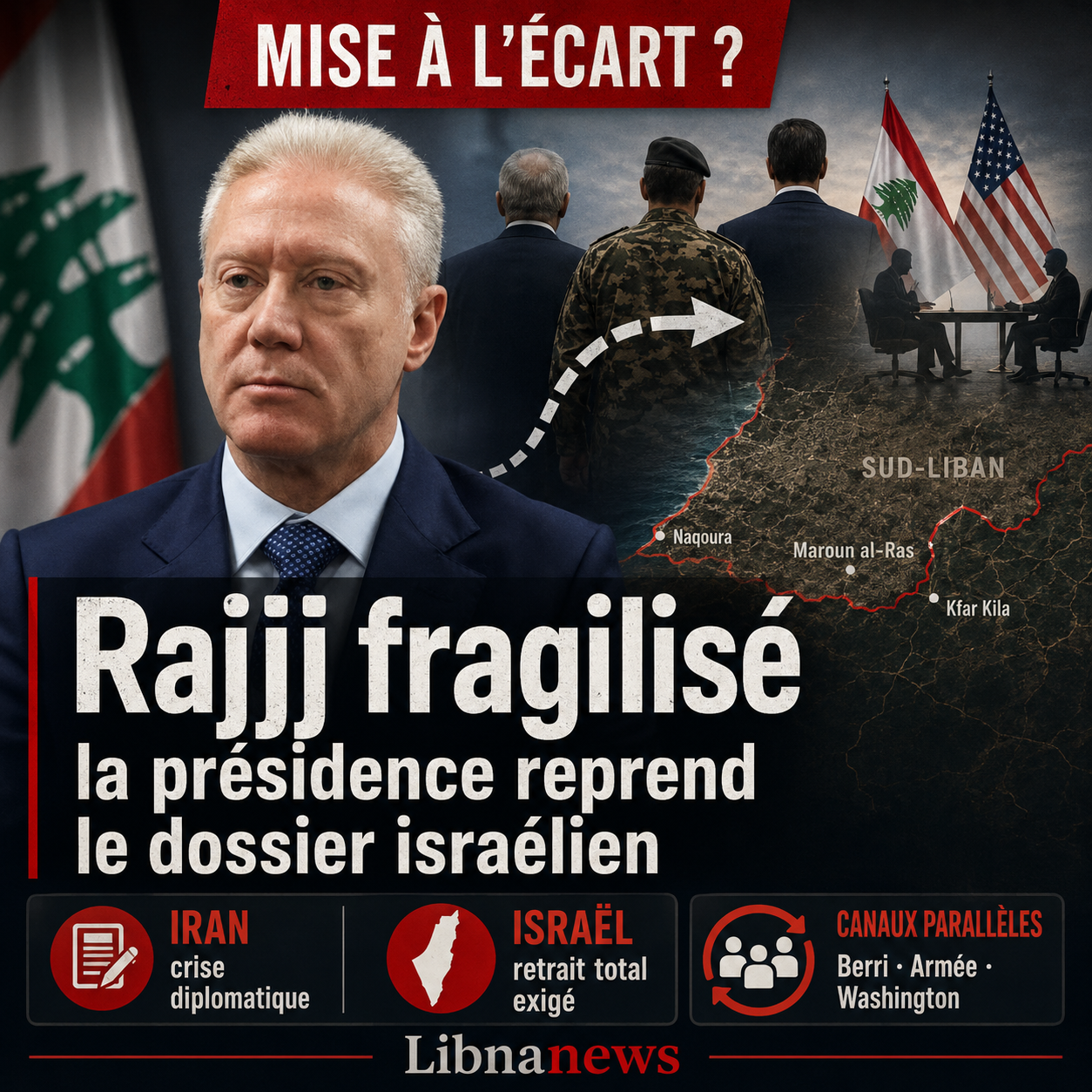
The role of Youssef Rajji in the negotiations between Lebanon and Israel is now at the heart of a political controversy that goes beyond his person. The Minister for Foreign Affairs was not formally removed from this file. No press release announces its exclusion. But its relative erasure, to the benefit of the Presidency of the Republic, the army, Nabih Berri and more direct American channels, feeds the idea of de facto gauge. This development comes after several episodes considered costly by some of the Lebanese political circles. The most sensitive remains the open crisis with Iran, when the ministry declared persona non grata the appointed Iranian ambassador, while, according to political rumours of the time, the presidency would have wished a simple diplomatic blame. This would then have affected Lebanese participation in the Islamabad talks, forcing the Presidency to send the army commander in an attempt to re-establish a channel. It is also reported to have strengthened the informal channels through Hezbollah and Nabih Berri. At the same time, some blame the minister for too much in framing discussions with Israel. The negotiations between Iran and the United States now give Lebanon a lever. Beirut must use it to secure a total Israeli withdrawal from southern Lebanon, otherwise the occupation of southern Lebanon by Israel will continue to legitimize Hezbollah and the Iranian channel.
Unannounced but politically readable set-off
First, a distinction must be made between the established fact and political interpretation. Youssef Rajji remains Minister for Foreign Affairs. As such, it retains institutional responsibility for Lebanese diplomacy. No official announcement indicates that he was removed from the Israeli file. But in the Lebanese system, real power is rarely measured by organizational charts alone. It is read in the channels that work, in the interlocutors privileged by the mediators, in the travels made and in the officials responsible for repairing crises.
From this perspective, the minister appears less central. The Presidency of the Republic seems to have taken on a more direct role. The army intervenes in technical discussions related to the South. Nabih Berri remains a must with Hezbollah and with some foreign interlocutors. The Americans are looking for interlocutors who can guarantee political decision-making and security enforcement. The Ministry of Foreign Affairs remains present, but it no longer seems to be the single point of entry.
This move is not insignificant. He suggests that the file has changed its nature. It is no longer just a question of a ceasefire or diplomatic representation. It is a matter of setting a national line at a time when Israel is still bombing southern Lebanon, when Iran links the Lebanese issue to the discussions with Washington, and where Hizbullah maintains an independent military capability. In this context, a minister may become too exposed to conduct such sensitive negotiations alone.
Youssef Rajji also pays the cost of his style. He wanted to embody a more direct, sovereignist and offensive diplomacy. This posture was able to seduce a part of Lebanese opinion, tired of ambiguities vis-à-vis Iran and Hezbollah. But it also created a vulnerability. Effective diplomacy is not only based on firm statements. It is based on coordination, control of side effects and ability to preserve channels, even with opponents.
The Iranian Ambassador, the initiative that weakened the Minister
The crisis around Mohammad Reza Shibani remains the most serious precedent. In March, the Lebanese Ministry of Foreign Affairs withdrew the approval of the Iranian ambassador-designate, before declaring him persona non grata. He asked him to leave Lebanese territory. The decision was justified by violations of diplomatic practices and by interventions found to be contrary to the rules between States. On the substance, it met a requirement of sovereignty. On the method, it opened a much wider crisis.
According to political rumours then circulating in Beirut, the President of the Republic would not have wished to go as far as dismissal. She would have preferred a reprimand, a firm summons or a protest note. This point has not been formally confirmed. It should therefore be presented with caution. But he explains part of the current malaise. In this reading, Youssef Rajji reportedly turned a controlled sanction into a symbolic break with Tehran.
The difference between blame and dismissal is major. A blame keeps the diplomatic channel while setting a limit. It makes it possible to report a fault without causing a public arm. A referral requires an enforcement capacity and a monitoring strategy. Iran refused to comply with the decision. Lebanon then found that its sovereignist gesture could be challenged without the immediate political means of imposing it.
This sequence therefore produced a paradoxical effect. A decision purporting to assert the authority of the State revealed its limitations. She also put the Presidency in a difficult situation. If the head of state really wanted a more measured sanction, he found himself forced to deal with a tougher crisis. If, on the contrary, he had validated the decision, he had to bear the consequences without achieving a clear result. In both cases, the department lost part of its margin.
Islamabad, a detour that has become necessary
The Iranian episode would have had a direct regional consequence. According to reports from the Lebanese political circles, the crisis would have helped to cut, or at least weaken, Beirut’s presence in the Islamabad talks. Pakistan then played a mediation role in the exchanges between Iran, the United States and several regional issues, including the Lebanese front. For a Lebanon subjected to shelling and external pressure, staying in this circuit was essential.
The decision on the Iranian ambassador would therefore have created a practical problem. How to weigh in a channel where Iran plays a decisive role, while official Lebanese diplomacy has just opened an arm with Tehran? How can the Lebanese interest be defended in a sequence where Hezbollah, Iran’s ally, is at the centre of the regional calculation, if the Ministry of Foreign Affairs no longer has access to certain interlocutors? This contradiction has weakened Youssef Rajji’s line.
According to the same political readings, the presidency should have sent the army commander to Islamabad in an attempt to regroup the pieces. This displacement, if confirmed in all its details, says a lot of the situation. The army would have become a catch-up channel. The Presidency would have sought to re-establish a less cleavage institutional path. The department, on the other hand, would have been circumvented or supported because its initiative had made some contacts more difficult.
This point is central to understanding the possible current spread. It would not only be a matter of punishing a minister. It would be necessary to avoid the same mistakes in the Israeli case. Negotiations with Israel require open channels with Washington, Tehran, Berri, the army and international forces. Any poorly calibrated rupture can result in loss of access. In this type of folder, losing a channel sometimes means losing a card.
Berri and Hezbollah reinforced by the crisis
One of the most important effects of this sequence was the strengthening of the informal channel through Hezbollah and Nabih Berri. This is often underestimated. When the official channel blocks, mediators look for those who can still talk to everyone. In Lebanon, this almost always leads to the President of Parliament, to the relays of the Shiite tandem and to the interlocutors able to influence Hezbollah.
Nabih Berri occupies a special place. It belongs fully to the institutions. He presides over Parliament. But it also maintains close political ties with the Hezbollah environment. He can speak to the Americans without appearing as a mere representative of the Shiite party. He can speak to Hezbollah without being perceived as outside his camp. This position makes him a forced passage in the crises of the South.
Hezbollah benefits from every weakness of the state channel. When the Foreign Ministry breaks too brutally with Iran, the party can present itself as the real interlocutor of Tehran. When Israeli bombing continues, he can present his weapons as a necessity. When official negotiations do not produce a total withdrawal, it may denounce the impotence of the State. The crisis around the Iranian ambassador was thus able to strengthen the actors that the Rajji line wanted to contain.
This is one of the paradoxes of this case. Diplomacy as a sovereignist can weaken sovereignty if it reduces state channels without having an alternative. In seeking to cut short Iranian interference, the minister would have contributed to making the Iran-related informal channel more useful. By wanting to show that the state decides, he would have given parallel actors the opportunity to prove that they remain indispensable.
Concessions perceived to be excessive against Israel
The second complaint addressed to Youssef Rajji concerns his attitude in the Israeli case. According to political critics, the minister would have given too much on the scoping of the negotiations. It would have accepted too quickly the idea of a direct or quasi-direct process, without first obtaining strong guarantees about the cessation of the bombings, the total withdrawal and the end of any security zone imposed by Israel in southern Lebanon.
This reproach must not be caricatured. Lebanon needs to negotiate. He cannot be content with statements of conviction while his villages are bombed. He needs to talk to the American mediators. It must seek mechanisms of ceasefire. He must get the displaced back. But negotiating does not mean accepting the framework of the other party. Negotiations only make sense if they really change the ground.
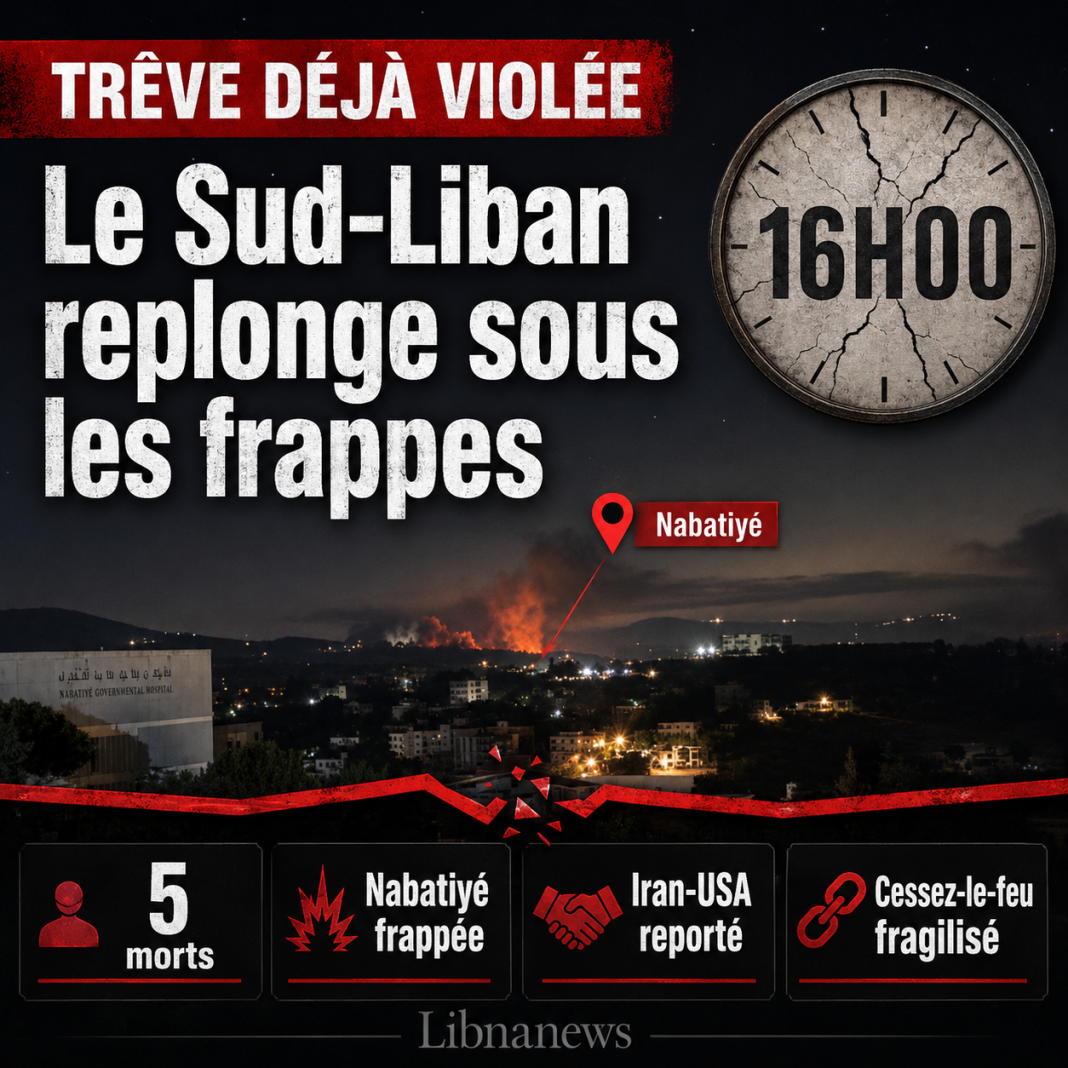
But the land remains hard. Israel maintains military pressure in southern Lebanon. Strikes are still reported despite the ceasefire announcements. Israeli officials defend the idea of maintaining a capacity for action against Hezbollah. This logic amounts to asking Lebanon to accept conditional sovereignty. It lets Israel decide when it can strike, where it can stay and how it interprets threats.
Beirut cannot enter into this logic. Lebanon must not negotiate the development of an Israeli occupation or freedom of action. He must negotiate their end. Any concession that would allow Israel to occupy points in the South or conduct preventive strikes would undermine the credibility of the State. It would also give Hezbollah the most powerful argument to maintain its arsenal.
Total withdrawal, the only strategic objective to be readable
Total Israeli withdrawal must become the central criterion of negotiation. It’s not a maximalist formula. This is the minimum condition for effective sovereignty. A State cannot restore its authority in an area where a foreign army retains positions. He cannot ask his citizens to return home if drones continue to fly over their villages. He cannot demand Hezbollah to step back if the occupation remains visible.
Lebanon can discuss the timetable. It may discuss verification mechanisms. It can accept a strengthened role for the Lebanese army and international forces. It can accept mutual security guarantees, provided that they respect its sovereignty. But he cannot accept partial withdrawal as a final compromise. It cannot accept a buffer zone controlled by Israel. He cannot accept a clause that would allow the Israeli army to return or strike at his will.
It is here that the Presidency of the Republic must take over the centre of the dossier. The President may carry this requirement with a broader legitimacy than that of a disputed minister. He can say that Lebanon is ready to negotiate, but not to validate an occupation. He can speak on behalf of the army, sovereignty and national unity. He can also remind the Americans that their stated goal of strengthening the Lebanese state is first and foremost through real Israeli concessions.
The Presidency should therefore not be content with managing the erasure of Youssef Rajji. It must transform this erasure into a strategic correction. The problem is not just who is talking. It is to know what Lebanon demands. If the mandate remains unclear, there is no point in changing the interlocutor. If the mandate is clear, the Presidency can use the sequence to achieve a concrete result.
Iran-United States card must not be wasted
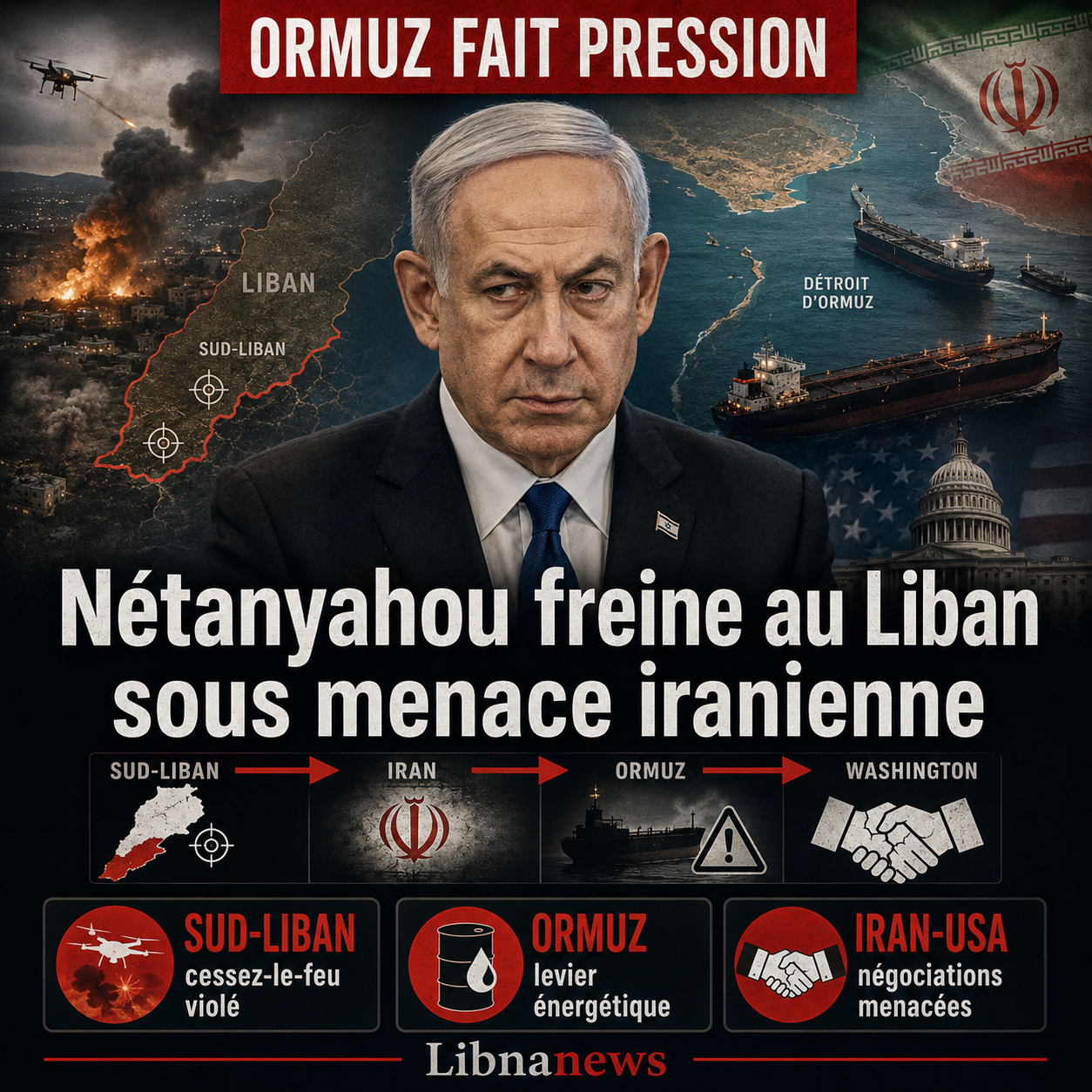
Negotiations between Iran and the United States give Lebanon a rare lever. Tehran considers the Lebanese file to be part of the regional force report. Washington wants to stabilize the region and avoid the southern front derailing the discussions. Israel wants to preserve its freedom of action. Hezbollah wants to avoid a regional agreement at its expense. In this configuration, Beirut can weigh more than normal.
This card must be used with method. It is not about delivering the Lebanese file to Iran. Nor is it a matter of legitimizing Hezbollah as the only interlocutor. It is a question of recognizing that Lebanon is present in the negotiations, even when it is not sitting at all tables. If Washington needs calm in the South to move forward with Tehran, Beirut can demand a total Israeli withdrawal. If Tehran wants to preserve its ally, Lebanon can argue that the best way out is to strengthen the state rather than a permanent war.
The difficulty comes from the canal. After the Iranian ambassador’s crisis, the Ministry of Foreign Affairs lost part of its ability to engage with Tehran. Hezbollah and Berri then regained value. That is precisely why the Presidency must refocus itself. She has to get that card back without leaving it to Hezbollah. She must speak in Washington with the Iranian argument, but on behalf of the Lebanese State. It must maintain a minimum channel with Tehran, but without accepting guardianship.
This line is narrow. She’s asking for discipline. She also asks not to repeat the error of the Iranian episode. Sovereignty is not about closing all channels. It consists of controlling them. A channel with Iran can serve the State if it is led by the Presidency and set in a national objective. It serves Hezbollah if it becomes the only effective channel. The whole question is here.
Two issues for Lebanon
Lebanon is facing two exits. The first is to allow the Israeli occupation and bombing to continue to fuel the legitimacy of Hezbollah. In this scenario, the Shiite party may say that the state speaks, but that Israel remains. He may say that ministers promise, but drones strike. He may say that the Americans are negotiating, but only Iran is putting the Israeli withdrawal on the agenda. This reading would strengthen the Hezbollah-Berri-Iran channel.
The second is to secure, through the presidential process and with the support of the Iran-United States negotiations, a total withdrawal from Israel. This would not automatically resolve the issue of Hezbollah’s weapons. It would not suppress Iranian influence. It would not immediately rebuild the destroyed villages. But it would change the political basis of the debate. Without occupation, Hezbollah’s military argument would lose its strength. With the deployed army, the state would regain a visible function. With people returning under institutional protection, sovereignty would cease to be an abstract word.
The choice is therefore less moral than strategic. If the state wants to take over, it must produce a result that Hezbollah cannot claim alone. This must be the total Israeli withdrawal. Nothing less. A fragile ceasefire, partial withdrawal or a negotiated security zone would only displace the problem. They would give Israel a military lever and Hezbollah a political justification.
That is why the concessions made by Youssef Rajji, or perceived as such, have become such a sensitive subject. A diplomatic concession may be acceptable if it permits a higher gain. It becomes dangerous if it normalizes a loss. Lebanon can agree to discuss with Israel. He cannot accept that this discussion turns occupation into a lasting parameter.
Why Rajji’s gauge can become useful
The possible departure of Youssef Rajji by the Presidency, if confirmed in fact, should not be read only as a sanction. It can become useful if it redefines the national mandate. The minister asked real questions. He recalled that the State must speak on behalf of Lebanon. He denounced Iranian interference. He argued that diplomacy cannot remain a prisoner of Hezbollah. But its method also created costs.
The first cost is the crisis with Iran. The second is the loss of access, or weakening of the Lebanese channel, in a regional sequence where Iran remains indispensable. The third is the mechanical strengthening of Berri and Hezbollah as an unofficial relay. The fourth is the perception of too much flexibility in the face of Israeli framing. Taken separately, each of these elements could be contained. Together, they justify a presidential focus.
This refocusing must not humiliate the minister. Public humiliation would create an unnecessary institutional crisis. The Ministry of Foreign Affairs must remain in the system. It should prepare notes, formalize positions and represent Lebanon in appropriate frameworks. But the political conduct of the case must return to the top of the state. The army must deal with the technical aspects. The Presidency must set the red lines. The government must provide political coverage. Berri can be used as a relay, but it must not replace the state.
Such an architecture would reduce ambiguities. The Americans would know that Lebanese demand is not a ministerial position. Iranians would know that the canal with the state remains open, but that it does not go exclusively through Hezbollah. Israel would know that total withdrawal is not a secondary claim. The Lebanese would finally know that the negotiations were not aimed at disguised normalization, but at restoring sovereignty.
The risk of a spectator state
The main danger is that Lebanon will remain spectator of an agreement that directly affects it. The United States and Iran can discuss the Lebanese front in a regional sense. Israel can seek to preserve its freedom of action. Hezbollah can negotiate its role by relay. Berri can cushion shocks. But if the Presidency does not set a clear position, the Lebanese State will again find itself commenting on decisions taken elsewhere.
This is precisely what the Islamabad crisis seemed to reveal. When the official channel becomes fragile, Lebanon must run after the events. He’s sending another contact. He’s trying to get a seat back. He seeks to understand what has been said on his behalf or about him. This cannot be repeated in the negotiations with Israel. South Lebanon is not a peripheral folder. It commits national sovereignty.
The Presidency must therefore act before the framework is set by others. It must tell the Americans that Lebanon cannot accept a truce without withdrawal. It must tell the Iranians that the regional channel cannot replace the state. She must tell Hezbollah that the total withdrawal will remove part of her argument. It must tell Israel that the security of its north cannot go through the occupation of southern Lebanon.
This position does not guarantee success. Israel can refuse. Washington can slow down. Tehran can use the file. Hezbollah can seek to retain its advantage. But a clear line gives Lebanon a chance to turn a constraint into a lever. A blurred line would only prolong impotence.
A Method Lesson for Lebanese Diplomacy
The Rajji case offers a broader lesson. Lebanese diplomacy cannot function by isolated gestures. It must be collective, hierarchical and realistic. A minister can carry a vision. He cannot open a crisis with Iran alone, engage in a logic of negotiation with Israel, and then hope that other institutions will repair the side effects. In such a fragmented country, the method counts as much as the bottom.
Sovereignty requires firmness, but also channels. It requires red lines, but also sequences. It demands to speak to opponents without giving them the essentials. It requires not to confuse posture with result. The blame that the presidency would have wished against the Iranian ambassador illustrates this difference. A blame would have meant a limit. The dismissal created an arm of fire. This arm then strengthened those with unofficial channels.
The Israeli case presents the same risk. Accepting negotiation can be helpful. But accepting negotiation without imposing total withdrawal as a central requirement can become dangerous. The state may then seem reasonable in the eyes of the mediators, but weak in the eyes of its citizens. Hezbollah would only have to exploit this weakness. Israel would only have to extend its presence. Iran would only have to keep its lever.
That’s why the political title of this sequence could be this: Youssef Rajji is not only challenged for what he said or did. It is contested because its initiatives have shown the need for presidential leadership. Lebanon does not need a louder diplomacy. He needs diplomacy that gets a withdrawal, that reopens the villages of the South, that puts the army back in the centre and that takes the pretext of occupation from Hezbollah.
An immediate test for the Presidency
The Presidency of the Republic now plays a decisive part. If she takes over the file to better organize it, she can turn Youssef Rajji’s weakening into an opportunity. If she is content to move the minister away without setting a line, she will leave the field in parallel channels. Refocusing must therefore be political, not just administrative.
The Lebanese mandate must be made legible. It must include a complete ceasefire, a halt to the bombings, full Israeli withdrawal, the effective deployment of the Lebanese army, the return of the displaced and a verification mechanism that does not give Israel permanent freedom of action. These points are not details. They are the difference between a useful truce and a trapped truce.
The Iran-United States card must be used on this line. Regional discussions should not legitimize Hezbollah by passing over the state. On the contrary, they must help the State to recover the land. To do this, Beirut must speak with one voice. The Presidency must lead. The department must execute. The army must secure. Berri can transmit. Hezbollah must be reduced to a new internal calculation, in which the Israeli occupation no longer serves as a permanent justification.
The political fate of Youssef Rajji will depend on this clarification. If he remains associated with solitary initiatives, he will become the symbol of a diplomacy that wants to assert the state but has strengthened the informal channels. If the Presidency takes over the dossier and obtains a total withdrawal, its relative erasure will appear as the price of a necessary adjustment. For the time being, South Lebanon remains bombarded, regional negotiations remain fragile, and the minister’s real place serves as an indicator of a broader question: who really speaks on behalf of the Lebanese State when deciding the future of its southern border.