

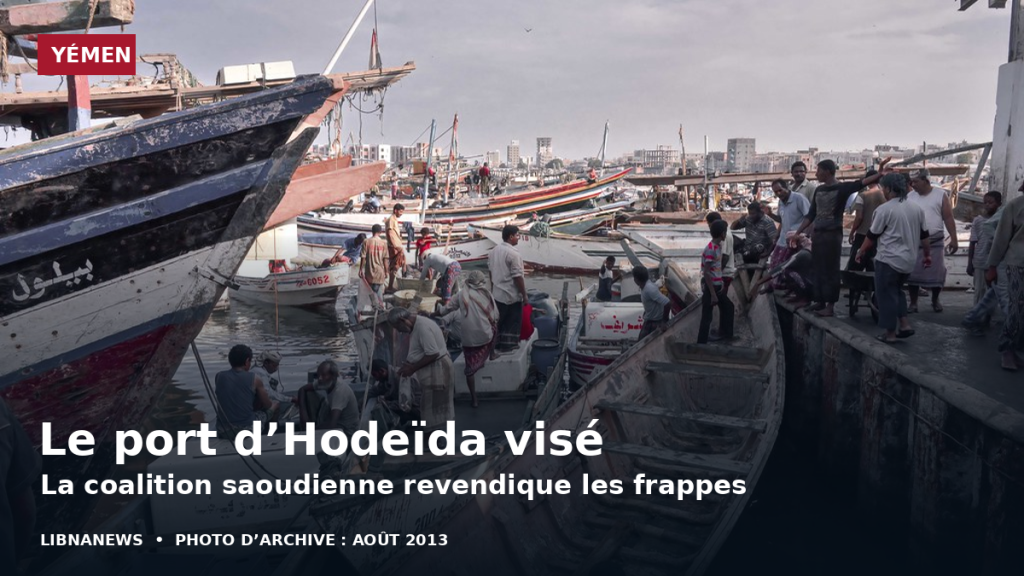
The Saudi-led coalition announced that it had struck the Yemeni port of Hodeida on Wednesday, 25 November, after asking civilians to evacuate it. The Houthis threatened to retaliate against Saudi ports. The extent of the damage and the consequences for commercial and humanitarian traffic are not established.
Coalition does not specify damage to port
Coalition spokesman, General Turki al-Maliki, said on Wednesday that the strikes had targeted installations related to the operation of the port of Hodeida, without specifying which ones. He also announced the destruction of several targets in Saada and Amran governorates. Its statement does not give a human report for the port or an indication of the condition of the docks and the continuation of the unloading operations.
The announcement comes after a warning from the coalition asking the civilians to evacuate the port. The Houthis military spokesman, Yahya Saree, had threatened to retaliate against Saudi ports in the Red Sea, including Jeddah, if Hodeida were attacked. This threat does not constitute confirmation of a strike in Jeddah.
Two separate episodes in Hodeïda
On Wednesday, the coalition claimed strikes at the port. These are not the attacks on Monday 23 November in the same governorate, which the Houthies authorities attributed to Saudi Arabia. The latter said that buildings of a public telecommunications company had been hit and reported 17 deaths. This balance sheet, not independently verified, cannot be taken back as the balance sheet of Wednesday’s operation.
Tensions were already heightened on Tuesday after a drone attack on a tower in the Riyadh financial district. Saudi civil defence reported 11 injuries in the capital. The coalition attributed this attack to the Houthis. Again, this is a separate assessment from that of the strikes in Yemen.
A point of entry for food imports
Hodeïda is one of the Red Sea ports followed by the World Food Programme for Food Imports, with As-Salif and Ras Issa. Yemen imports about 90 per cent of its food, according to the United Nations agency. This is the national import share, not the part that passes through Hodeida.
The World Food Programme had already reported that the fighting had cut off access to certain areas of Taez and Hodeida governorates, preventing its teams and partners from reaching about 350,000 people. This figure is before Wednesday’s strike. In the immediate future, the elements for measuring the consequences are the state of port facilities and confirmation of the continuation or interruption of commercial and humanitarian operations. Neither of these points is established by the coalition communiqué.





Comments