

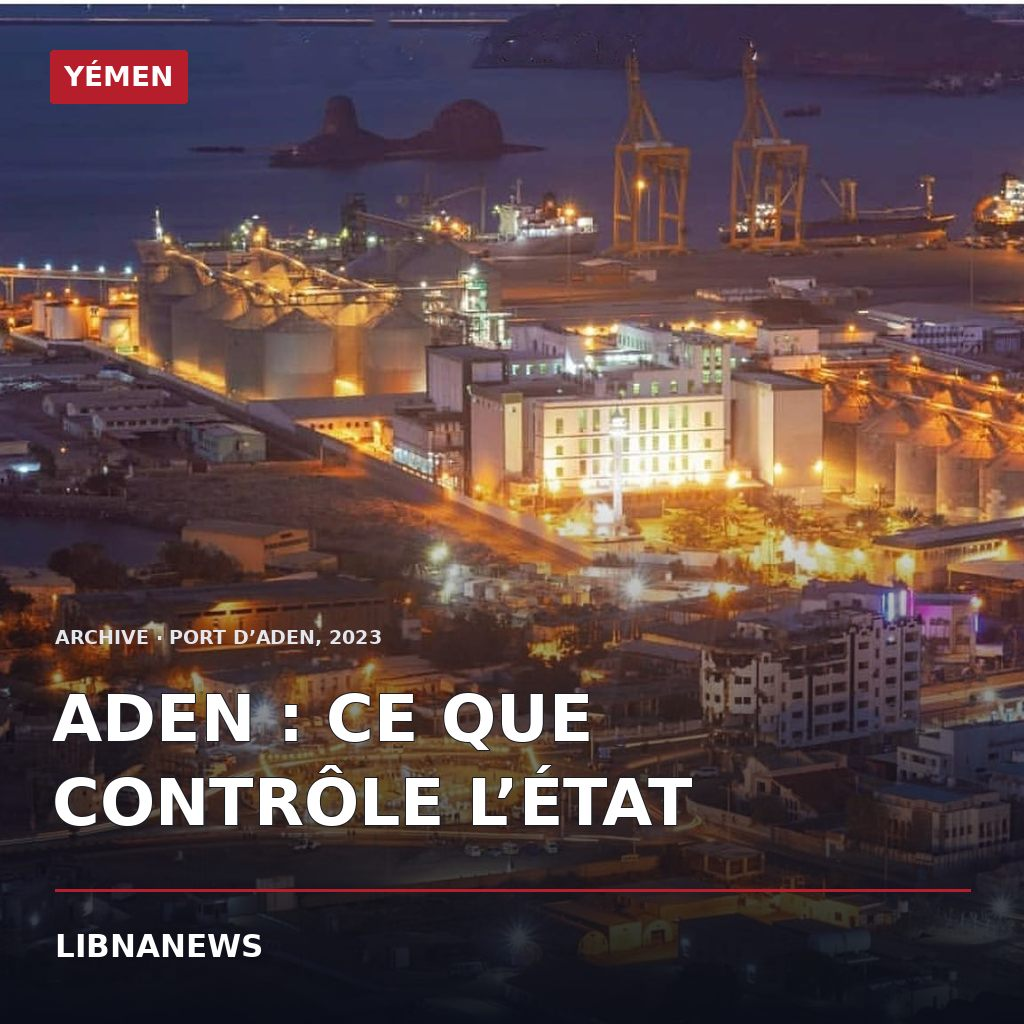
While the army loyal to the Yemeni government claims to have strengthened Aden’s defence, the institutions of the recognized government continue to work in the city. The visit of the United Nations humanitarian official to a camp in Aden on 26 November shows what the city also means to help the displaced.
A temporary capital that remains active
Aden became the provisional seat of government recognized by the United Nations after the capture of Sanaa by the Houthis in 2014 and the subsequent political breakup. In a letter to the Security Council on 2 November, the representative of Yemen indicated that State institutions continued to exercise their functions there. He also reported attacks on the presidential complex and the airport, which his Government attributed to the Houthis.
On 24 November, the spokesman for the army loyal to the government said that the Houthis had advanced towards Aden and that his forces had redeployed to defend the city. This statement is not sufficient to establish which localities have changed hands, nor to confirm that the advance is definitely stopped.
In Aden, UN works with Yemeni authorities
On 26 November, the United Nations humanitarian official, Tom Fletcher, visited camps for internally displaced persons in the Al-Chaab area in Aden. The Yemeni Minister of Human Rights and the UN Resident and Humanitarian Coordinator accompanied him, according to the official agency of the Yemeni government. The purpose of the visit was to assess the needs in the camps.
In Aden, the Ministry of Health and the World Health Organization had also announced on 19 November the distribution of 5,000 impregnated nets in two camps. The announcement describes an operation in the city, not a state of service in neighbouring provinces. The UN distinguishes the possibility of operating from Aden from access to the populations of the combat zones, particularly in the Taez region.
The seat of government does not say who administers the whole South
The Yemeni government represents the country to the United Nations. In the South, government services, provincial authorities and local forces do not fall under the same decision-making channels everywhere. The Southern Transition Council, which emerged from the separatist movement, also weighed the power relations in Aden; This role is not confused with the diplomatic representation of Yemen.
The visit on 26 November confirms that Yemeni and UN leaders are continuing their work in Aden. It does not make it possible to extend this finding to the whole of the South, nor to conclude on the military control of the vicinity of the city.





Comments