

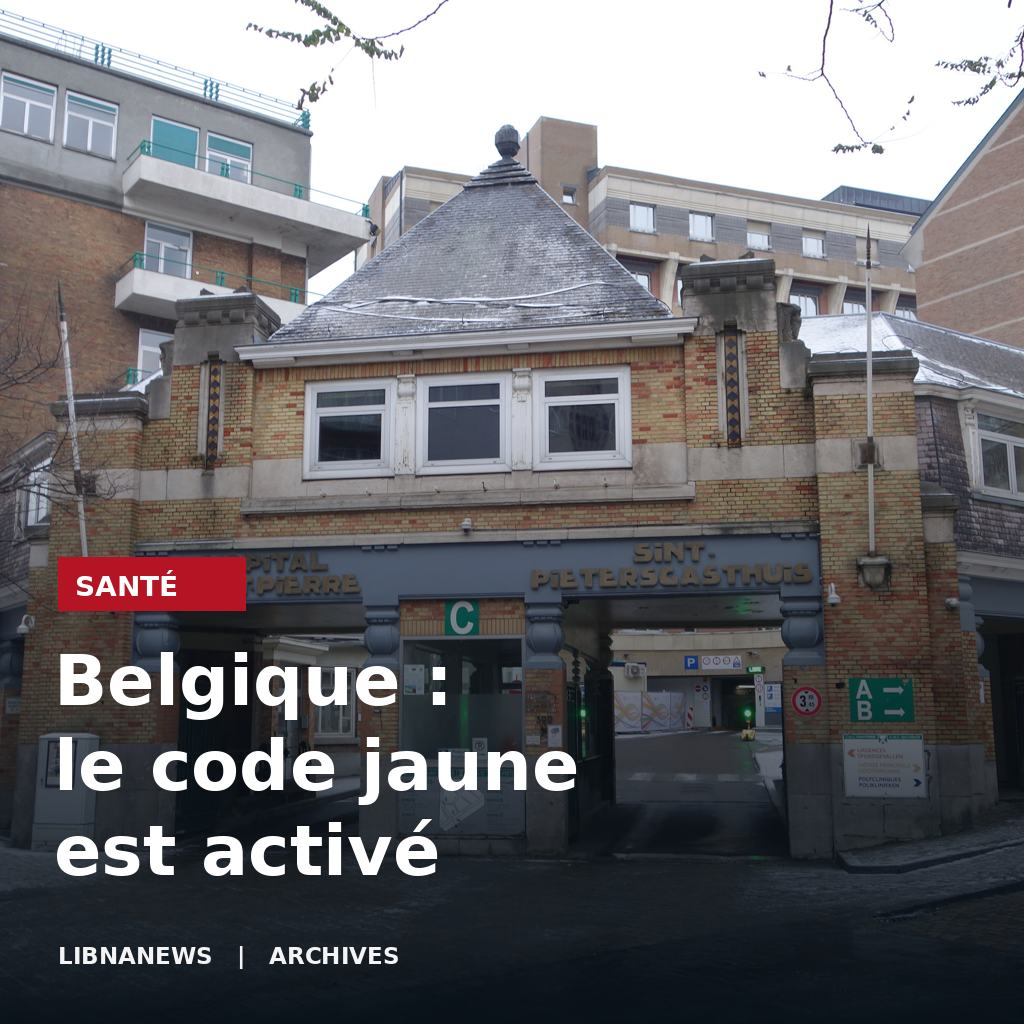
Since November 26, Belgium has been in yellow code for respiratory infections. The winter plan recommends better aeration, without imposing new obligations.
On Thursday 26 November, the Belgian Risk Management Group raised the level of attention for respiratory infections. The shift from green to yellow corresponds to a moderate circulation of infections, with pressure on the care that the authorities still consider to be controlled. The Interministerial Conference on Public Health confirmed the implementation of the winter plan.
Yellow doesn’t mean hospitals are saturated
The device follows several infections: influenza, Covid-19, respiratory syncytial virus (VRS) infections and pneumococcal infections are among those mentioned in the press release. The yellow code is therefore not a report of influenza epidemic alone. In the four-level scale, orange corresponds to strong circulation and significant pressure on care. The overload of the health system characterizes red.
The Sciensano wastewater monitoring illustrates this distinction. On its public table, the November 16 samples indicated a very high level of SARS-CoV-2 and moderate levels for influenza and RSV. This network covers 39% of the population in 172 municipalities. These measures inform the circulation of viruses in the following area: they are neither a national count of patients nor a hospital check-up. The next update was announced by November 30th.
At work and at home, the focus is on indoor air
For the yellow code, the Belgian authorities recommend to open windows and doors regularly, if possible on two sides of a room, and to leave the ventilation grids unobstructed. When the building has a mechanical system, they recommend checking that it works and adjusting the flow rate when several people occupy the room. The press release also recalls the advice in force throughout the year, including hand washing and reduced contact when one is ill.
The plan includes workplaces, transport and gatherings. The change of colour does not create a general obligation to wear a mask in transport or school. The risk management group may raise or lower the level depending on the circulation of infections and their effects on care.





Comments