

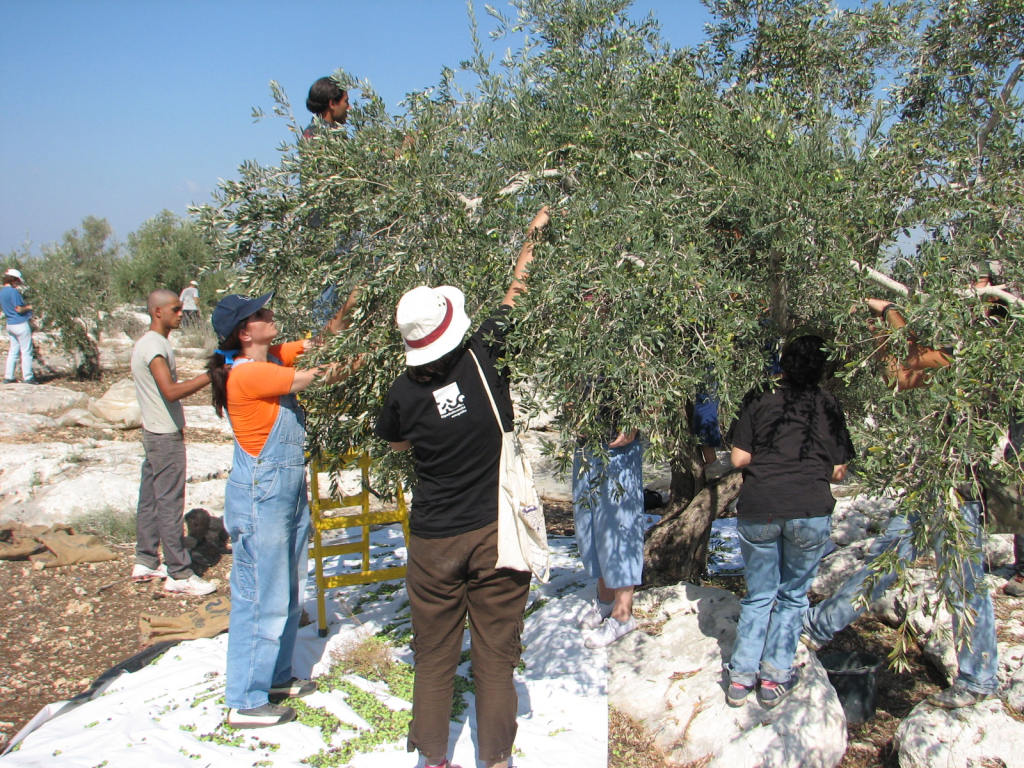
Former Israeli military officials accompanied Palestinian farmers on Tuesday, 3 November, to harvest their olives near Qusra in the occupied West Bank. This solidarity initiative comes at a time when settler violence and access restrictions disrupt gathering.
In the West Bank, retired officers alongside pickers
Former General Eyal Ben-Reuven explains that for several months he has brought together a group of about thirty former military officials, including six generals. This figure describes the collective constituted: it does not allow to affirm that its thirty members were all present in olive groves on Tuesday.
According to a news agency present on site, Ben-Reuven compares settler attacks with pogroms. He referred in particular to violence against women and children. Other participants denounce the occupation and its consequences for both Palestinians and Israel.
This involvement of former officers is not an operation of the Israeli army. It is a process of solidarity with Palestinian farmers facing violence.
In Qusra, access to trees remains the immediate challenge
Nimr Nazzal, owner of land near the village, claims that he could not join his olive trees without this accompaniment, due to attacks by settlers. He also accuses the army of protecting them. This charge is that of the owner, not a finding made for each incident.
The aid provided to harvesters therefore concerns both the presence on the plots and the harvesting work. The testimonies gathered in Qusra describe an access that farmers fear is not guaranteed when they are alone.
A harvest marked by attacks and missed access
The United Nations humanitarian report of 29 October lists 38 attacks by settlers linked to the harvest between 20 and 26 October. They caused injury or damage to property. This assessment covers the entire West Bank, not the only village of Qusra.
The document describes attacks, theft of olives and equipment, and the destruction of agricultural property. It also notes coordinated access suspensions in parts of Jenin and Nablus governorates and behind the Qalqiliyah barrier.
Army claims to protect coordinated harvests
In a statement dated 27 October, the Israeli army claimed to have protected the harvesting operations at approximately 100 coordinated sites. She assured that the vast majority were proceeding without unusual incidents and said that she had increased her strength to prevent violence.
This general presentation does not respond individually to the accusations made in Qusra. It covers coordinated operations, while humanitarian observations also include land that is rendered inaccessible. Harvest support teams continue to be present with farmers, but the United Nations notes that their assistance is still reaching only a limited number of beneficiaries in most localities.
References and photographic credit
- Press release of 3 November 2026, taken over by RTÉ.
- United Nations humanitarian report dated 29 October 2026.
- Israeli Army communiqué of 27 October 2026.
Photo archive: Israeli and Palestinian collectors in Qafin, West Bank, October 2008. This photograph does not show Qusra on November 3, 2026, nor the former officers mentioned in the article.Orrling / Wikimedia Commons,CC BY-SA 3.0. Image not modified.






Comments