

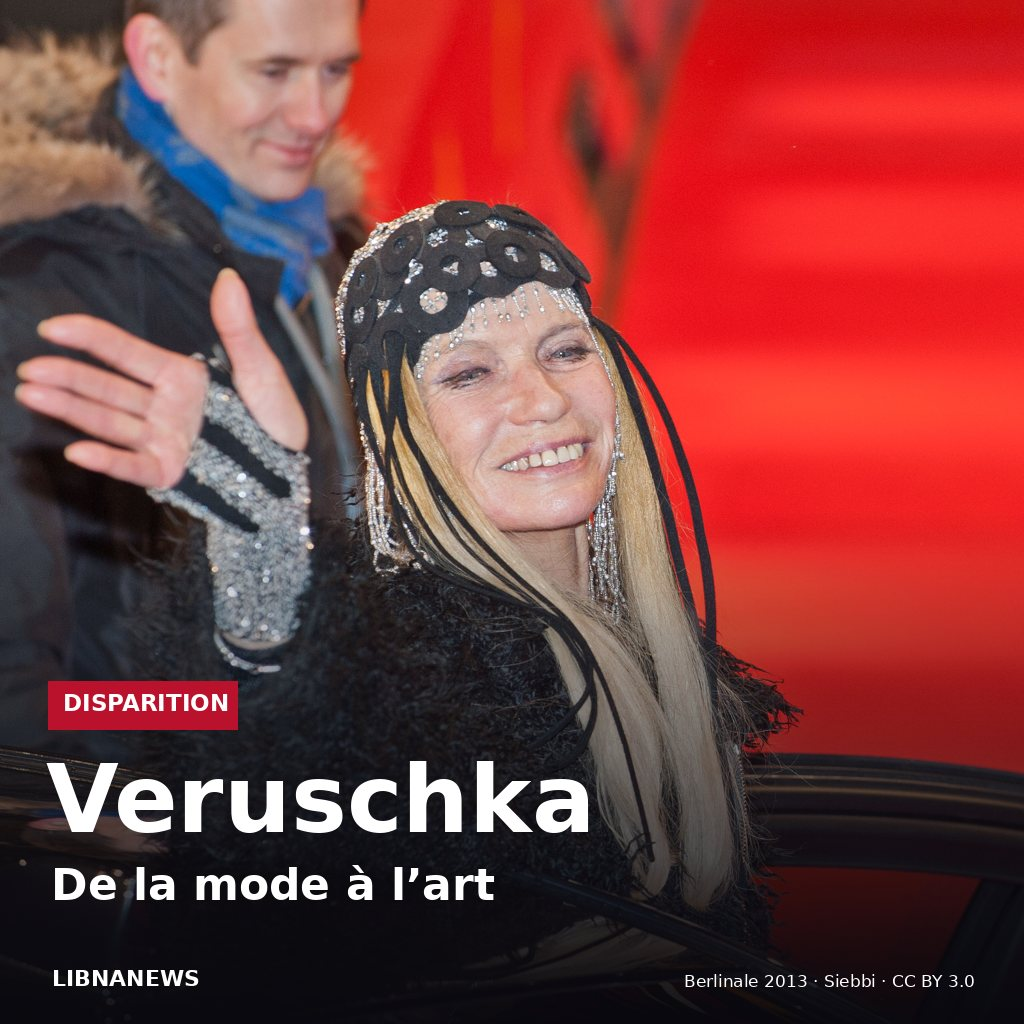
Vera von Lehndorff, known as Veruschka, died in Berlin on 24 November at the age of 87. Mannequin of the 1960s and actress in « Blow-Up » by Michelangelo Antonioni, she then developed with Holger Trülzsch a photographic work based on body painting and camouflage.
His family confirmed his death on Wednesday, November 25. Veruschka’s name remains associated with the great fashion series of the 1960s, notably Richard Avedon’s. The exhibitions of her work with photographer Holger Trülzsch shed light on another part of her career: the images of which she herself was the author.
From Vera von Lehndorff to Veruschka
Born in 1939 in Königsberg, East Prussia (now Kaliningrad), Vera von Lehndorff grew up in Steinort Castle in present-day Poland. She was five years old when her father, Heinrich von Lehndorff-Steinort, was executed by the Nazi regime in Berlin-Plötzensee on 4 September 1944. He had taken part in the resistance that organized the failed attack against Hitler on 20 July.
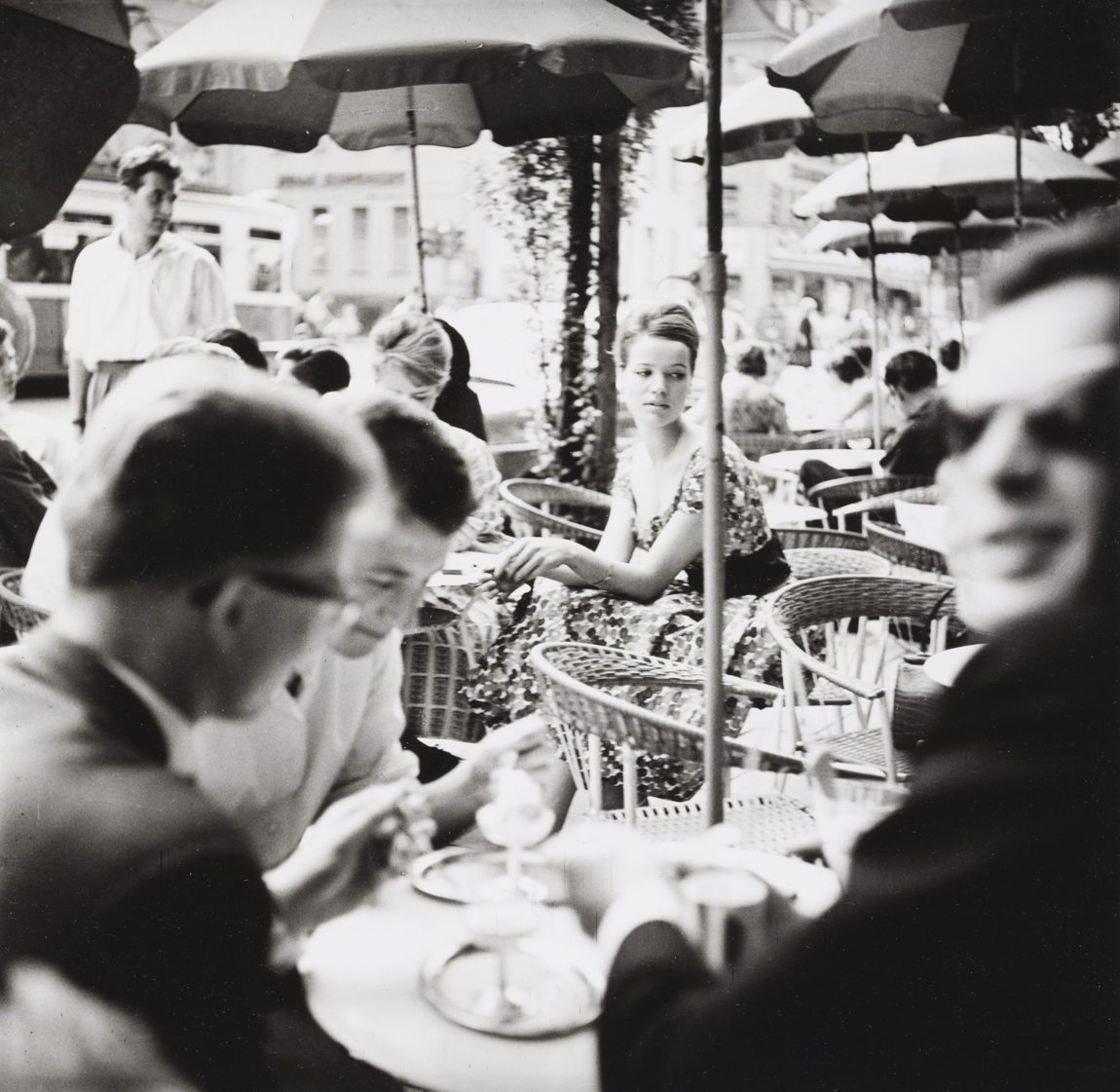
In 1960, Barbara Nigll Radloff photographed the terrace of the Café Cadore in Munich. The photograph, preserved at the Munich Municipal Museum, dates from the beginning of his career. Customers in the foreground blur the contours of the scene, while Vera looks at the lens from a table in retreat.
Under her stage name, she became one of the best known German models abroad. In the American issue ofVogueof March 1, 1967, Richard Avedon devoted a series of 25 pages to him. The photographer seizes her in motion: her poses give shape to the dresses as much as they present them. In 1968, Franco Rubartelli photographed her in a laced Saharan girl from Yves Saint Laurent, another striking image of this period.
A few minutes in London from « Blow-Up »
Michelangelo Antonioni makes her play inBlow-Up, released in 1966. She appears under her own name in front of David Hemmings, who embodies a London photographer. Their pose session shows the choreography of a fashion studio, before the film follows the track of a scene photographed in a park.Blow-Upreceived in 1967 the International Grand Prix of the Cannes Film Festival, which was named after the Palme d’or.
The painted body from the studio to the walls of Hamburg
In the 1970s and 1980s, Veruschka and Holger Trülzsch together produced several photographic series. InMimicry-dress-art(1973), painting imitates clothes and the two artists divert the roles of Hollywood cinema. Veruschka alternately performs male and female characters, playing with the poses required by fashion magazines.
In a series started in 1978 in an old hall at the Hamburg auction, the decor takes over. The painting takes over the colours and the aperities of walls, doors and metal. The body melts into this surface and the spectator must look for a detail, a hand or a contour, to find it. Part of this work appeared in 1986 in theTransfigurations, with a try on Susan Sontag.
Veruschka sometimes returns to the podium: in 2017, she finished the parade of Esther Perbandt at the Volksbühne in Berlin in a black outfit. In his lifetime, the Regional Museum of Prussia-Oriental gathered a selection of his photographic performances with Trülzsch in the exhibitionThe Seen and the Unseenpresented in Lunebourg from 25 April to 18 October 2026.





Comments