

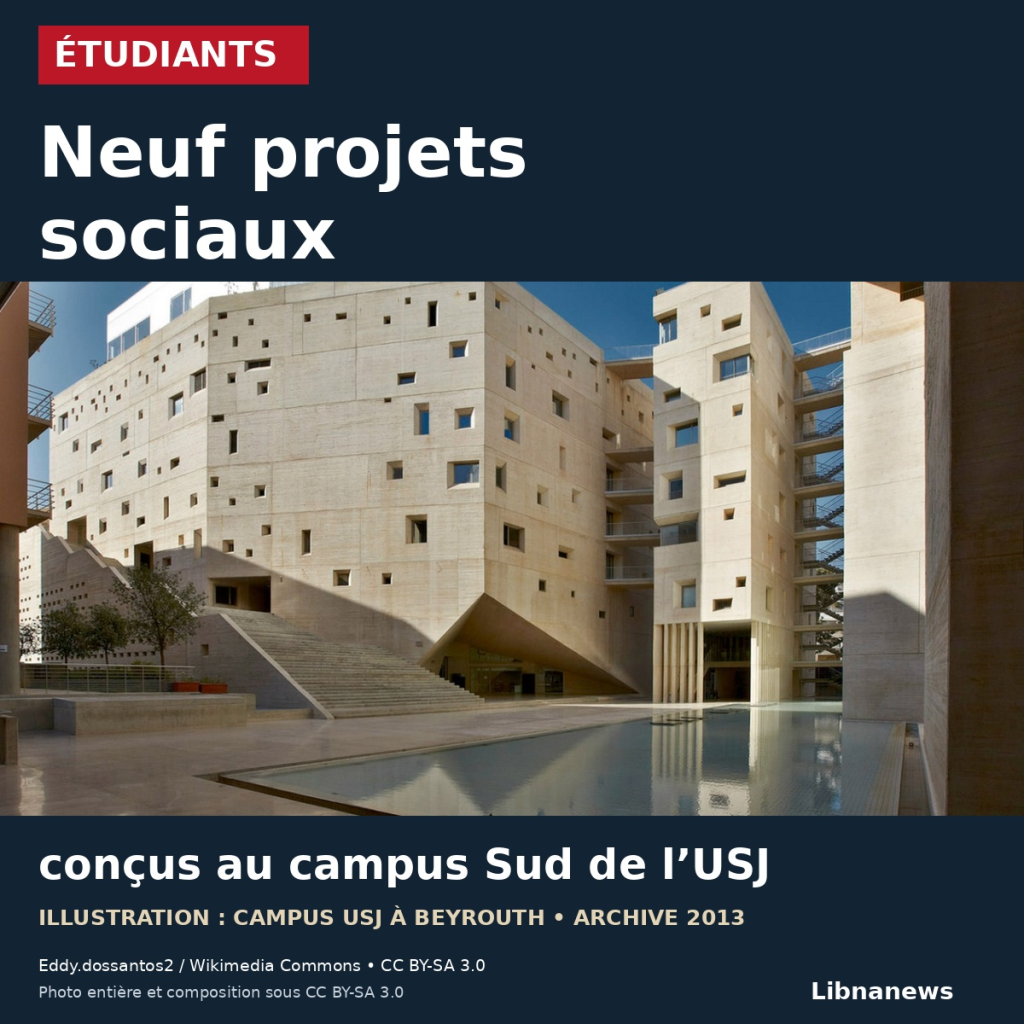
Sixty-seven students from the South Lebanon campus of Saint Joseph University (USJ) presented nine social projects. The university reported on this training on 10 November 2026. In Bramieh, near Saida, the teams worked on concrete needs: affordable food, inclusion, community services and re-employment.
The programme is part of the European SE.TC project on social entrepreneurship in times of crisis. Dina Sidani, campus director, supervised the training. Participants included management, engineering, data science and special education.
Social projects rooted in daily needs
Among the proposals, Tima Aoun focused on food waste and access to cheaper meals. With Anywear, Nicole Constantine proposes to combine sale, rental and gift of used clothing. Dabbirli, led by Rafka Antoun, aims to bring residents and local home service providers closer together.
Angela Akoum presented Next Level City, focusing on inclusive sport for children with special needs. These initiatives were presented after a training course. This assessment is not an announcement of the opening of nine services to the public.
Also train teachers
The SE.TC scheme is not limited to a competition of ideas. Funded by Erasmus+, it combines Lebanese and European institutions to develop the teaching of social entrepreneurship. Partners include USJ, Lebanese University and University of Wisdom, as well as institutions in Italy and Ireland.
In a review published on 15 January 2025, La Wisdom described a first survey of 305 students and 54 teachers from four Lebanese universities. The work identified two barriers: insufficient access to resources and lack of institutional support. Teachers also called for better teaching methods and curricula.
This preparatory stage should guide subsequent training and workshops. The announced goal was to equip the teachers to accompany the students, and then to help them turn an identified social need into a feasible proposal.
Implementation partners
The closing meeting also brought the teams into contact with local community and economic actors. The challenge now is to find partnerships to test and develop their proposals.





Comments