

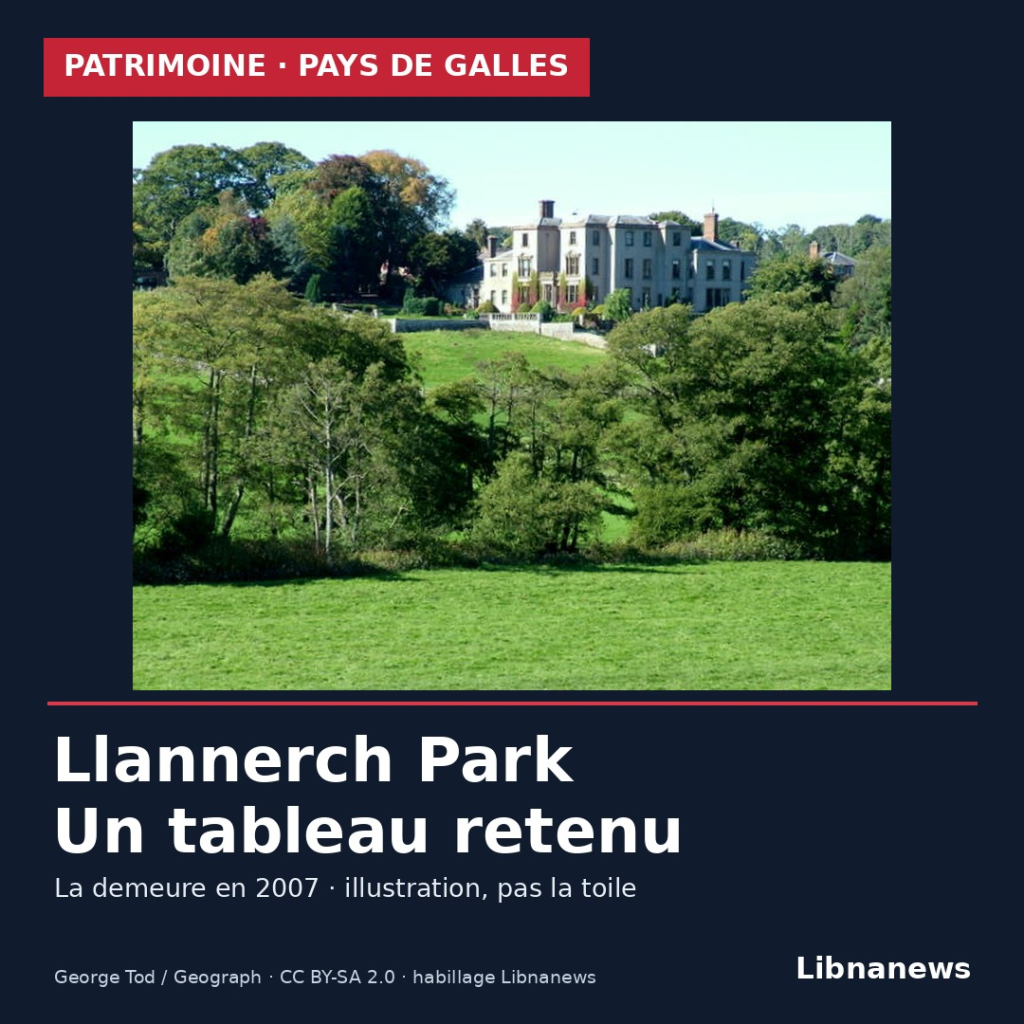
The UK has deferred the authorisation to export oil on canvas from Llannerch Park, Wales. The measure, announced on November 20, gives a buyer time to raise funds to keep in the country a rare testimony from the 17th century gardensecentury. The painting remains in private hands.
The British Department of Culture has decided to temporarily suspend consideration of the export licence application for a view of Llannerch Park, Denbighshire. The first period runs until 19 February 2027 inclusive. It allows a museum, other institution or patron to show up so that the canvas can remain in the UK. The decision does not constitute a public acquisition or a definitive ban on exit.
A window to raise £550,000
The recommended price is £550,000, plus £11,000 in VAT. At the end of the first period, the owner has 15 working days to examine the offers. A second four-month period would begin if an option agreement was signed. The £550,000 is therefore the reference amount of the procedure, not an amount already paid or an appropriation made by the State.
The Minister for Heritage, Baroness Twycross, followed the opinion of the British Committee which examined applications for the export of works of art and cultural property. The committee believes that the canvas has an important link to the history of the country and is of particular interest in the study of gardens and landscape. He advises the government; he does not buy the table. The Ministry states that the work remained in the family that ordered it before its auction in London in December 2014.
The plan of a garden with few traces left
The work, an oil on canvas of 1.60 meters by 2.32 meters, is dated 1662 by the ministry. Its author is not identified. The overhanging view makes the layout of the terraces around the house legible. The Welsh Register of Heritage describes the ancient gardens of Mutton Davies, built in the 1660s after his journey on the continent: several enclosed spaces, plantations, statues, ponds and water games. There are few traces of this composition, which was reworked at the end of the 18th centuryeor at the beginning of the XIXecentury.
The register lists two very close oil paintings representing the estate. One belongs to the Yale Center for British Art; The other version is the subject of the British measure. This distinction counts: the table from which London deferred export has its own origin, while the canvas kept in Yale documents the same garden without being affected by the decision.





Comments