

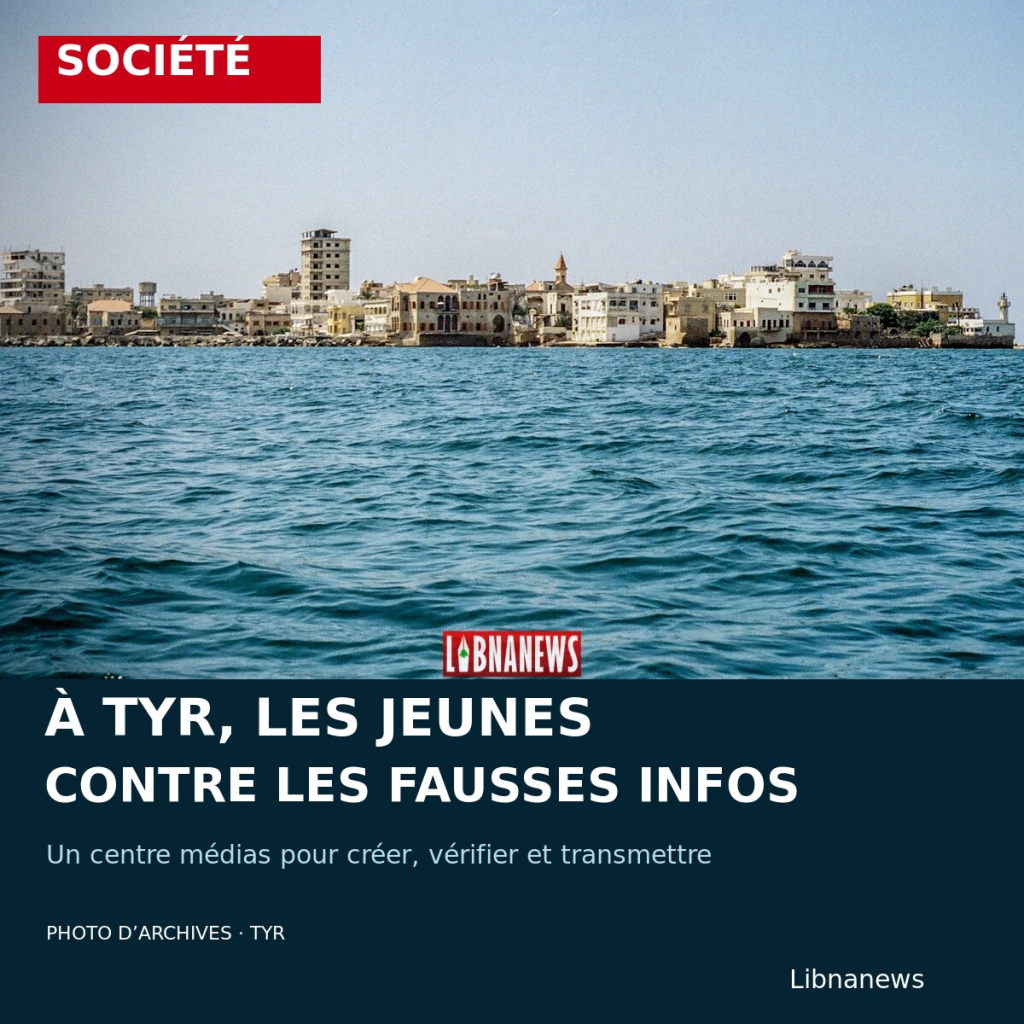
In Tyre, a media centre and a digital platform are now extending the training of young people from South Lebanon in information verification. Inaugurated on 30 October at the Imam Sadr Foundation, these two tools must enable them to produce content and transmit their skills in their communes. UNESCO and UNIFIL reported on two years of work: over 900 young people affected in more than 115 cities and villages.
In Tyre, a media centre designed for young people
The Imam Sadr Foundation site hosts content creation, audio-visual narrative and digital production. The Digital Citizen Hub gives it an online extension, dedicated to youth achievements and learning. Students, content creators, journalists and community representatives participated in the various phases of the program.
The project also prepared some participants to train others. The aim is to disseminate skills beyond workshops through activities organized in local communities.
Podcasts to short videos
The specifications published by UNESCO on 8 September detail the intended uses of the studio. It includes video interviews, podcasts, social media publications and short vertical videos. Photography, sound and audio and video editing are also included in the program.
The equipment requested was intended to allow young people to work after initiation. UNESCO was looking for a facility that was simple to use, reliable and compatible with the various production tools. She preferred a functional studio rather than sophisticated material for television broadcasting.
This design combines two learnings: to check what is being received and to know how to make your own content. A recorded interview, a short report or a social media capsule become training materials.
Recognize an old TikTok alert
The testimonies gathered by UNESCO, published on 29 September, show how these skills fit into everyday life. Zeinab, a student in journalism and digital media, explains that she is checking her mother’s alerts about TikTok. Some prove to be false; Others are old, but circulate like news.
Intissar insists on pre-sharing verification and the risks of online violence and blackmail. She also learned to speak in front of a camera. Ali, engaged in a local association, said to pass on the achievements of the training around him. Roaa, for its part, refers to the use of evidence to support an assertion and the limitations of artificial intelligence in digital creation.
At this stage of the programme, UNESCO indicated that it had selected 83 participants from a group of over 300 young people for advanced sessions and training of trainers. The journey involved fact checking, critical thinking, speaking, cybersecurity and content creation.
A bilingual digital extension
Preparation of the platform had begun before the centre was opened. UNESCO’s call for proposals of 30 July included a website in Arabic and English, a content management system and a link with social networks.
The proposed scheme included training activities for young contributors. It also provided for 12 months of maintenance after launch, with problem correction, security updates and assistance. The centre in Tyre and its digital space must therefore extend the work of the participants after the completion of the training project.





Comments