

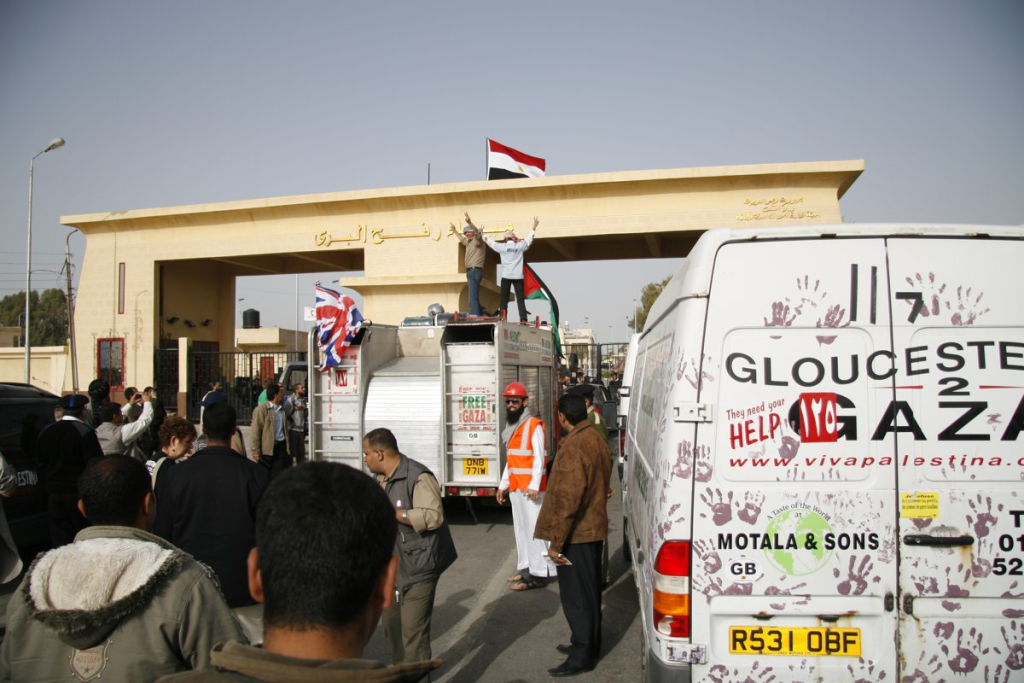
Egypt and Qatar continue to coordinate their de-escalation efforts, without announcing a new agreement for Gaza. While Cairo is working on the transition to the second phase of the ceasefire plan, humanitarian operations remain hampered. The latest review of the United Nations is a week-long measure of the gap between the supply of goods entered to and shipped.
Two mediators, several interlocutors
On 22 November, Egyptian Foreign Minister Badr Abdelatty met with Qatari Prime Minister Mohammed bin Abdelrahmane Al Thani. According to the Egyptian ministry, they discussed joint efforts to contain the escalation in the region. The report does not mention a timetable for Gaza or agreement on the modalities for the second phase.
More specific approaches to Gaza were made public on 13 November. Badr Abdelatty discussed with the European Union envoy Christophe Bigot the consolidation of the truce and the implementation of the next phase. In New York, Qatar, together with Jordan and the United Kingdom, requested immediate and unrestricted humanitarian access. The interlocutors differ, but the two approaches concern commitments that the mediators do not themselves apply.
What access data can control
From 16 to 23 November, the United Nations logistics group identified 527 United Nations trucks and partners registered to enter the Gaza Strip. According to the humanitarian bulletin of 26 November, 405 were discharged from the Israeli side of Kerem Shalom, 111 of whom arrived from Egypt. The figure of 405 is neither the Egyptian trucks alone nor the total aid which then reached the beneficiaries. Unloading at a crossing point and transport within Gaza are two different stages.
In a joint statement issued in August, Doha, Cairo and Ankara called on Israel to honour its commitments and to leave humanitarian and medical aid unimpeded. The text indicated that Hamas and the other Palestinian factions had announced that they would accept a road map for the continuation of the truce. It did not see the implementation of the corresponding measures.
The announcements of the mediators and the November 26 bulletin thus document two distinct realities: continuing diplomatic contacts, and deliveries that remain subject to access restrictions. No joint timetable published this week sets a date for the implementation of the second phase.





Comments