

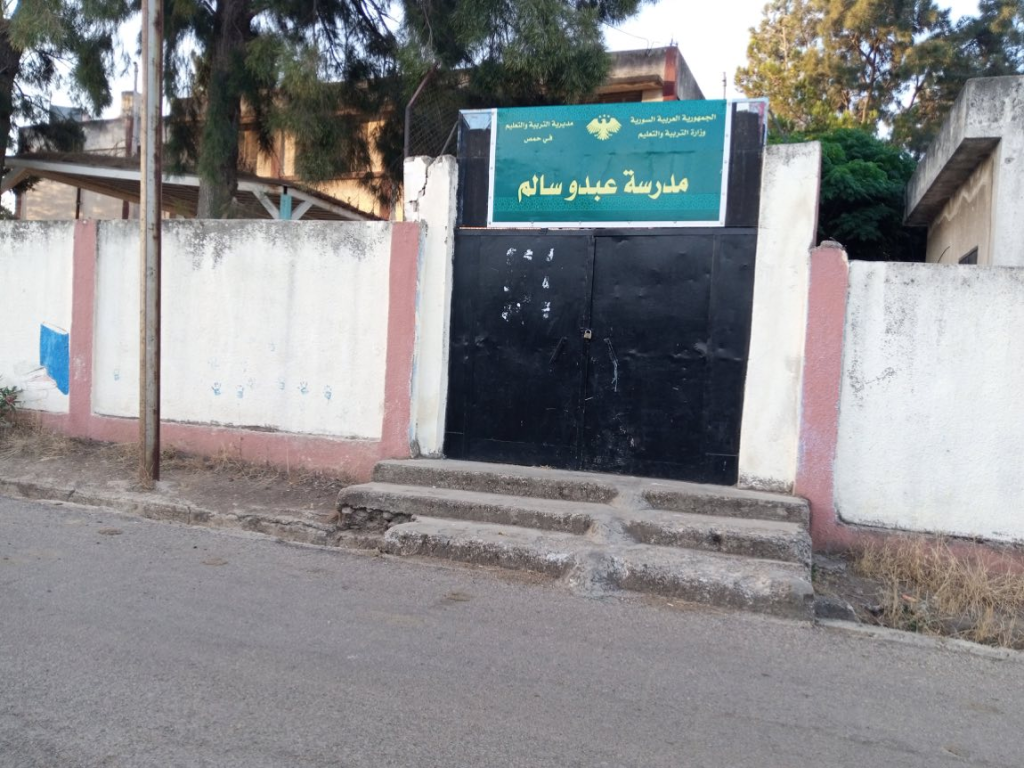
In Al-Bahluniyah, in the Homs countryside, the Al-Razi settlement increased from approximately 260 to 338 students after its renovation. Some have returned from Lebanon. At the Syrian level, however, UNICEF estimates that 2.7 million children do not attend school and that approximately 8,000 institutions are not functioning. The return of families increases needs where services are still fragile.
In Homs, additional places in a restored building
The Al-Razi school welcomes students from grades 7 to 12. Water infiltration, earthquake damage and power outages interfered with the flow. In its report of 9 November, UNICEF reported that the project covered roof sealing, room repairs, furniture and sanitary facilities. Ramps facilitate access and solar panels make power supply more regular.
The increase in enrolment gives a local order of magnitude: almost 80 more students. UNICEF reports that the school welcomes children from abroad, including Lebanon, and other Syrians. It does not break down new entries between these groups. The figures therefore do not allow us to measure how many places have been required for returns from Lebanon alone.
Open rooms, then accompany students
In its July-September review, UNICEF estimates that approximately 8,000 institutions are not functioning. This figure does not mean that 8,000 schools were destroyed. Some are unavailable for other reasons; Still others work but cannot absorb all requests. For families with precarious incomes, enrolment also does not rule out the risk of the child leaving school to work.
UNICEF reports that it has improved the learning conditions of nearly 12,900 children this quarter by renovating facilities or school spaces. Approximately 60,100 have benefited from educational activities outside the regular curriculum, including catch-up and transition programmes. These are assisted staff, not a re-inscription count. The organization also offered support in Arabic and accelerated courses for returning children.
What returns do not measure
The Office of the United Nations High Commissioner for Refugees recorded approximately 362,100 Syrian refugee returns in the first half of 2026, including 197 000 from Lebanon. This statistics includes persons of all ages and does not cover returns of internally displaced persons. The Agency stresses that some of the recent departures respond to difficult circumstances, including the conflict in southern Lebanon.
The national balance sheet does not show the number of children returning from Lebanon who have returned to their places, nor how many are still attending after the start of school. Al-Razi provides a point of comparison: the school can tell how many students are enrolled before and after work. In order to assess the effects of returns on school attendance, the same follow-up should be available in the other receiving municipalities and distinguish between enrolment and actual attendance.





Comments