

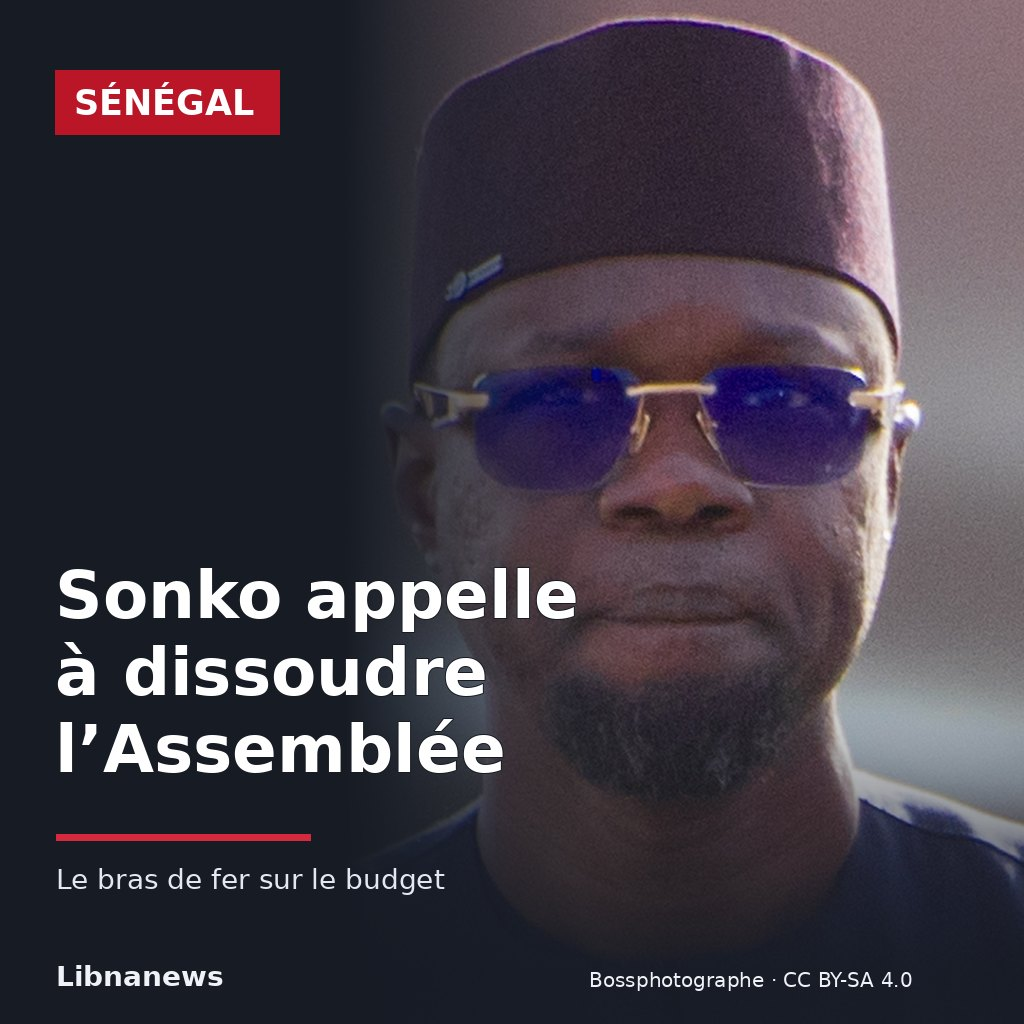
The President of the Senegalese National Assembly, Ousmane Sonko, invited the Head of State, Bassirou Diomaye Faye, to dissolve the Chamber from 2 December. In an address to Pastef activists on Thursday evening, November 26, the former Prime Minister said that if he had the power to do so, he would sign a decree at the beginning of that day. The call came the day after a vote by Members asking Faye to withdraw the decree which brought into force the amending budget of 2026 after it was rejected by Parliament.
Why Sonko quotes December 2
The date corresponds to the second anniversary of the installation of the office of the fifteenth legislature. The Senegalese elected the deputies on 17 November 2024, but it was on 2 December that the Assembly elected its president and the members of its Bureau. The Constitutional Council had, for the previous legislature, chosen the date of installation of the final bureau, not the date of the election, as the starting point for the legislature.
Article 87 of the Constitution prohibits dissolution during the first two years of a legislature. After this period, the President of the Republic may dissolve by decree after obtaining the advice of the Prime Minister and the President of the Assembly. Sonko could be consulted as such, but Faye would be responsible for the decision. The date given by Sonko is therefore neither a deadline imposed on the Head of State nor a summons of voters.
If an order were made, it would also set the date for legislation. Voting should take place between 60 and 90 days after the decree is issued. In the meantime, the dissolved Assembly could no longer meet; the term of office of the MPs would terminate the proclamation of the results of the new election.
The budgetary decree which opposes the palace to the deputies
The Finance Amendment Bill was introduced on 18 September 2026. On 3 November, MEPs adopted a preliminary question, a procedure which ended the discussion of the text. On 19 November Faye issued Decree No. 2026-2416 to bring the project into force. On 25 November, in the Council of Ministers, it asked the Government to take the necessary measures without delay to implement the programmes included in the amending budget. In particular, he stressed the funding of the agricultural marketing year and the youth employment programme.
On the same day, the National Assembly adopted a resolution calling for the withdrawal of the decree. For the parliamentary majority, the provision in Article 68 authorizing the entry into force by decree of a finance bill when it has not been finally voted within sixty days does not make it possible to ignore an explicit rejection. The resolution voted expresses Parliament’s position; it does not constitute a judicial annulment of the decree. In particular, the text provides that revenue, expenditure and borrowing carried out solely on the basis of that act shall be examined when the accounts for the financial year 2026 are audited.
A return to the ballot box that would bring the majority of Pastef into play
Pastef won 130 of the 165 seats in the legislative elections of November 2024. This majority remained at the centre of the balance of power after Sonko’s departure from the government in May 2026 and his election to the presidency of the Assembly. A dissolution would force the party to defend its seats in an early election, when it now has the necessary votes to reject a budget text. Soenko asked his activists to prepare for elections in 2027. On Saturday morning, 28 November, no decree of dissolution or timetable for early legislative action had been announced by the Presidency.





Comments