

A diplomatic announcement, a new majority in Congress or a limited trade authorization do not remove US sanctions against Iran. Their operation is based on several texts and decisions. To understand what can really change, we must distinguish between the law, the measures taken by the executive and the permissions granted for certain operations.
The documents published by the Office of Foreign Assets Control, OFAC, in August and September 2026 show this difference. Some authorizations have been suspended, while humanitarian mechanisms remain listed. This decryption describes these dated provisions and the framework presented by the Congressional Research Service on 3 November. It does not announce any further relief or general permission to trade.
Several foundations for the same restriction
The United States system combines laws passed in Congress, presidential decrees and administrative regulations. The SRC distinguishes sanctions directly against certain persons or activities from secondary sanctions, designed to deter third parties from dealing with the main targets.
A person or company may have several legal bases. Removing a designation does not necessarily mean that all other restrictions disappear. The effect of an advertisement should be assessed on the basis of the modified text, the actors involved and the operations actually authorised.
Not all 2026 suspensions are identical
In its updated notice on 8 September, OFAC details a first series of suspensions which entered into force on 24 August. It covers, in particular, certain educational activities, certain personal non-commercial transfers, conference services, as well as sports and university exchanges covered by general licences F and G.
A general licence allows, within its scope, an activity otherwise prohibited without requesting an individual authorization. Its suspension removes this possibility; It does not necessarily describe all activities in the same sector.
The notice distinguishes a second set, suspended on 8 September: certain authorizations or policies relating to overflights, air safety, refuelling and emergency repairs, as well as the J-1 licence for certain temporary stays of civilian aircraft. Transitional arrangements BB and DD provided for an orderly cessation period until 8 and 23 September respectively, subject to conditions. These deadlines are not permanent authorizations.
Individual application is not a guarantee
The policy statement of 10 September establishes a presumption of refusal for applications for licences relating to operations prohibited by Iranian rules and other relevant authorities. The OFAC states that specific licences may only be issued when required by law or in exceptional and urgent circumstances, including when there is a risk to life, physical integrity or environmental safety.
The examination announced is individual, in consultation with the State Department. This procedure should not be confused with a commercial opening: filing an application does not constitute authorisation.
Humanitarian arrangements also have their limitations
General Licence 8A, dated 26 October 2020 and still listed on the Iranian programme page consulted, deals with certain humanitarian transactions involving the Iranian central bank, the national oil company or entities owned by the latter at least 50%. It refers to specific provisions concerning authorized transactions and payments.
The text retains exclusions and does not allow transactions prohibited by other applicable rules. The « humanitarian » label therefore does not replace the review of property, payment and stakeholders. This distinction describes the law cited; It does not measure the actual access of populations to medicines or food.
What Congress Can Change
The CRS recalls that certain legislative provisions subject the lifting or derogation to presidential conditions and certifications. Its status report of 3 November also indicates that Act P.L.119-111 extended the expiry of the Iran Sanctions Act from 2026 to 2031.
A possible nuclear agreement must be distinguished from its legal execution. According to the CRS, the INARA Act provides for a thirty-day parliamentary review period during which the President may not grant relief from the legislative sanctions covered by this scheme. A negotiation can prepare changes; it does not prove that they are already applicable.
To follow an announcement about Iran, three questions are therefore essential: which authority makes the decision, which text changes and when? It is at this level that relaxation or hardening occurs, rather than from a single political signal.
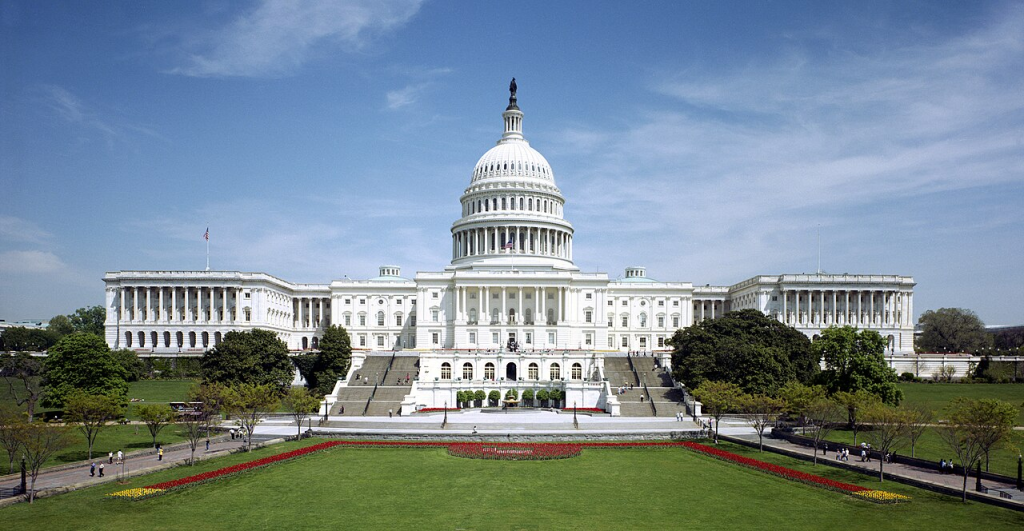
Generic institutional illustration: American Capitol in Washington in 1997. Architect of the Capitol, a public domain in the United States, via Wikimedia Commons and Libnanews archives. This photograph is not a decision on the sanctions of 2026.





Comments