

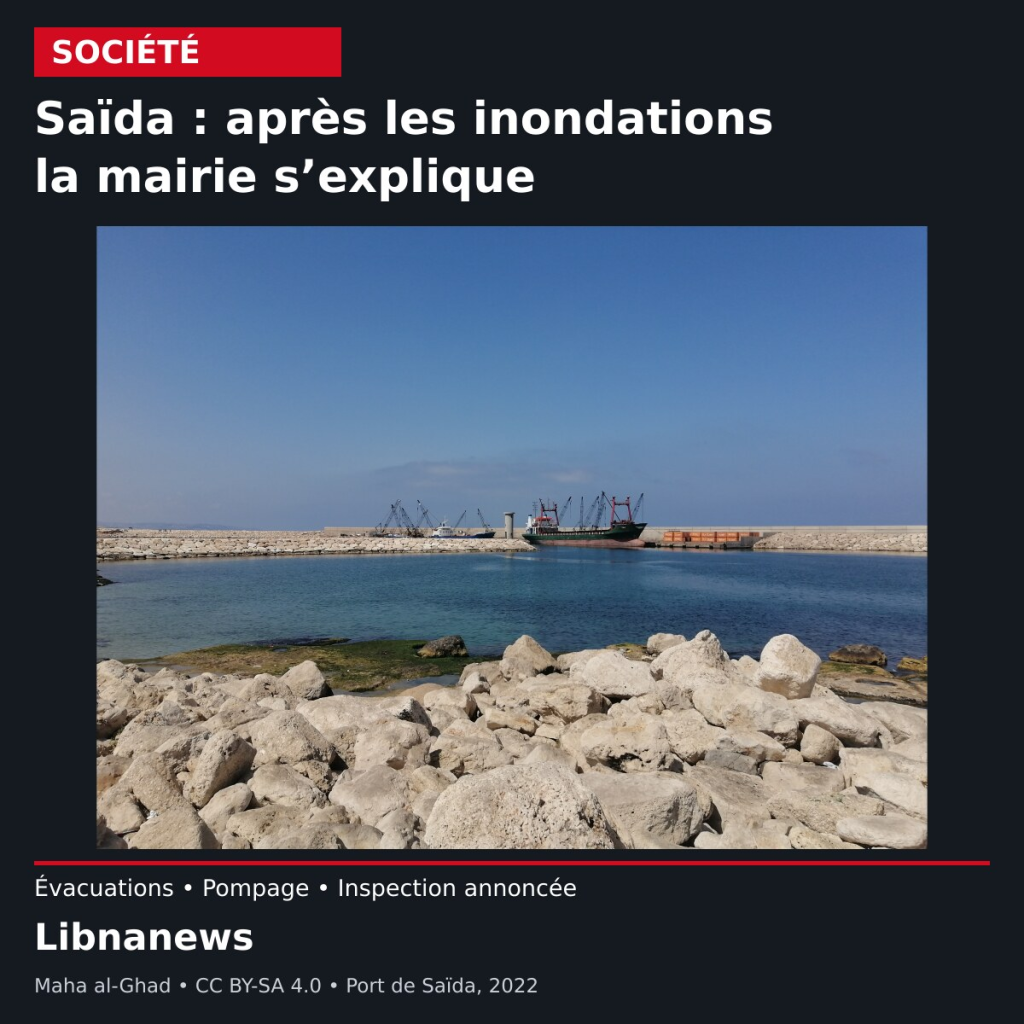
The municipality of Saida apologizes to the inhabitants and traders affected by the floods on Saturday, November 7. In a statement relayed Sunday, November 8, 2026, she describes two difficulties on the evacuation network. It calls into question the continued obstacles to a maritime outlet and the shutdown of pumps in Siniq. These explanations remain those of the municipality. It announces an urgent inspection with the South Lebanon Water Establishment before the next rains.
Water has entered houses and shops, disrupting daily life and economic activity in several sectors. Neither the buildings affected nor the amount of losses were reported. Nor does it provide compensation. The town hall acknowledges, however, the damage suffered, despite the preparations it claims to have carried out during the last two months.
Floods in Saida: the sectors concerned
The perimeter described goes from Qayaa to Bqosta and joins part of the coastal highway. The municipality cites the outskirts of the Al-Alam area and the extension to the Shawarma Al-Mahatta restaurant. She claims that most other streets in the city did not experience unusual accumulation of water.
This distinction limits the scope of his diagnosis. The town hall describes a set of points related to evacuations and sewerage. It does not report a general submersion of Saida. However, it does not provide precipitation surveys or flow measurement to quantify the episode.
The communiqué insists on preventive operations. The teams reportedly cleaned all the ducts under this preparation before the rains. The town hall therefore considers that the incidents cannot be reduced to a lack of curing of the openings visible in the streets. It details what would have prevented water from flowing further into the network.
Obstacles to the exit to the sea
The first cause is seasonal installations at a sea outlet. According to the municipality, the South Lebanon Water Establishment places stones and embankment bags there during the summer. These barriers are used to limit odours and discharges of wastewater to the seafront.
The town hall explains this by crossing, in certain points, stormwater and wastewater pipes. Barriers must be removed at the beginning of the rainy season. According to his account, this operation had not taken place at the start of the current season.
The municipality claims that its emergency teams removed the obstacles during the floods on Saturday. She explained that their presence at the eyes of the visitors was in response to this intervention. She thus contests the idea that they would only have started, during the storm, a cleaning that should have occurred before.
This explanation commits the municipal reading of the incident. It alone does not constitute independent expertise on the respective responsibilities of stakeholders. The release does not specify who was to verify the removal of the facilities or when the verification was planned.
The pumping in Siniq also involved
The second difficulty lies near Al-Alam. This point communicates with the main line that transports wastewater to the Siniq pumping station. The municipality states that this facility is dependent on the South Lebanon Water Establishment.
According to her, the pumps were not in service. Their arrest would have caused a reflux to the neighbouring points and upstream. The town hall recalls that the collector concerned is primarily intended to transport waste water. The presence of rainwater in common parts of the network is therefore central to its explanation.
The text does not give the cause for stopping the pumps. It does not allow it to be attributed to an electrical failure, a mechanical defect or another operating problem. It also does not announce that they will be reinstated. The current state of pumping remains a point to be clarified in the technical monitoring.
The municipality states that it contacted the public institution about these difficulties. While placing both causes outside her jurisdiction, she ensures that she does not escape her responsibility. She also pointed out that the problem was at the beginning of each winter.
An inspection announced before the next rains
At other points in the cornice, the teams removed waste recently accumulated in the evacuations. The town hall evokes the rubbish thrown by seafront users and those trained from the streets. It distinguishes these local obstructions from the two main causes for flooded areas.
Firefighters also cleared water deposits in front of houses and shops. This work concerns the immediate aftermath of the floods. They do not replace the checks announced on the evacuation route.
The Town Hall now plans a field inspection in direct coordination with the South Lebanon Water Establishment. It must start with the outlet of the Al-Alam sector. The announced goal is to remove obstacles before the next rain wave.
The municipality also plans to continue coordination to separate stormwater from wastewater in the common pipelines. No detailed schedule, budget or schedule of work shall accompany this announcement. The next expected element is the result of the inspection and the list of the operations actually carried out on the water outlets.





Comments