

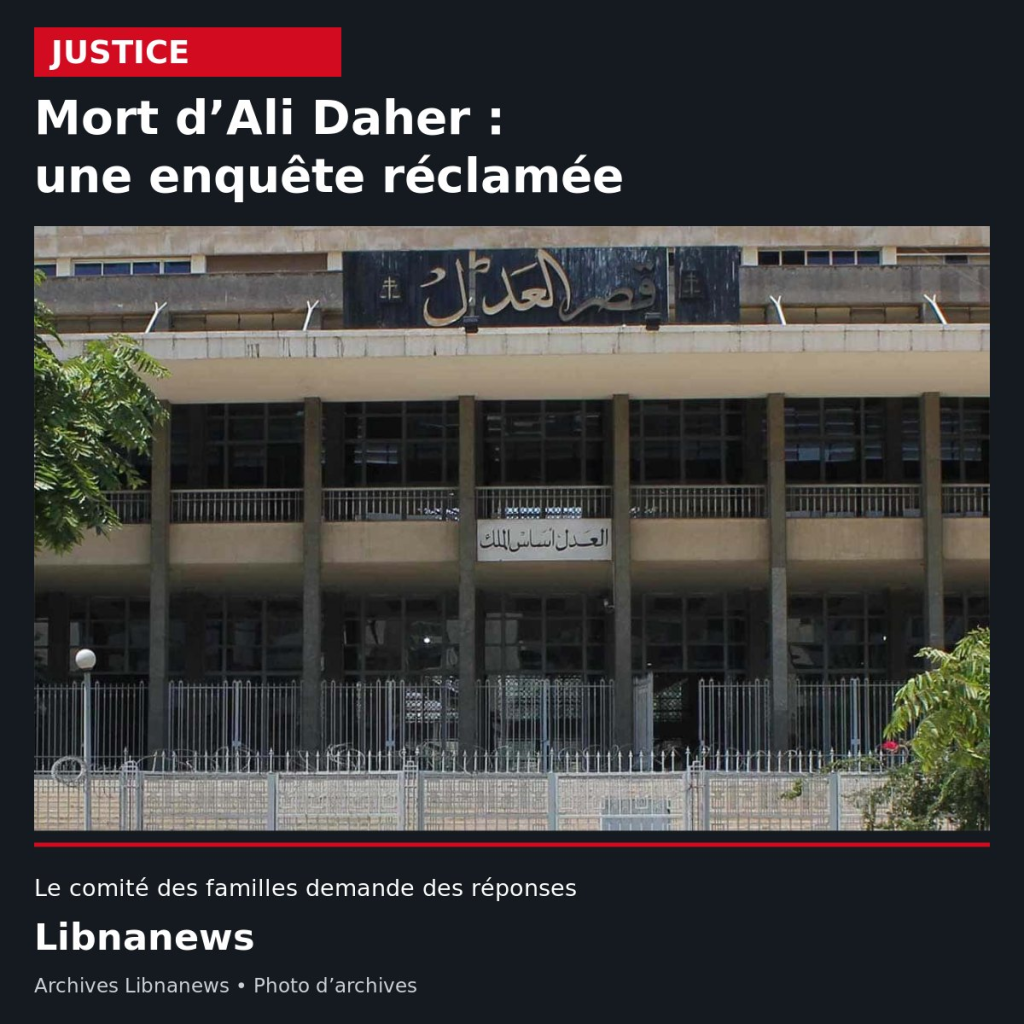
The death of 27-year-old Ali Daher led the committee of prisoners’ families to request an investigation into his care and the steps that would allow his release. The death was reported on Friday, November 6. According to the public information, the young man had suffered a health problem during his detention at the Choueifat post, prior to his transfer to an Akkar hospital.
The committee states that he was to be released on the following Monday, November 9, under amnesty. This version raises questions about the administrative schedule. It alone is not sufficient to establish the medical cause of death or the responsibility of a person or institution.
Committee asks to check timetable
In its statement, the committee stated that Ali Daher had been detained for more than a year. He claims that the exit formalities had already been more than 20 days late due to administrative difficulties and the increasing number of documents requested.
These statements must be distinguished from a verified judicial chronology. The individual decision concerning the release, its date of notification and the acts still expected do not appear in the public documents consulted. It is therefore not possible to determine from the only release when a release was legally executable.
The committee questions the delay in issuing and transmitting decisions. It calls for consideration of possible responsibilities. This request is not the result of an inquiry: it expresses the position of the families and the points they wish to see clarified.
Medical care still to be documented
A second chronology is the health problem, hospital transfer and death. The available information does not specify all hours of surgery, examinations performed or medical findings. They do not allow the exact conditions of the assistance received to be restored.
Linking the alleged delay of release and death to the same narrative does not demonstrate a causal link. An investigation should examine the medical facts and administrative decisions on their own exhibits, and then prepare any reports. Affirming now that the delay caused the death would exceed what is known.
A request for an investigation, not conclusions reached
The Committee calls for an immediate investigation into the circumstances of the death and any deficiencies that may be identified. His approach also includes the enforcement of release measures in other amnesty cases. The case of Ali Daher, however, does not allow the legal situation of all detainees to be determined.
At this stage, no medical and judicial conclusions or detailed replies from the competent authorities appear in the information consulted. Their publication would be necessary to go beyond the reported versions and establish responsibilities, if any.
The next useful information therefore concerns the decision to release, its movement between services and medical care. The committee’s request remains to know what happened. The answer assumes a documented timeline and the results of the requested investigation.





Comments