

Rwanda and five European countries announced on 16 November 2026 their intention to set up a centre for people without right to stay in the European Union. Denmark, Germany, Austria, the Netherlands and Greece have first transfers in 2027. The announcement opens an operational negotiation: it does not mean that a centre is already functioning or that the conditions for each transfer are fixed.
The Danish calendar specifies this distinction. Copenhagen hopes to present a concrete agreement at the beginning of 2027 and then be ready to make the first transfers before the end of that year. The political commitments of 16 November and the expected implementation agreement are therefore two different stages.
A return centre in Rwanda, not an asylum procedure
The scheme described in the common sheet covers third-country nationals who are subject to an enforceable return or removal order. Their return to their country of origin could not take place quickly. Governments refer in particular to insufficient cooperation between that country or the person concerned.
The return centre in Rwanda would not be responsible for examining asylum applications. The relevant procedures should first have been conducted in the European State. The project concerns persons who would not be entitled to asylum, international protection or other residence permits. It is thus distinguished from a transfer to have an application still pending processed elsewhere.
This distinction defines the target population; it does not automatically resolve the situation of each person. The five states affirm that transfers must respect national, European and international law. Their file excludes a removal from the home exposing someone to a real risk of inhuman or degrading treatment.
Men alone in the first phase
The Netherlands provides additional clarification: the first phase must concern only men alone. Unaccompanied minors would be excluded. For its own participation, The Hague intends to favour people from countries in the same region as Rwanda.
This Dutch priority is not presented as an identical general rule for the five partners. Nor does it provide a list of eligible nationalities. At this stage, the announcements therefore do not allow for a timetable for transfers by country of origin.
The Common Fact Sheet also calls for a particularly careful examination before any transfer of vulnerable persons. This principle will have to be translated into practical terms in the selection of cases and the protection of the persons concerned. The document does not describe a complete medical protocol.
A temporary stay in the center, a possible installation
The Dutch government describes an open and temporary structure, followed by the possibility of integration into Rwandan society. Transferees would receive a right of residence and access to education, the labour market, care and justice.
The temporary nature announced therefore concerns accommodation in the centre, not necessarily the presence in Rwanda. A sustainable facility is one of the intended outcomes. Voluntary departure to the country of origin would also remain possible. These two options should not be confused with a right to return to the European Union.
The five European countries announce that they will finance temporary reception. No total cost, guaranteed volume of persons transferred or maximum common duration of accommodation can be found in the official communications consulted. Presenting these parameters as already set would be premature.
The role of international organizations remains to be clarified
Copenhagen indicated that it wanted to work with the International Organization for Migration to assist transferees at the request of Rwanda. The Office of the United Nations High Commissioner for Refugees should advise on international obligations. The European Commission acts as an observer in the preparation of the scheme.
These announced functions do not mean that international organizations will administer the centre or approve each transfer. The European Migration Network stresses that practical arrangements remain under construction and distinguishes between governments’ intentions and their implementation.
The next step announced is the negotiation of the concrete agreement. It must specify the reception conditions, the responsibilities of the partners and the guarantees effectively accessible to the transferees. The 2027 target remains a political and operational timetable for the time being.
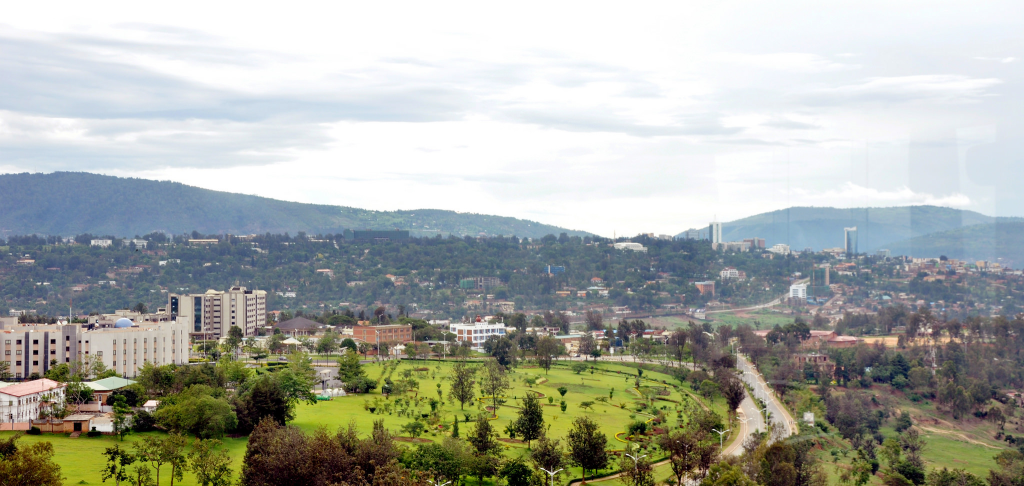
Archive photo: Kigali since Kimihurura, January 24, 2018. This image does not represent the projected centre.Honeybarger / Wikimedia Commons,CC BY-SA 4.0. Image not modified.






Comments