

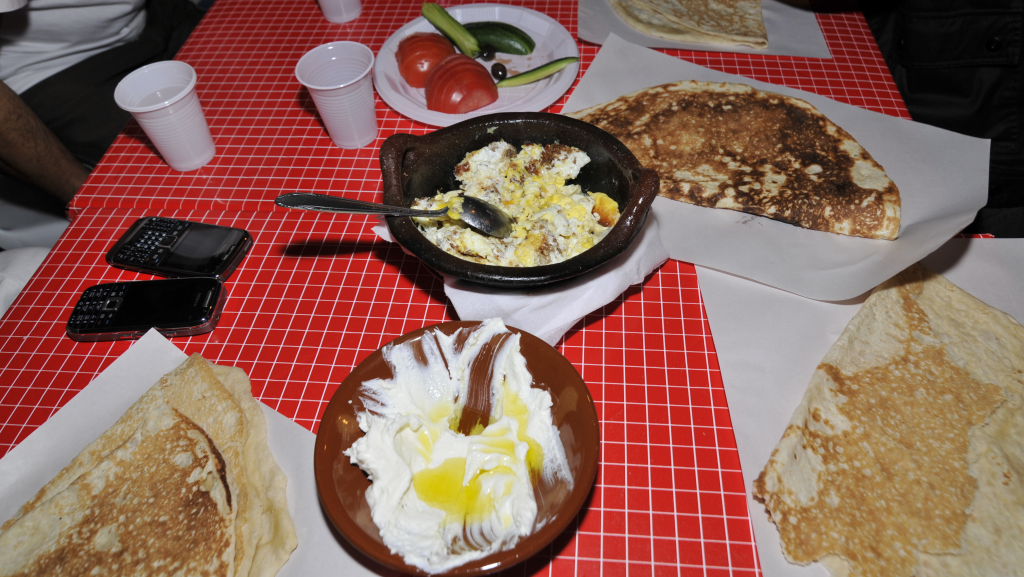
Qawarma is not a jar of candied meat. In Lebanese cuisine, this preparation accompanies the eggs as well as the hummus, the kishk or some variations of mountain dishes. Meat, usually lamb, cooked in animal fat.
Writes also awarma or kawarma, its name crosses several culinary repertoires. To understand its place in Lebanon, the examples of Western Bekaa and Chouf are particularly telling: they show how a winter supply enters cereal, legume and dairy recipes.
The qawarma, a provision before being a garnish
The qawarma belongs to the moonh, all provisions made for the following months. Before the generalization of the refrigerator, mountain kitchens had to deal with winter and difficult travel. Transforming food reduced dependence on fresh produce.
The qawarma follows this logic. The meat could be chopped or cut into pieces. The earth containers belong to the memory of this preparation, while the glass jars appear in his contemporary presentations. These elements describe a heritage practice, not a method of conservation to be reproduced without caution.
There is no specific date of birth or village in the documents consulted to which his invention is attributed. The presence of qawarma in several regions also makes it impossible to define a single recipe. The proportions, choice of meat and culinary uses differ according to the preparations.
Winter taboule in Bekaa and Chouf
One of the best documented uses surprises those who only associate taboulé with parsley and tomato. In the western Bekaa and the Chouf, a winter version brings together large bulgur, chickpeas, onions and qawarma. It serves hot with cooked cabbage leaves.
The Food Heritage Foundation describes this preparation as a response to the season when summer taboo vegetables are less available. The dried mint brings the vegetable aroma. Bugour and chickpeas form the base, while qawarma introduces the meat component.
From yogurt to eggs, several paths to the table
Chouf offers another example with some yogurt kebbe preparations. qawarma can be added to enrich the dish. It should not be confused with the meat incorporated in the bulgur mixture which forms the pellets: it intervenes here in the accompaniment.
The eggs in qawarma, often referred to as bayd awarma, are a more direct association. Confite meat joins the eggs in the preparation. Other uses integrate with kishk or place it on the hummus. The same reserve can participate in several meals, with very different bases.
This diversity explains why describing qawarma only as a can would be incomplete. His culinary interest also lies in what he transforms around him: eggs, a purée of chickpeas, a cereal dish or a yogurt preparation. It is these associations that circulate the tradition from one kitchen to another.
A tradition that also travels outside Lebanon
A contemporary example appears in the collective revenue book 2026 at the Dashew Center at the University of California in Los Angeles. Among his international community’s contributions is a houmous to l’awarma presented by Mark Muawad for Lebanon.
The recipe describes a candied meat garnish deposited on the mashed chickpeas. She uses beef, which reminds us that not all contemporary versions rely on lamb. The paper presents contributions from students, visiting researchers and staff as part of International Education Week.
This case does not measure the spread of the dish throughout the diaspora. It shows, more modestly, how family preparation can take place in an academic exchange. The recipe transmits a concrete use, without requiring the reader to already know the whole Lebanese moonh.
Heritage also goes through supply
The transmission does not only concern kitchen gestures. Interviews with Beirutins presented by the Food Heritage Foundation highlight the role of producers, relatives and markets in buying the moonh. Knowing where to look for a product and what season to get is part of that knowledge.
These observations do not represent all Lebanese families. However, they shed light on the link between the city and the countryside: some households buy the provisions already prepared, others buy the ingredients before they are processed. The price, confidence and time available count as much as the attachment to a recipe.
Mooneh is therefore not a tradition without material constraints. Prepare, purchase and transport the ingredients mobilize resources. Heritage stories are not sufficient to establish the current cost of a qawarma pot or its accessibility to all households.
At the table, however, this preparation continues to change shape according to its accompaniment. In the winter taboulé, it joins the bulgur and chickpeas. On the hummus, it becomes a garnish. With eggs, she composes another meal: so many documented ways to make one ingredient live.





Comments