

One hundred and fifty people drawn by lot began Friday 27 November in Paris to work on deficit, debt and spending priorities. The Convention organised by the Economic, Social and Environmental Council (EESC) is due to submit proposals in March 2027. She won’t vote the budget.
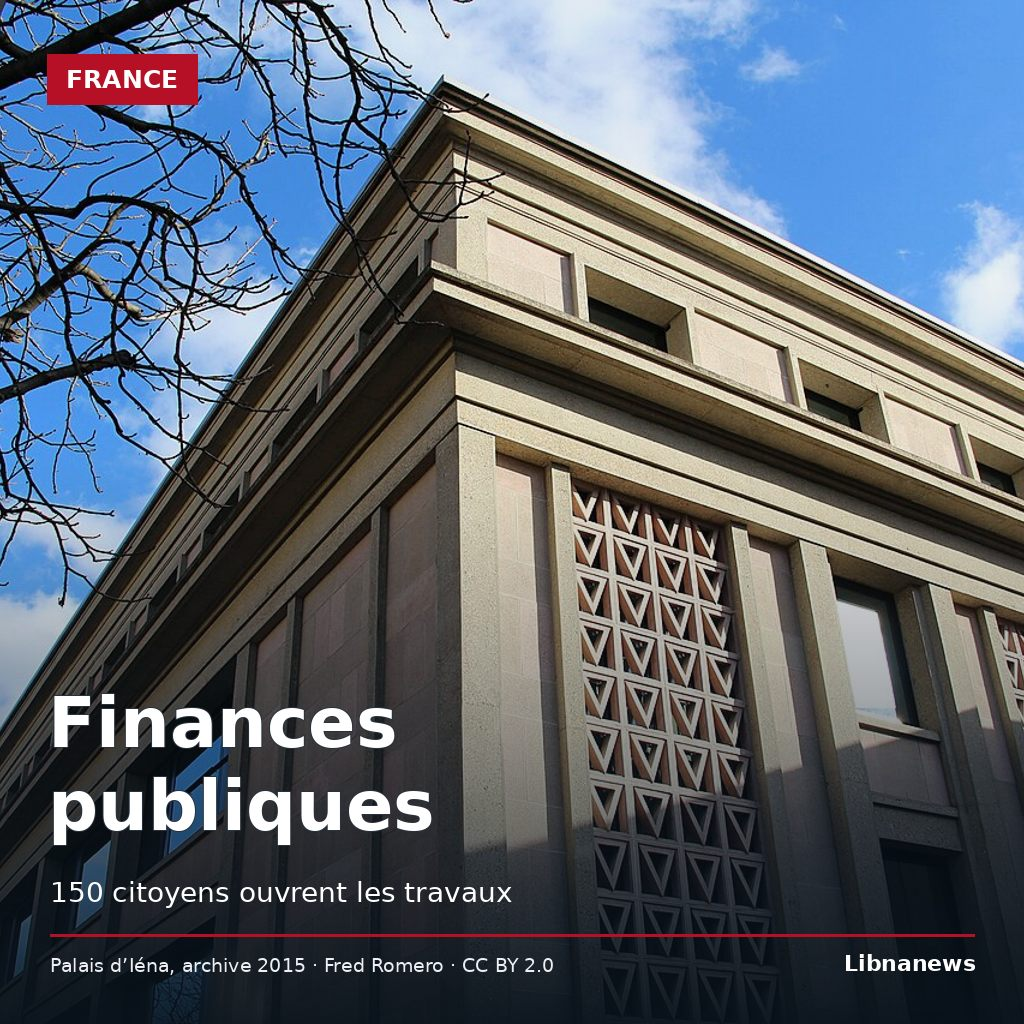
The first session takes place from 27 to 29 November at the Palais d’Iéna. The EESC asks the participants to consider which options would reduce the deficit and prepare for the future. The financial year covers the State, local and regional authorities and social security. It is therefore not limited to the spending of ministries or to the only government finance bill.
A first weekend to understand public accounts
The Chief Economist of the Treasury Directorate General, Dorothée Rouzet, is scheduled to open the hearings this Saturday at 2.30 p.m. Sunday at 11:15 a.m., the meeting on the scope of public finances will bring together former budget rapporteur-general Gilles Carrez, INSEE’s Managing Director Fabrice Lenglart, Social Security Director Pierre Pribile and Amélie Verdier’s Executive Director of Public Finance. Both hearings are announced live on EESC channels.
The first meetings focus on reading the accounts and the different administrations that make up them. The deficit is the negative balance of a financial year ; debt measures an outstanding amount. An improvement in the deficit does not necessarily mean an immediate reduction in debt. Citizens will be able to ask for insights and hear speakers who defend different positions. A 14-member governance committee organizes the work and selects stakeholders according to a requirement of pluralism.
Seven sessions until March
After this weekend, the 150 participants are scheduled to meet from 11 to 13 December, then twice in January and February, before a final session from 19 to 21 March 2027. The EESC plans first to provide information, then to examine several scenarios and finally to adopt the report. A platform also helps to contribute to reflection outside the group drawn by lot.
The timetable for work is different from that for the budgetary debate in Parliament. The conclusions will be proposals; They shall not determine the revenue or expenditure of the State without the decision of the competent institutions.





Comments