

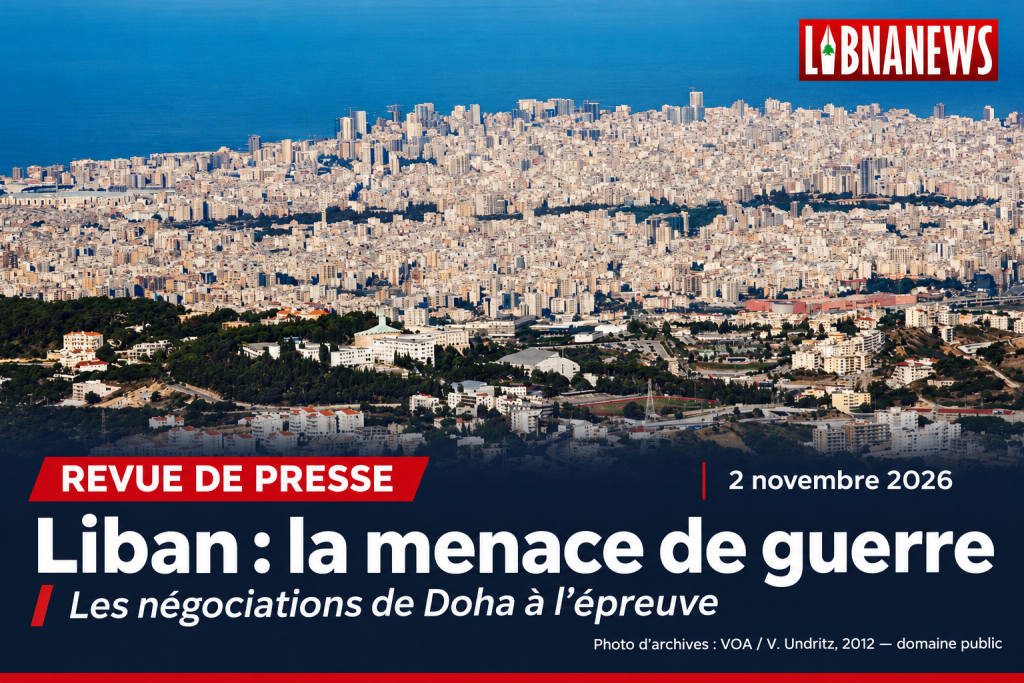
On the front page: negotiating under the threat of a new war
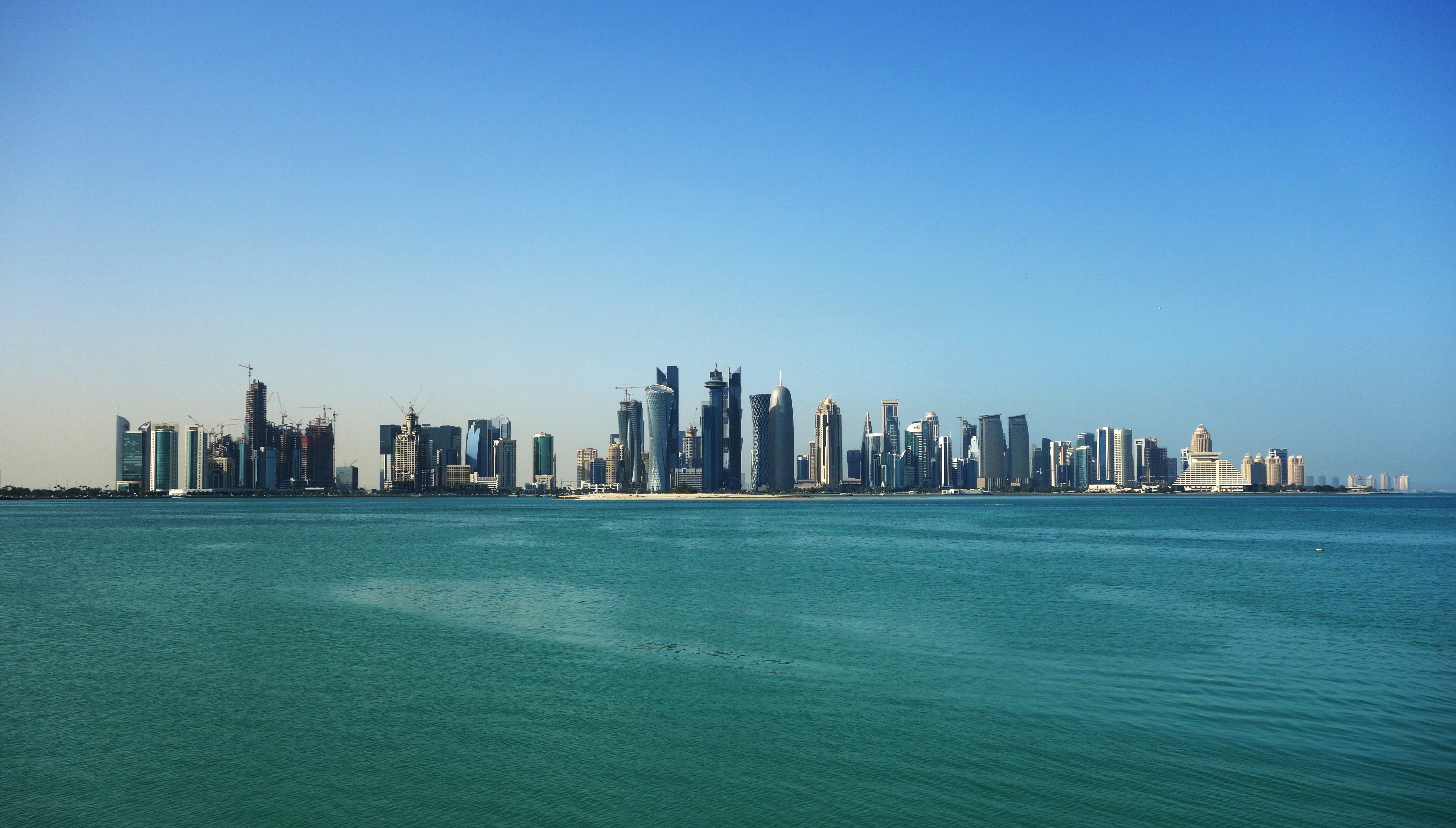
Doha in the centre of regional waiting
Negotiations are moving forward, military preparations are moving forward. This tension crosses the first pages of November 2, 2026, with a common concern: Lebanon could find itself drawn into a confrontation whose decisions are largely taken elsewhere. In Doha, Qatari mediators continue their discussions with Iranian representatives. At the same time, American and Israeli warnings keep open the prospect of a resumption of hostilities.
Al Akhbar gives this expectation the face of a war race. Its 2 November 2026 edition describes sustained discussions between the Iranian delegation and Qatari intermediaries, themselves in contact with Washington. The newspaper places the negotiations in a balance of power where each military threat also seeks to weigh on the concessions of the other party.
The optimism remains measured on the Iranian side. Abbas Araghchi announces progress, but no final outcome. Al Arabi Al Jadid of 2 November 2026 insists on this reservation: the American answers to the questions transmitted by Tehran have yet to determine the future. The Minister also states, in the words of Al Sharq Al Awsat, that the delegation’s presence in Doha does not mean the opening of direct negotiations with the United States.
The points discussed nevertheless give consistency to the exchanges. Al Binaa of 2 November 2026 evokes a two-day implementation formula around the reopening of the Strait of Ormuz. The daily combines measures concerning Iranian oil, frozen assets and maritime arrangements with Oman. The nuclear dossier would be examined in a second stage of the system presented.
This diplomatic progression is accompanied by a language of war. Al Quds Al Arabi, November 2, 2026, addresses Donald Trump’s threats against Iranian nuclear facilities. Tehran replied that a new confrontation could last longer than the previous one and that Washington would not fix the term alone. Al Sharq, too, holds this coexistence between the discussions and the threat of an attack.
Lebanon in conflict-extension scenarios
For Beirut, regional uncertainty translates into specific threats. Ad Diyar of 2 November 2026 contains information from the Israeli press on a possible extension of operations in the South to Saida, as well as on strikes against the southern suburbs of the capital. The newspaper also reports warnings to the Lebanese authorities through several channels.
The message described by its sources is aimed at Hezbollah: participation in a new war against Iran would expose Lebanon to considerable destruction. Threats thus seek to influence the movement’s decision even before a regional confrontation resumes.
Tyre, Saida and Nabatiyah are also included in the military assumptions reported by Al Sharq Al Awsat of 2 November 2026, based on information published by Maariv. Nida Al Watan gives high visibility to this scenario, combining on the first page a possible invasion of the South with the destruction of the southern suburbs. These stories relate to military projects and warnings, the execution of which remains conditioned by the evolution of the conflict.
The threat is already having an impact on the inhabitants. Al Sharq Al Awsat reports that some residents of the southern suburb are looking for housing for retreat. The prospect of a new displacement thus enters into daily decisions, while families still do not know whether the Doha talks will help keep the danger away.
A week that can redraw power relations
The American elections and Israeli negotiations add another uncertainty. Al Joumhouria of 2 November 2026 describes a sensitive week, during which political results could alter the calculations of the leaders without immediate settlement.
The diplomatic circles cited in the daily newspaper envisage three developments: a relaxation accompanied by negotiations, an extension of the crisis below the threshold of an enlarged war, or a diplomatic failure leading to a new escalation. For Lebanon, these opportunities have a very uneven weight. The country needs a period of stability to rebuild and operate its institutions; it remains particularly exposed to the cost of a new confrontation.
An Nahar of 2 November 2026 places this vulnerability in double pressure. Israeli threats are developing at a time when the relationship between Hezbollah and power is spreading around the Dahr al-Baidar file. The external front and the internal crisis come together on a central question: who can decide the security of the country, and with what capacity to impose this decision?
Local politics: the weapons issue puts the government and Hezbollah face to face
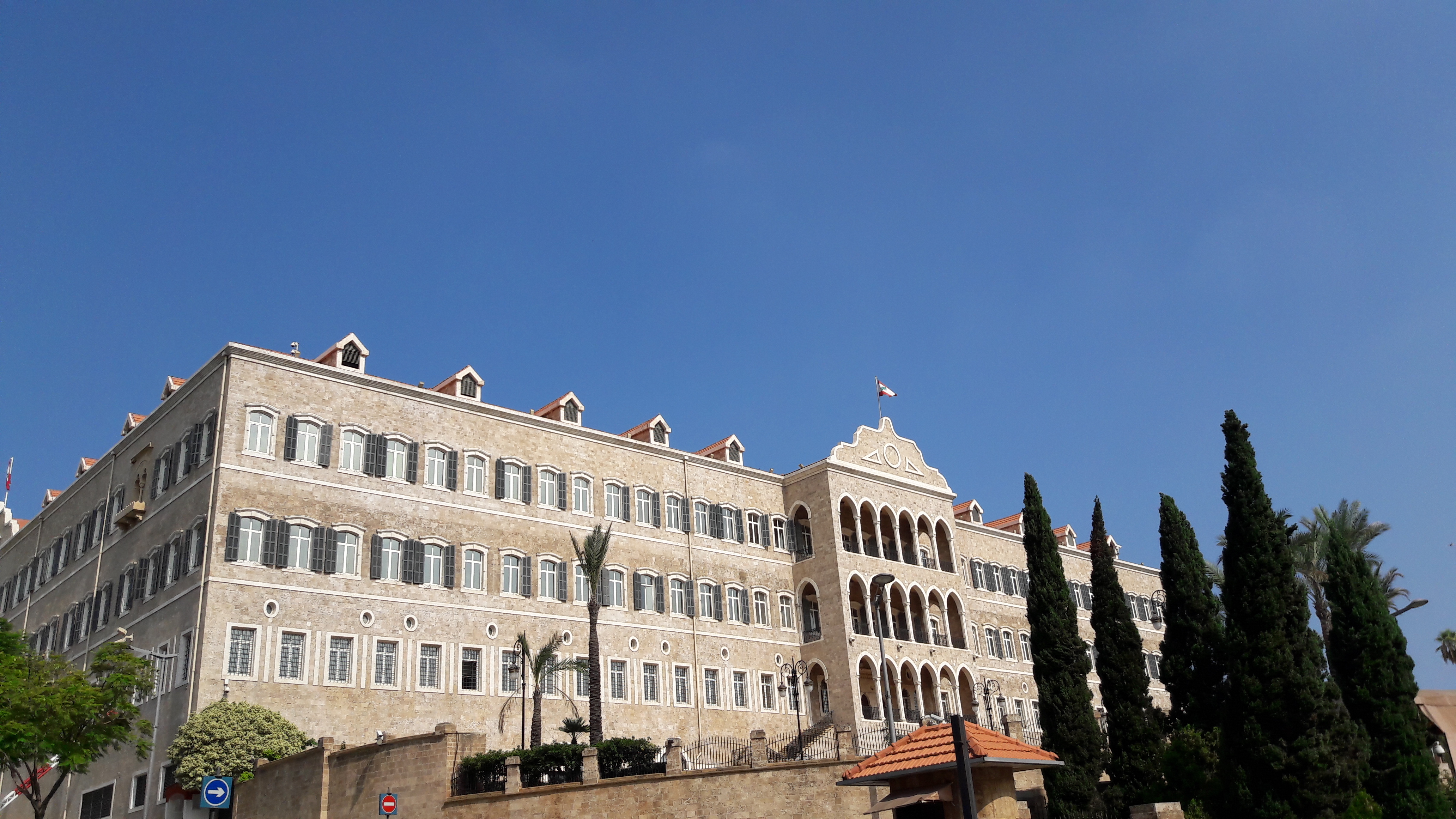
Dahr Al Baidar goes beyond the intercepted truck
The Dahr Al Baidar case of weapons and explosives takes on a dimension that goes beyond the circumstances of interception. It now covers the implementation of government decisions, Hezbollah’s military activities and the choice of jurisdiction to review the case.
Al Joumhouria of 2 November 2026 reports that the government commissioner to the military court, Judge Claude Ghanem, has brought charges against thirteen people. The qualifications selected give the file an important scope. The Minister of Justice, Adel Nassar, defends the continuation of the procedures allowing a referral to the Council of Justice.
The government is thus faced with both a political and a judicial test. Going to the end of the procedure means asserting the capacity of institutions to deal with a case involving Hezbollah weapons. But this statement comes in a tense regional climate, where each decision can be interpreted as an element of wider confrontation.
It is precisely this risk that Al Akhbar of November 2, 2026 puts forward. The newspaper describes contacts designed to prevent the case from causing a break between the movement and the institutions. In its reading, the dossier refers to the disagreement over the rearmament of Hezbollah and the legitimacy it claims against Israel.
Nida Al Watan takes a much more critical position. Its 2 November 2026 edition challenges the arguments opposing the transfer of the case to the Council of Justice. Where Al Akhbar insists on the political dangers of confrontation, Nida Al Watan highlights the obstacles to the institutional treatment of the case.
An Nahar describes an attempt to contain the conflict without having resolved its causes. Contacts between officials help to limit the immediate escalation, but disagreement remains over prosecutions, surrender of wanted persons and the scope of the State’s decisions.
Béchara Rai calls for a national decision on war and peace
From Bkerké, the Maronite patriarch replaced the discussion on the ground of responsibility towards the population. Preserving Lebanon from a new war is, according to Ad Diyar of 2 November 2026, a major national responsibility.
Béchara Rai insists on the human consequences of a new confrontation: destruction, displacement and additional suffering for already tested inhabitants. It defends a single decision on war and peace, as well as arms control by the State and its legal institutions.
This statement directly reaches Dahr Al Baidar’s news. Al Joumhouria of 2 November 2026 reports that the patriarch refers to the dangers of arms trafficking and calls for strengthened border control. The protection of the country, in its discourse, goes through external sovereignty and the authority of the institutions within.
Gebran Bassil intervenes in a neighbouring registry when he criticizes unilateral decisions that might involve Lebanon in a regional conflict. An Nahar of 2 November 2026 reported its distinction between the defence of the territory and a decision to attack or climb. In his view, the latter presupposes a national decision that takes into account the interests of the country.
At بي
The commemoration of the birth of Rafic Hariri brings back to the foreground another memory of power. Ad Diyar of 2 November 2026 describes a political and social gathering organized at the Centre House at the initiative of Bahia Hariri.
The meeting combines a review of the former Prime Minister’s journey with a presentation of the new orientation of his foundation. A film traces the major stages of his life, from his beginnings to his assassination, while tools of artificial intelligence are mobilized to make his texts heard and return his presence.
Bahia Hariri takes this opportunity to express her concern at the current tensions and discourses that threaten the ties between Lebanese. Saad Hariri also pays tribute to his father, linking his memory to education, modernization and the ability to build a future.
Diplomacy: Beirut revives the files with Damascus and seeks to contain the effects of the regional crisis
A visit to Damascus with concrete cases
Borders, refugees and detainees: the Lebanese delegation expected in Damascus must address long-standing issues affecting relations between the two countries. Ad Diyar of 2 November 2026 presents this visit as an attempt to re-start several cooperation projects.
The delegation is led by Deputy Prime Minister Tarek Mitri. An Nahar of 2 November 2026 mentions the participation of Ministers of the Interior, Labour, Education and Social Affairs. This composition gives an idea of the extent of the discussions, which link security issues to the conditions of return and resettlement of refugees.
At borders, trade must include smuggling, crossing and tracking of movements. Ad Diyar refers to cooperation between the services concerned. The journal also reports on the search for procedures to make passages more controllable and movements more readable.
The return of refugees raises another set of challenges. It requires housing, schools, care and resettlement opportunities. According to information published by Ad Diyar, discussions must also relate to the material conditions for this return and to coordination with international actors.
Inmates’ files also remain sensitive. The daily refers to the examination of new releases of Syrian prisoners after a first phase involving 264 people. The relevant legal situations and guarantees are discussed between the two parties.
Security incidents affect bilateral relations
An Nahar of 2 November 2026 states that the delegation must also address recent security events in Lebanon related to wanted persons in Syria. These incidents recall that the relationship between the two countries is also played out in service practices and in accordance with the competence of each State.
Ad Diyar insists, in his edition of the day, on the need to build State-to-State relations. This approach involves institutional exchanges, identifiable procedures and bilateral treatment of disputes.
The visit is part of a broader diplomatic activity. Al Liwaa of 2 November 2026 also announces the arrival of the Jordanian Foreign Minister in Beirut. Contacts with neighbouring countries continue as the Lebanese authorities seek to limit the impact of a possible failure of regional negotiations.
In the Gulf, protect navigation and maintain diplomatic channels
Maritime security occupies an important place in the diplomatic coverage of Al Sharq Al Awsat of 2 November 2026. The paper looks back at the discussions at the Manama Dialogue, where concerns are about sea crossings, energy supplies and the risk of a new confrontation with Iran.
The reported Saudi position emphasizes the collective responsibility to protect navigation. Bahrain defends a regional security framework that could remain open to Iran, subject to respect for sovereignty and international law.
The daily also refers to French and British initiatives to strengthen maritime cooperation. The objective is to protect ships and respond to threats, including those related to mines. Manama’s exchanges thus seek to preserve traffic while maintaining a possibility of de-escalation.
International policy: Iran, Israel and the United States in the same sequence of uncertainty
Washington between negotiation and military pressure
The American tone remains double. Donald Trump considers the discussions useful, but retains the threat of an attack. Al Quds Al Arabi and Al Sharq Al Awsat of 2 November 2026 give an important place to this combination, which maintains pressure on Tehran while allowing the mediators to continue their work.
Iranian responses focus on possible targets and the duration of the conflict. Al Sharq Al Awsat reported statements by military officials that envisaged a response beyond the geographical limits of previous confrontations. These warnings aim to broaden the cost of a decision to attack in US calculations.
Al Arabi Al Jadid, in its 2 November 2026 edition, shows that diplomacy takes place in the midst of military preparations. The newspaper reports Israeli exercises to simulate complex emergencies and clashes on several fronts.
The formation of the Israeli government remains open
Israeli electoral results did not lead to a simple majority of Governments. Al Joumhouria of 2 November 2026 describes Benjamin Netanyahu’s difficulties in securing the necessary support. Personal relationships, campaign commitments and party differences complicate alliances.
Gadi Eisenkot, for his part, is looking for a formula for forming a government. Al Binaa and Al Sharq Al Awsat of 2 November 2026 refer in particular to the hypothesis of a minority government and the question of relations with Arab parties.
In this context, military choices also become a subject of domestic political struggle. The newspapers examine the possibility of escalation of negotiations, the position of leaders and their chances of retaining power.
Al Akhbar of 2 November 2026, however, highlights the limits of a change of coalition for the Palestinians. His dossier on Israeli parties and the West Bank insists on the continuity of policies of occupation beyond opposition between leaders. Competition for the government therefore does not mean, in its reading, an automatic break on the ground.
Gaza and Yemen remain caught in regional violence
Diplomatic discussions do not make the dead disappear on other fronts. Al Quds Al Arabi of 2 November 2026 reported eight deaths in Gaza, including one child and five police officers, in Israeli strikes. The daily situation places these attacks in the midst of the persistence of violence despite the mechanisms supposed to limit hostilities.
In Yemen, fighting and air operations are also important. Al Quds Al Arabi evokes an escalation between Saudi aviation and the Houthis, as well as fighting on several land fronts.
Al Binaa of 2 November 2026 links this evolution to threats against sea lanes and missile attacks. The Yemeni conflict appears on the same pages as the negotiations on Ormuz: regional risks affect the territories, but also trade routes and energy infrastructure.
Economy: State seeks revenue in a country whose resources remain fragile
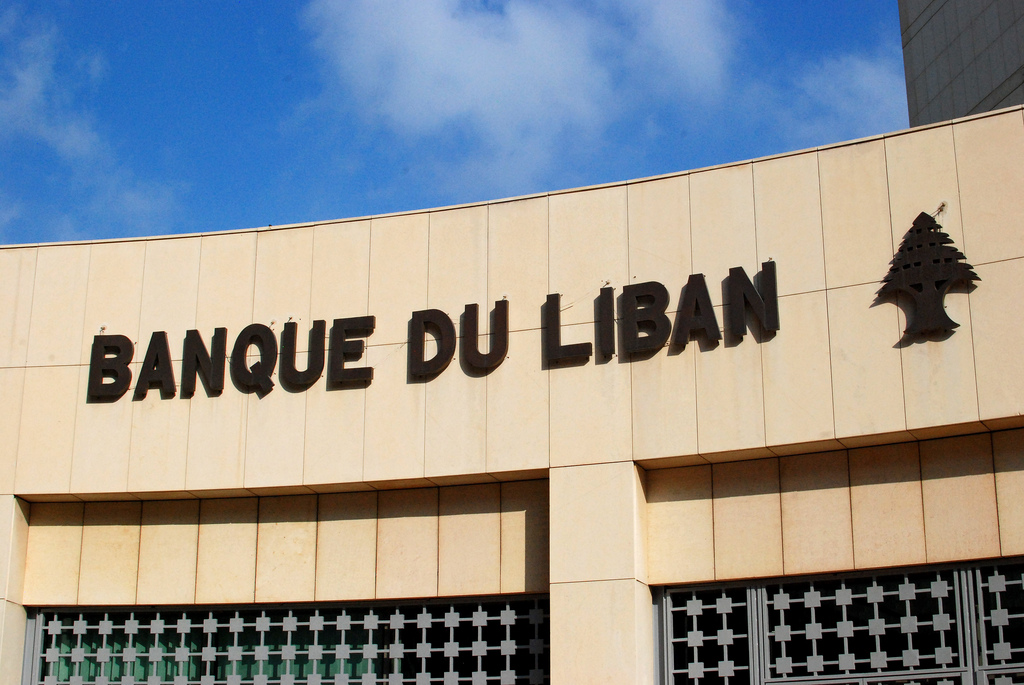
Bank losses return to the centre of the tax dispute
The disagreement between the state and the banks is moving again towards the treatment of losses. An Nahar of 2 November 2026 devotes its economic dossier to the banking challenge concerning the international obligations of the State.
Banks consider that the methods used for tax calculation can transform actual losses into taxable accounting profits. The dispute includes the exchange rates used to determine the cost of securities and the results of transactions.
Yassine Jaber defends another reading. The Minister of Finance states, in the words of An Nahar, that the administration applies the tax rules and does not pursue a policy of targeting the banking sector. It calls for follow-up on available review and remedies.
Behind this technical debate is a wider conflict over the distribution of the cost of the crisis. Banks claim losses on their assets. The State seeks to recover its revenue. Depositors are still waiting to know the conditions under which their funds can be returned.
Discussions with the Monetary Fund remain a confrontational area
Al Akhbar of 2 November 2026 questions the evolution of the positions of the International Monetary Fund with regard to Karim Suaid’s proposals. The newspaper examines trade in the distribution of losses, treatment of deposits and bonds of the Bank of Lebanon.
Its approach is critical to mechanisms that could reduce the recognized value of deposits or alleviate the contribution of certain actors to the resolution of the crisis. The daily distinguishes the discussions on bank restructuring from the central bank’s accounts.
The question asked in one remains open. The elements reported relate to negotiations, proposals and signs of flexibility attributed to the interlocutors. They do not constitute the announcement of a final agreement with the Monetary Fund.
This debate echoes the banking objections presented by An Nahar, while addressing them from another point of view. The two cases deal with losses, but the interests defended and the responsibilities highlighted differ.
One hundred and seven cases transmitted to the financial prosecution service
The Minister of Finance chooses a stronger tone on tax collection. In an interview published by Ad Diyar on November 2, 2026, Yassine Jaber announced the transmission of 107 business and institutional files to the financial prosecutor’s office.
It distinguishes real economic difficulties from failure to fulfil tax obligations. The Minister particularly insists on the sums collected on behalf of the Crown and which must be returned to the Consolidated Revenue Fund. At the same time, he referred to measures to settle and reduce penalties to facilitate regularization.
This firmness is accompanied by a speech on simplification. Ad Diyar reports on electronic service development, billing and data-based control projects. The department presents these two avenues as complementary: facilitating compliance and making fraud more difficult.
More sampling does not mean more activity
The question of capacity to pay goes through economic pages. In Al Joumhouria, November 2, 2026, Fouad Zmokhol criticises a policy that would primarily seek to increase revenues without rebuilding production conditions.
Its argument is based on the costs already borne by households and businesses: lost savings, high operating costs, insufficient bank financing and private payment of essential services. An increase in levies thus occurs in an economy whose resources remain weakened.
Al Akhbar sheds further light with his examination of tax revenues. The daily newspaper notes a drop in the value added tax collected on domestic operations and sees it as a sign of weakness in local consumption. It distinguishes this development from that of import-related revenues, which can be influenced by prices and applied rates.
The reconciliation of the two analyses highlights a common difficulty: an improvement in collection is not enough to demonstrate a recovery in the economy. Businesses must sell, invest and hire so that government revenues can grow on a sustainable basis.
Dedolisation refers to trust in institutions
Al Joumhouria of 2 November 2026 also devotes a dossier to reducing financial dollarization. The study compares several emerging economies and examines the role of stability, local financial markets and programmes supported by the International Monetary Fund.
The central point is trust. Households and businesses return to a national currency when they can keep their savings there without fear of a further loss of value. Administrative restrictions are not enough to produce this change.
For Lebanon, this dossier echoes other economic debates of the day. The monetary issue remains linked to the credibility of the institutions, the treatment of losses and the protection of depositors.
Justice: Dahr Al Baidar’s prosecution and airport investigation focus attention
A procedure whose figures differ according to the newspapers
The treatment of Dahr Al Baidar’s case has a gap between daily newspapers. Al Jumhouria and Al Akhbar of 2 November 2026 refer to thirteen persons prosecuted, while An Nahar mentions fourteen. These figures therefore remain allocated to each publication.
Beyond the count, the disagreement relates to the scope of the case. The military court is seized, but the possibility of a transfer to the Justice Council remains at the heart of the political and legal debate.
An Nahar insists on the consequences of prosecutions for the relationship between the government and Hezbollah. Al Akhbar further examines the basis and qualifications. Nida Al Watan contests the arguments aimed at preventing referral to the Justice Council.
Respondents and prosecutions reported do not prejudge future decisions. The case remains ongoing, at the intersection of individual responsibilities and conflict over the implementation of State decisions.
Investigators look for cocaine recipients
At Beirut airport, interception of a shipment of cocaine opens another important investigation. An Nahar of 2 November 2026 reports a seizure of 46.7 kilograms and the arrest of a Syrian traveller from Accra.
Al Joumhouria states that the operation was conducted on the night of 31 October thanks to the cooperation of customs and General Security. The drug was distributed in 40 packages, hidden by a process to complicate its detection. Tracking devices were also found in the packages.
The first items cited by the newspapers refer to a previous passage of the suspect to Lebanon by Masnaa, then to a trip to Accra before his return with the cargo. The investigations concern sponsors, recipients and the extent of the network.
Nida Al Watan of 2 November 2026 gives on the first page an estimate of two hundred kilograms after preparation for marketing. This estimate concerns the potential volume on the market; the intercepted weight reported by other daily newspapers remains 46.7 kilograms.
A professional sanction cancelled for lack of sufficient evidence
Ad Diyar of 2 November 2026 also publishes a column on a decision of the Beirut Civil Appeal Court concerning a pharmacist sanctioned by his professional order.
The case is based on the charge of discounting medicines. The column reviews the inspections performed, the statements collected and the value of the elements used to justify the sanction. The minutes referred to did not observe the practice complained of.
The Court held that the evidence was insufficient and annulled the contested disciplinary decision. This file recalls the place of evidence in a professional sanction, beyond a complaint or information provided by competitors.
Society: salaries, travel and memory of the South
Minimum wage remains traded
The wage negotiations continue without agreement. Al Akhbar of 2 November 2026 reports the expiry of the time allowed to the discussions of the competent commission to examine the increase in the minimum wage.
The daily describes a sharp reduction in union ambitions. After initial amounts of $1,100 to $1,200, he referred to a provision of the General Confederation of Workers to accept a proposal around $475. However, employers did not agree to compromise, according to his account.
The newspaper’s criticism is about the method. In his view, the discussions should be based on prices, inflation and household needs. Rather, they take place in a balance of political forces that gradually reduces the level of demands.
The file also addresses the social rights associated with the declared salary. Basic remuneration affects workers’ contributions, allowances and protections. A limited agreement can therefore produce effects that exceed immediate monthly income.
Families in the South still face the most basic needs
The visits of the Minister of Social Affairs, Haneen Sayed, to the South are reported by Ad Diyar of 2 November 2026. The newspaper describes inter alia exchanges around children with special needs, care facilities and families affected by the war.
Needs relate to care, accommodation and continuity of education. The newspaper refers to temporary facilities and premises to accommodate families or maintain school activities.
These situations give concrete content to the discussions on reconstruction. For the inhabitants, the rehabilitation of the territory requires usable housing, an accessible school and adequate support. Temporary solutions can be used to respond to the emergency, but the needs are time-consuming.
The concerns reported by Al Sharq Al Awsat about the search for retreat homes in the southern suburbs add another dimension. Some families must consider a new start even before they can regain stability.
Hula maintains the memory of the 1948 massacre
In Houla, the municipality commemorates the massacre of October 31, 1948. Al Akhbar of 2 November 2026 reiterates a statement recalling the death of 90 civilians.
The municipal text links this memory to the locality’s current trials: destruction, displacement and damage to the way of life. He called for documenting crimes and preserving testimonies for the next generations.
The commemoration thus concerns the transmission of a local history, but also the connection of the inhabitants to their village. The preservation of this memory remains inseparable from the possibility of return in the press release.
Culture: Chouchou regains his place in the history of theatre, while Beirut and Saida announce their appointments
Return to Chouchou without locking in nostalgia
The Lebanese theatre returns to the forefront with Fares Ywakim’s book on Shuchou. Nida Al Watan of 2 November 2026 presents this book as a work of memory and restitution around a major figure in the popular scene.
The story goes beyond the memory of an actor. It covers the shows, collaborators, places and conditions in which a theatre experience was built. The attention given to documents and testimonies makes it possible to put Chouchou back in a collective history.
The issue of responsibilities occupies an important place in the newspaper’s proposed reading. Rebuilding a path involves recognizing the role of authors, artists and teams who participated in the works. The memory of theatre is also built in this precision.
The book finally recalls the strength of the link between a scene and its audience. Through Shuchou, it is a part of Lebanese social and cultural life that finds its landmarks, its voices and its places.
Beirut publications between poetry and life stories
Nida Al Watan’s literary pages of November 2, 2026 present several publications related to Beirut, poetry and personal trajectories. Gibran occupies a place there with a work around Sable and Ecumen, while other books explore the urban memory and experiences of their authors.
The diversity of these works gives cultural pages a different pace than political news. The stories relate to places, meetings and personal traces. They participate in the conservation of a memory that is also transmitted outside official commemorations.
Al Joumhouria on November 2, 2026, for its part, opens a reflection on the place of letters and the humanities. The contribution of Dalia Kherbani of the Lebanese University defends their role in research, transmission and work, including in an environment dominated by technological transformation.
Three appointments announced in Lebanon
The program of the week begins with philosophy. Al Akhbar of 2 November 2026 announces, for Tuesday 3 November at 7 p.m., a meeting with the writer and researcher Regina Sneifer at the Al Madina Theatre in Hamra. The discussion focuses on the philosophical legacy of the Mashrek. Remote participation is also planned.
In Saida, music takes over on Saturday 7 November at 8 p.m., at Hammam Al Jadid, in the old town. The newspaper announces a first presentation of the project of Lebanese artist and composer Anwar Al Bizri, known as Anou, devoted to migration.
The show combines music, narrative and visual elements. It deals with the departure, return and search for a place to belong, in a form that the newspaper brings closer to a contemporary musical and stage creation.
On Thursday, 12 November, at 6 p.m., Raeda Taha is to sign four of her pieces at T Marbouta Café in Hamra. Al Akhbar highlights the place of memory, Palestinian experience and personal narrative in his theatrical writing.
Sport: Lebanon overturns France after a suspense rugby match
A win ripped out after the end of regulatory time
Rugby offers sports pages a story of reversal. Al Joumhouria of 2 November 2026 devotes a great place to Lebanon’s victory against France, 24 to 20, in Sydney.
The game was no longer to decide on a qualification. Both selections had already lost their chances of reaching the rest of the competition, according to the daily. However, it was still necessary to finish the tournament on a different image than that left by previous matches.
The end of the game concentrates all the suspense. While France is thinking of holding the victory, a last opportunity given to Lebanon makes it possible to return to equality. The score is reduced to 20 everywhere after a review of an action by the arbitrators.
The extension then gives Lebanon an opportunity to conclude. Abbas Miski scored the decisive test after an individual action that turned the last movement of the game into a Lebanese victory.
Abbas Miski at the centre of the sporting narrative
Al Joumhouria’s report insists on the role of Miski in the moments when the meeting changes. The player takes part in the Lebanese return before scoring the test that ends the game.
The daily also gave a place to Captain Alex Twal, the tension of the end of the meeting and the arbitral decisions. The victory is built in a chain of gambling facts, defensive resistance and occasions seized at the last moment.
In the fora, the presence of the Lebanese community gives a special dimension to this Australian meeting. The newspaper describes support that goes beyond the issue of the ranking and connects the team to its diaspora audience.
This success did not change the elimination of Lebanon, but it changed the way its tournament ended. Players return with a win in a long uncertain match, after an effort continued until the last action.
Technology: computing power becomes the real issue of artificial intelligence racing
Europe faced with material constraints
The models attract attention, but their operation depends on very concrete installations. Al Joumhouria of 2 November 2026 devotes its technological dossier to European needs for computing power, data centres and energy.
The article thus moves the discussion to deployment conditions. A company may have a project or a performance model and lack the resources to train, operate or use it on a large scale.
Constraints combine: access to processors, memory, power supply, cooling and connections. The cost of a data centre is therefore not limited to buying machines. Its commissioning involves networks and equipment capable of supporting its activity.
Modular installations promise faster deployment
The daily presents in particular the modular systems put forward by Nvidia. Their interest lies in the assembly of units which can reduce installation times and facilitate the gradual increase of capacity.
This approach responds to industrial demand. The use of artificial intelligence develops in the design, maintenance, robotics and organization of production. They require processing capabilities, but also reliable data flow between equipment.
The article stresses, however, that the speed of installation does not solve all the difficulties. Energy needs, team formation and data control remain critical.
Sovereignty takes place under conditions of access
The European question also concerns dependence on external suppliers. Who controls the infrastructure? Under what conditions are data processed? What solutions remain available when a supplier changes its offer or rules?
Al Joumhouria defends an approach that combines equipment with skills and uses. New capabilities have a lasting effect when they can be used by companies, universities and research organisations.
In Lebanon, Ad Diyar of 2 November 2026 reports a different use of these tools during the commemoration of Rafic Hariri. The texts and presence of the former Prime Minister are returned through digital devices. The Hariri Foundation also presents an orientation towards the « smart transformation » of its programs.
These two treatments show different uses of the same technology: on the one hand, the construction of industrial capacities; on the other, applications related to memory, communication and education.
Photographic credits
Photo: Haakon S. Krohn / Wikimedia Commons — CC BY-SA 3.0.Source: Wikimedia Commons—CC BY-SA 3.0. Photograph of archives reproduced without modification.
Photo: Pjposullivan1 / Wikimedia Commons — CC BY-SA 2.0.Source: Wikimedia Commons—CC BY-SA 2.0. Photograph of archives reproduced without modification.
Photo: Karan Jain / Wikimedia Commons — CC BY-SA 2.0.Source: Wikimedia Commons—CC BY-SA 2.0. Photograph of archives reproduced without modification.







Comments