

Why does a citizen have to pay a commission to a private intermediary to pay an amount due to an administration? MP Bilal Abdallah brings this issue to the attention of the government in an inquiry dated 16 November and made public on Tuesday, 17 November. He asked for an explanation of the legal basis for these costs, the selection of providers and the controls exercised on their tariffs.
Who has to bear the cost of recovery?
In the document addressed to the President of the Chamber, the parliamentarian contests the fact that the cost of recovery services entrusted to companies or private persons is borne by the users. It considers that their intervention alone does not justify an additional burden without a clear legal basis.
His reasoning is based on articles 81 and 82 of the Constitution, which he invokes with regard to the legality of public levies. However, this is not a jurisdictional decision: the exact classification of commissions and their conformity with the texts are precisely among the points submitted to the Government.
Nine questions on contracts and commissions
The inquiry asks to identify the administrations concerned and their providers. It calls for the criteria for selecting the latter, the competition procedures which may be applied and the provisions allowing a commission to be billed to the citizen rather than to the body benefiting from the recovery.
Bilal Abdallah also asked whether the Government had compared the fees charged to the actual costs of the service, studied their harmonization or considered ceilings. He criticizes differences between operators and wishes to know about the monitoring mechanisms. However, the text does not provide an exhaustive list of companies or an audited table of commissions.
A request for control, not a removal of costs
The Member stated that a previous written question had not been answered and requested that the matter be discussed in plenary. He called on the Government to clarify the measures envisaged to review contracts and to put an end to practices that would be without legal basis.
At this stage, the documents consulted do not contain a government response to this inquiry. They do not establish a repayment decision or the general cancellation of commissions or the entry into force of a new ceiling. The criticisms expressed remain those of the parliamentarian and the questions raised do not constitute a judicial finding of irregularity.
For users, the issue is concrete: to distinguish the sum due to the public service from the price charged to pay it. The expected answer will have to clarify who sets this second amount, on what basis and under what control, without confusing the modernisation of the means of payment with the authorisation of any additional invoicing.
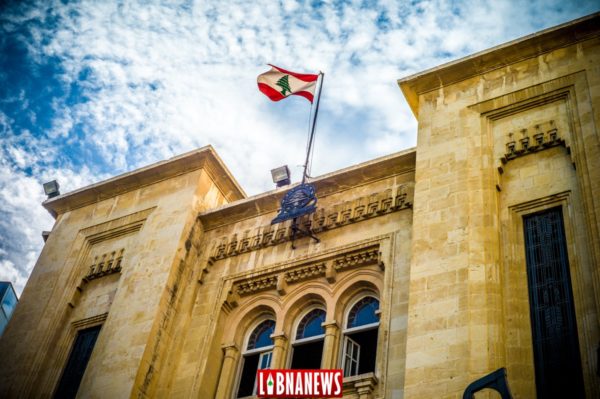
Illustration: Lebanese Parliament in Beirut, undated archival photograph. François el Bacha / Libnanews. It does not represent a session devoted to this inquiry.





Comments