

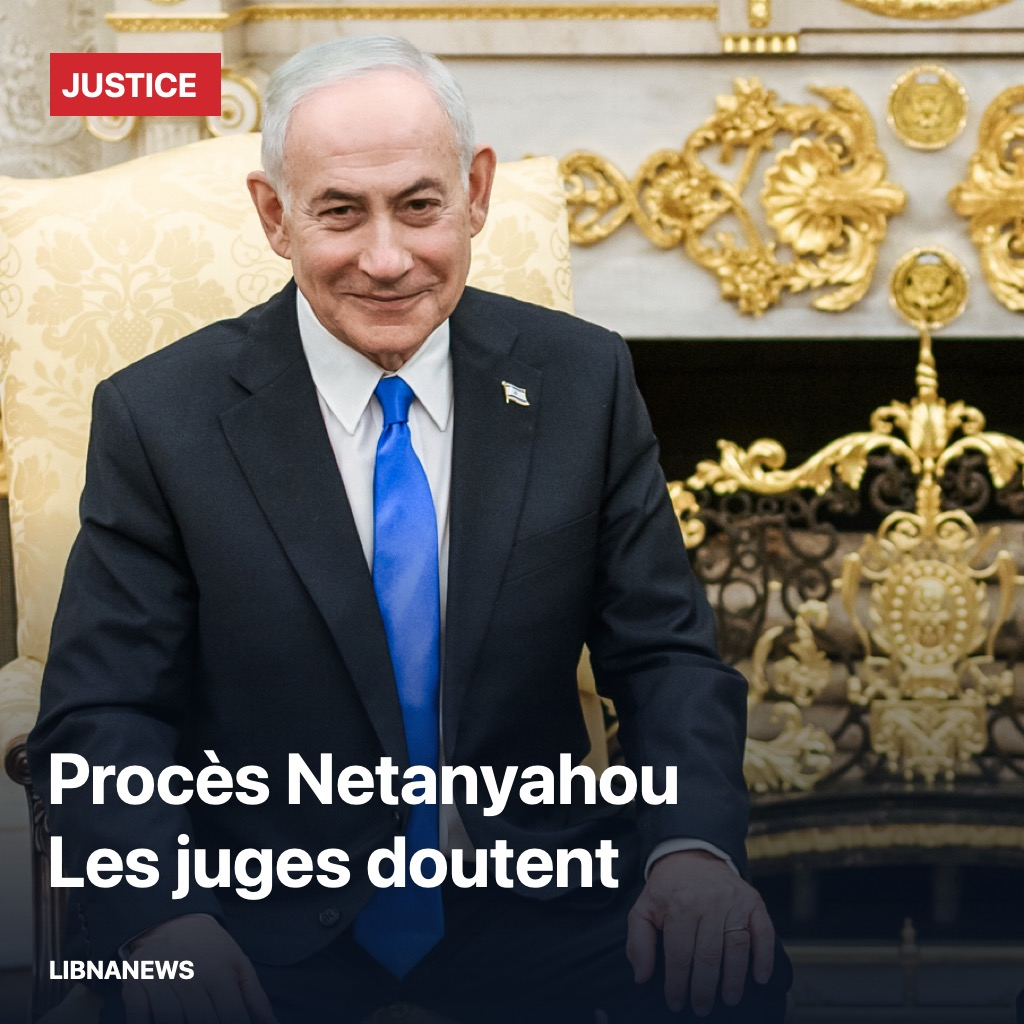
The judges of the Jerusalem District Court requested on Wednesday, 25 November, the Israeli Attorney General, Gali Baharav-Miara, to review the most serious aspect of the Benyamin Netanyahu trial. They consider the chances of a conviction in the Bezeq-Walla case low and have expressed doubts in a second case. Prosecutions have not been abandoned and no judgement has been rendered.
The Attorney General attended the hearing at the request of the three trial magistrates. The President of the formation, Rivka Friedman-Feldman, described the difficulties the court sees in the evidence presented in support of the 4000 case. The judges had already expressed reservations about the charge of corruption. This time, their assessment extends to the other counts in this case, fraud and abuse of trust.
Bezeq-Walla: Judges doubt evidence of exchange
In the 4000 case, the prosecution accused Netanyahu of having favoured, through regulatory decisions, Shaul Elovitch’s interests, which controlled the Bezeq telecommunications group and the Walla information site. In return, according to the prosecution, Netanyahu and his entourage received favourable editorial treatment. The head of government is challenging the charges.
At the hearing, the court challenged two elements of this thesis: the reliability of the testimony on the alleged Bezeq instructions and the evidence of unusually favourable treatment of Walla. The judges also wondered whether Netanyahu was aware of this treatment at the time of the alleged acts. The issue is not simply about the existence of contacts between politicians and media leaders. It deals with the nature of the decisions attributed to the Prime Minister and the link between these decisions and Walla’s coverage.
In particular, the judges noted that Shlomo Filber, former Director General of the Ministry of Communications, who had become a witness to the prosecution, had changed his narrative during the proceedings. According to their assessment, his testimony does not agree on certain points with objective elements of the file. These difficulties also affect the evidence of the instructions given by the prosecution to support the charges of fraud and abuse of trust.
The Court distinguishes the other two cases
The 2000 issue concerns discussions between Netanyahu and Arnon Mozes, editor of the daily newspaperYedioth Ahronoth. The prosecution argued that the head of government had considered legislative intervention that might weaken a competing newspaper in return for more favourable coverage. Netanyahu is prosecuted for fraud and abuse of trust in this case. The judges questioned the criminal characterization and wanted to hear the explanations of the prosecution before deciding on the follow-up.
The 1000 case concerned gifts that Netanyahu and his entourage allegedly received from businessmen. The prosecution also deals with fraud and abuse of trust. The Tribunal indicated that most of the elements of this component had been presented and invited the parties to consider how to complete it. The judges raised several possible issues without announcing agreement.
The prosecutor’s office must decide on the follow-up
The hearing did not change the indictments or the judicial status of Netanyahu. Observations on the chances of a conviction do not constitute an acquittal or a decision to dismiss. It is up to the Attorney General to decide whether the prosecutor ‘ s office keeps its charges, reduces their scope or engages in discussions in any part of the proceedings.





Comments