

A team from Munich University Hospital tested a brain-computer interface during an operation on a awake patient. The Technical University of Munich (TUM) announced on Tuesday 24 November that the prototype had been installed the previous day, the time to collect data, and then removed. It is neither a permanent implant nor a treatment of paralysis.
A necessary procedure for a tumour, a separate test
The trial took place during an operation already necessary to treat a brain tumor. The TUM explains that this type of research allows those who consent to participate in an operation scheduled for medical reasons. The device was removed after the measurements were completed. The announcement concerns only one procedure with this prototype in Munich, not the follow-up of a series of patients.
The research group is led by neurosurgeon Bernhard Meyer and works with FUTRUE Neurosciences, a Munich-based company founded by Clemens Fischer. The team had already made recordings in humans and placed two permanent interfaces in other works, says the university. The novelty of 23 November concerns the prototype of FUTRUE, not the first brain implant ever made in Munich.
Save a signal and eventually restore a sensation
The prototype consists of 512 microelectrodes that rest on the brain surface without entering brain tissue. The device is designed to collect electrical signals and, in the other direction, to stimulate the brain surface. The difference is important: recording a signal could be used to control an external device, while stimulation is intended to transmit information about this device to its user.
The research scenario described by the TUM is that of a paralyzed person who could command a robotic hand and receive feedback on what it touches. The team did not say that the patient had piloted a prosthesis during the surgery. The press release does not publish detailed measures and does not demonstrate that this prototype works on a sustainable basis or improves daily autonomy.
Additional measures, no timetable for making available
The TUM announces further measures. The challenge is not just to collect more signals: researchers want to know to what extent surface stimulation can provide accurate sensory information. The release does not set a marketing schedule or date of permanent installation of this model.
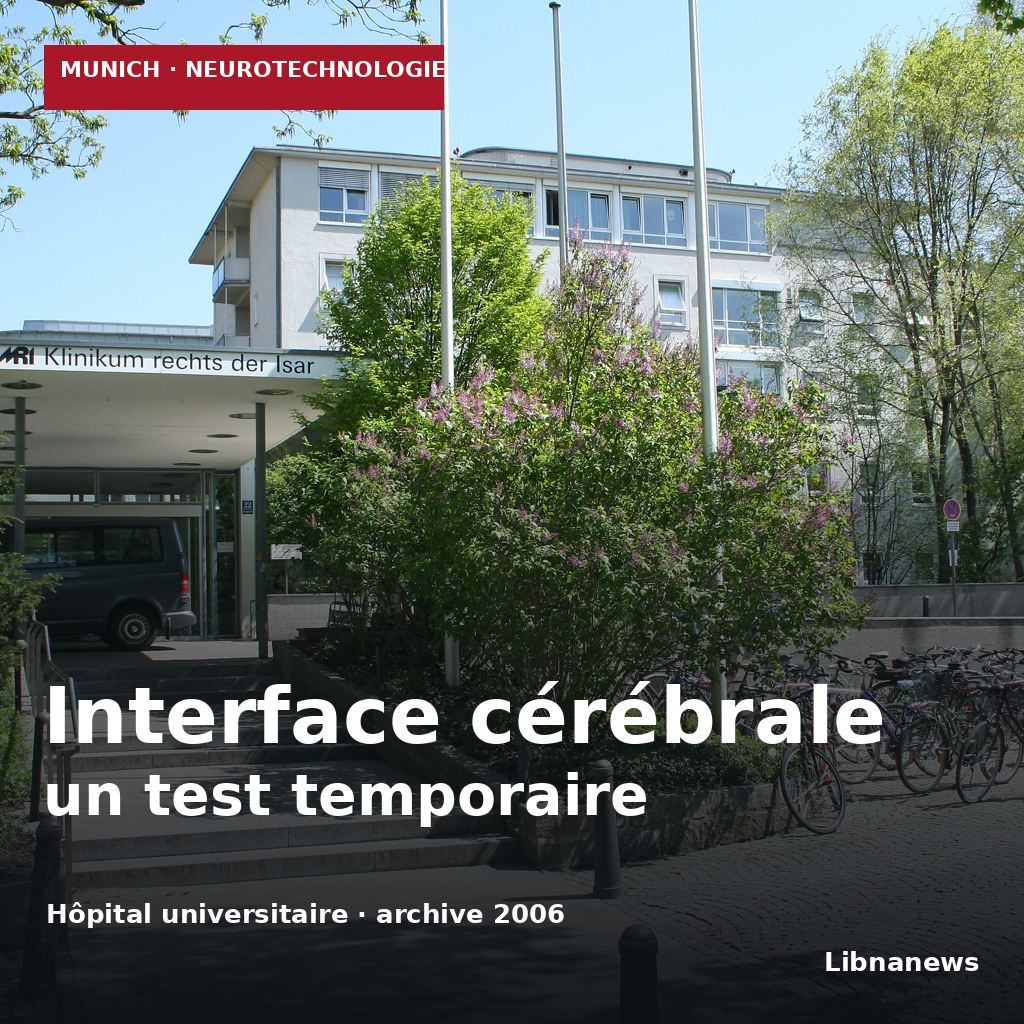
Cover: entrance to Rechts der Isar University Hospital in Munich in May 2006. Archive, without visual connection to the operation. Oliver Raupach / Wikimedia Commons,CC BY-SA 2.5, cropping and dressing under the same license.





Comments