

The association Terre-Lebanon said to follow eight reports of tree cuts in Mount Lebanon. In a press release released on Tuesday, November 24, she stated that she had received the warnings during November through her Green Rangers program and then filed complaints. Situations range from alleged cuts on private land to a site that the association says is authorized by the Ministry of Agriculture. They are therefore not all subject to the same procedure, and the list is not an official record of infringements.
Reports in five districts
In Kesrouan, the association reports repeated cuts in Ghusta and towards Ain Warka. It also reports work in Ehmej and oak cuts in Lassa, Jbeil district. In the same district, it reports logging and installation of charcoal production sites near Fatrat and Qarqariya, in an area connected to the Jabal Moussa biosphere reserve and Nahr Ibrahim.
In Al-Bireh, in the Shuf, and in Kfarmatta, in the district of Aley, the complaints concern, according to the association, pines cut on private land unknown to their owners, in the perimeter of the Damour River. The Ministry of Environment lists Damour and Nahr Ibrahim among the protected natural sites. This is not enough to define on the ground each of the parcels mentioned: this is one of the elements to be established by file.
A logging permit does not answer the question of environmental impact
In Aukar–Dbayeh, Metn, Terre-Lebanon claims that a permit from the Ministry of Agriculture allowed the cutting of a hundred pine trees to build a sports complex. She asked whether the environmental assessment for the project had been completed. It reports separately oak cuts at Ain El-Kharrubé, which it presents as being carried out under cover of forestry maintenance. The press release does not reproduce the licence of the complex or a notice from the Ministry of Environment. It therefore does not make it possible to conclude that the site was irregular.
Lebanese Decree 8633 of 2012 distinguishes the environmental screening from the full impact assessment. The project type, location and sensitivity of the site determine the procedure. The association asks the Ministries of Agriculture and the Environment to verify these obligations before granting the relevant permits and to monitor compliance with the permits on the ground.
According to Terre-Lebanon, half of the eight cases reported concern protected sites. This figure describes its November reports, not all the cuts at Mount Lebanon. The association reports following complaints with the Internal Security Forces and the relevant administrations. No investigation results or court decisions are announced in the press release.
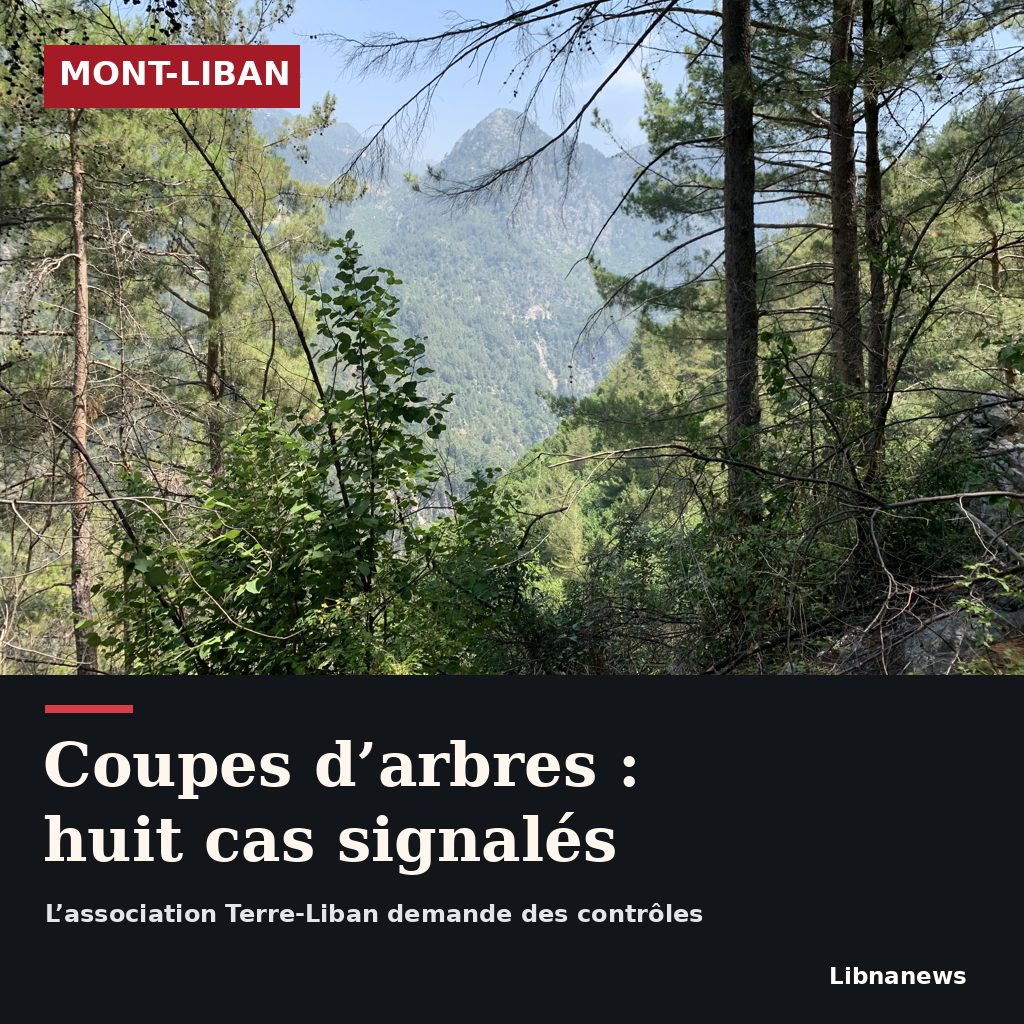
Photo archive: Jabal Moussa biosphere reserve, July 2020; does not show the reported cuts. MrPixels / Wikimedia Commons, CC BY-SA 4.0. Boxing and dressing Libnanews under the same license.





Comments