

The Lebanese media law is in force, but three of its articles remain at the centre of a request for review: 104, which maintains an offence of false news, 105, which organizes articulation with other criminal legislation, and 114, which deals with pre-trial detention. A proposal put forward by ten Members aims to change this package. In an opinion delivered on 15 November, the National Human Rights Commission supported the direction of the reform while requesting several clarifications.
The subject is distinct from the constitution of the National Media Authority and the choice of its members. It concerns what a publication may still cost its author, the texts against which it can be mobilised and the conditions under which it can be questioned.
Article 104: two offences in the same proceedings
Law No 69 of 27 August 2026, published in the Official Gazette on 3 September, contains provisions of a different nature in Article 104. Its first component punishes incitement to religious conflict or violence against individuals or groups on account of their origin, religion, confession, colour or sex. The penalty ranges from three months to three years in prison, with a fine of five to fifteen times the minimum wage, or one of these two penalties.
The text requires six elements of appreciation: social and political context, author’s position, intent to incite, content and form of speech, dissemination and probability of harm. The mere circulation of a statement is therefore not equated with the automatic demonstration of a criminal intention.
The second part punishes, within the same limits, the intentional manufacture of deceptions and the dissemination of false and harmful news. It is this wording that the proponents of the proposal want to delete. Their objection concerns the risk of prosecution based on an insufficiently defined concept, in particular against publications involving public officials.
The law in force also provides for hardening to hard labour where the acts result in certain serious consequences, including death, injury or major destruction. The proposal deletes the reference to forced labour but retains a worsening in case of serious consequences. This retention does not amount to setting a new penalty.
A proposal that retains the repression of incitement
The text of the ten Members, dated 21 September and registered on 1 October, does not propose to remove any criminal responsibility in the publication. It repeats the incitement offence and its criteria, while removing the paragraph on false news. It was prepared in cooperation with the Union of Journalists in Lebanon.
The signatories are Ibrahim Mneimneh, Halimé Kaakour, Firas Hamdan, Bilal Abdallah, Osama Saad, Michel Douaihy, Mark Daou, Najat Aoun Saliba, Melhem Khalaf and Yassine Yassin. Their initiative remains a proposal: the document consulted and the opinion of 15 November do not allow the amendments to be presented as already adopted.
Article 105: preventing the return of proceedings by another means
Article 105 of the Law on the Media excludes a number of general criminal provisions relating, inter alia, to defamation, contempt and certain publications. It maintains these texts for situations that remain outside this field. It is therefore not a general repeal of all these offences.
The proposal supplements the references excluded, in particular articles 292 and 293 of the Criminal Code and an explicit reference to article 157 of the Code of Military Justice. The aim is to avoid a publication under the special regime being pursued through a general qualification left open by an omission.
This question is different from that of the competent court. Article 113 of the current law already excludes the military court for the offences it covers. Determine who judges and determine which penal provision applies are two separate legal transactions.
Article 114: Detention is already prohibited in the scope of the text
Current article 114 prohibits pre-trial detention for offences committed by the media and electronic means provided for by law, regardless of the quality or profession of the perpetrator. The proposal maintains this guarantee. She adds that the investigation into a media professional within the meaning of the law would be conducted exclusively by the competent judges of the Public Prosecutor ‘ s Office.
It would therefore be incorrect to present the amendment as creating for the first time the prohibition of pre-trial detention. The additional issue is the interrogation authority. The legal definition of the professional is based on a main and regular media activity from which most of its resources come: it does not automatically include anyone who publishes information.
The reservations of the Commission on Human Rights
In its opinion of 15 November, the Commission recommends specifying the aggravated penalty and the criteria for incitement. It also calls for a clear distinction between the preliminary investigation and the subsequent stages of the proceedings, so that the new wording does not create ambiguity about the powers of judges. She insists on general protection against detention, without reducing it to professional journalists.
The Commission recommends a coordinated review of the various proposals relating to the law. This opinion is an institutional recommendation, not a decision amending the applicable law. Until a revision is adopted and comes into force, the guarantees already enshrined in the law, the changes requested by Members and the additions suggested by the Commission must be distinguished.
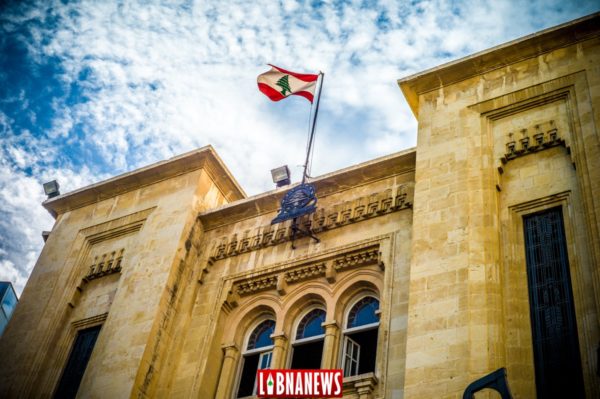
Illustration: Lebanese Parliament in Beirut, archival photograph, exact date not established. © François el Bacha / Libnanews.





Comments