

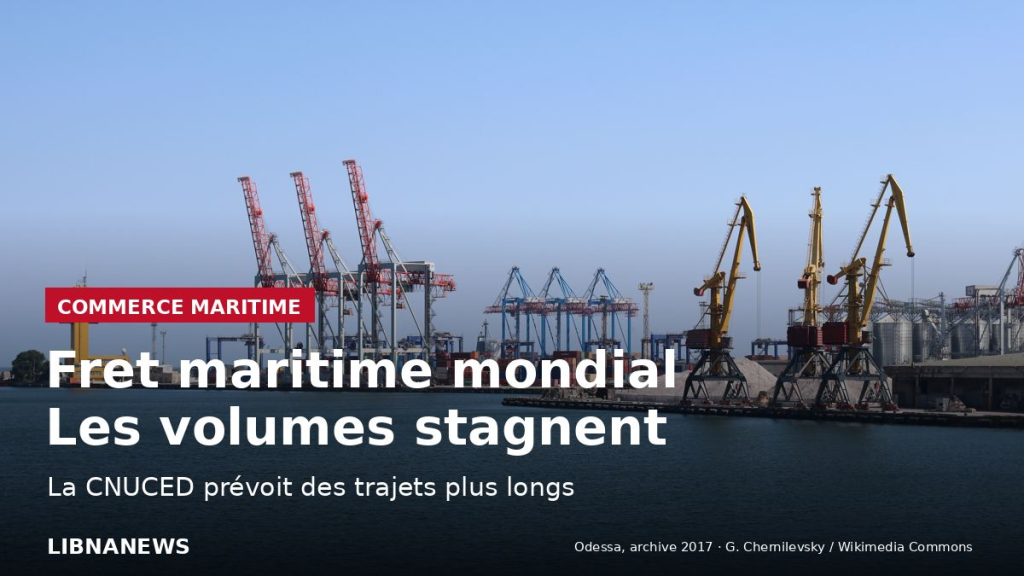
UNCTAD forecasts zero volume growth in world maritime trade in 2026, after an increase of 1.9 per cent in 2025. However, in its annual report published on 26 November, the United Nations agency estimates that the demand for transport measured in tonnes-miles will increase by 1.5%. Goods travel longer distances, even if their total tonnage is no longer increasing.
Trade by sea reached 12.3 billion tonnes in 2025. Growth slowed: 3.9 per cent in 2024, 1.9 per cent in 2025 and 0 per cent expected this year. Containerized transport differs from the rest of the market: UNCTAD forecasts a further 3.3 per cent increase in volumes for this segment in 2026. It projected a 3.2% rebound for all maritime trade in 2027. These are forecasts, not final results.
Ships travel more miles
One ton mile corresponds to the transport of one tonne over one nautical mile. A detour thus increases the demand for transport measured in this way, without adding a tonne to trade. Longer voyages mobilize ships longer, increase fuel consumption and complicate the organization of stopovers. According to the report, container spot rates more than doubled between January and August 2026. This does not apply to all contracts or roads.
In the Strait of Ormuz, UNCTAD estimates that approximately 120 vessels passed each day before the disturbance. In early March, gross tonnage traffic had fallen by about 95%. Gross tonnage is an indicator of vessel size, not a count of passages or tonnes of goods carried. In the Red Sea, some shipowners have again taken the corridor, but part of the traffic continues to bypass Africa through the Cape of Good Hope. The report also notes the persistent risks for grain shipments to the Black Sea.
Fuel costs weigh more heavily on vulnerable economies
Researchers simulated a sustained 70-80% increase in the cost of marine fuel compared to January and February 2026. If these costs continued until the end of 2027, consumer prices would increase by 0.19 per cent globally, by 0.27 per cent in small island developing States and by 0.35 per cent in least developed countries. This is not an inflation rate already observed. The variance is due in particular to the more limited number of connections and supply options for these savings.
In Lebanon, the latest data from the port of Beirut illustrate another gap between indicators: total container traffic increased by 5.42% year-on-year at the end of September, carried by transhipment, while non-transshipment activity decreased by 2.05%. These port figures measure container movements and do not, on their own, make it possible to quantify the effect of Ormuz on prices in Lebanon.





Comments