

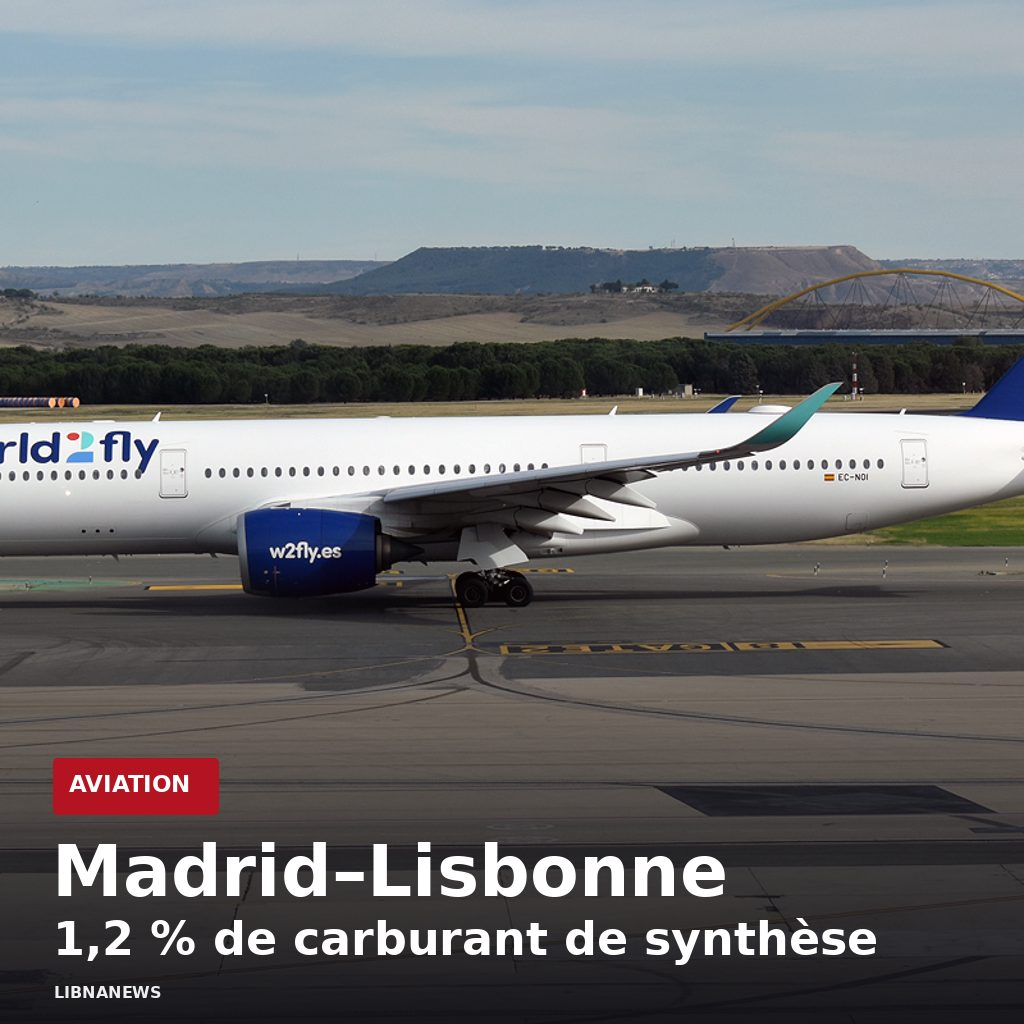
World2Fly flew from Madrid to Lisbon on 23 November with a mixture containing 1.2% synthetic air fuel, called e-SAF. Spanish energy company Moeve and the company also incorporated 4.8% of sustainable fuel of biological origin. The remaining 94% were conventional kerosene. The test therefore involved a mixture usable in existing equipment, not on a flight propelled entirely by synthetic fuel.
From laboratory to supply circuit
The Moeve Innovation Centre in Alcalá de Henares coordinated the production of the synthetic component with the Chemical Technology Institute, attached to CSIC and the Polytechnic University of Valencia, as well as with the Finnish ATV Centre. The industry employs hydrogen produced from renewable electricity and recovered carbon dioxide. The Fischer–Tropsch process allows them to be converted into hydrocarbons for use in an aerial fuel.
Exolum ensured the logistics of the mixture. World2Fly and Moeve indicate that independent bodies have verified their technical compliance with the ASTM D7566 standard. The test thus links two distinct steps: obtaining a component meeting the specifications and introducing it into the fuel distribution system at the airport.
1.2% are not required per flight
The ReFuelEU Aviation Regulation sets a minimum share of 2% of sustainable aviation fuels from 2025 onwards and 6% from 2030 onwards. Within this total, it forecasts an average synthetic share of 1.2% over 2030 and 2031, with a floor of 0.7% for each of the two years. The obligations relate to fuel supplied by distributors to Union airports covered by the Regulation, not the contents of each aircraft tank.
The mix used on Madrid–Lisbon reaches a total of 6% of sustainable fuels. Its synthetic dosage corresponds to the regulatory average forecast for 2030–31. However, the test does not measure the industrial production capacity or the volumes that suppliers can deliver to airports on these dates.
No emissions balance published for this route
The partners are advancing a reduction of up to 97% in emissions over the entire life cycle of the synthetic component compared to fossil fuel. This maximum does not apply to flight: the synthetic portion was only 1.2% of the mixture. The assessment depends in particular on the electricity needed for hydrogen production and the source of CO2. The partners did not publish the volume of fuel used on this route, the cost of the litre of synthesis or a flight-specific emission balance.





Comments