

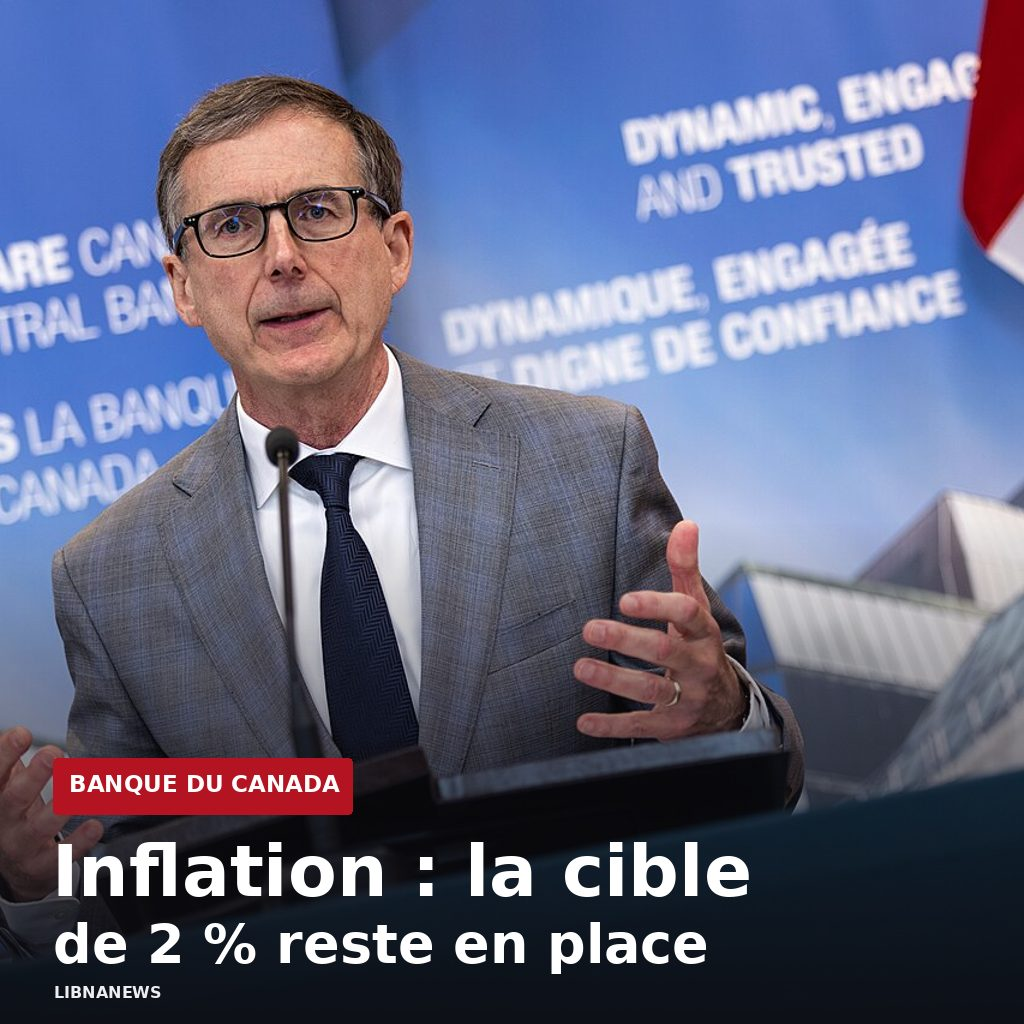
The Bank of Canada will maintain its inflation target of 2% until the end of 2031. Governor Tiff Macklem presented on Tuesday November 24 the conclusions of the review of the monetary framework, renewed with the government for five years. The Bank has also launched a scoreboard that includes its main price indicators. The speech did not change the policy rate.
The target remains in the middle of a range of 1% to 3%
The new agreement will apply from January 2027 to December 2031. The Bank will continue to target a 2% increase in the overall consumer price index (CPI) in the middle of a range of 1% to 3%. The limits of this range do not replace the central target. The underlying inflation measures, which help to isolate trends behind price fluctuations, remain diagnostic tools and not separate objectives.
It is this distinction that the Bank wants to make more readable with its dashboard. It brings together several underlying inflation measures and other indicators used by the Governing Council. Nevertheless, the institution intends to focus its communications on its overall CPI forecast and explain the differences between this forecast and the indicators it follows.
Respond sooner if a supply shock threatens to last
The Board considers that it is still possible to pass a temporary supply shock when its effects fade rapidly and inflation expectations remain stable. However, it wants to pay more attention to persistent shocks. Disruption of supply can both raise prices and reduce activity: raising rates slows demand, but does not restore deliveries. A faster response may be justified, according to counsel, if price increases spread or threaten to change household and business expectations.
To assess this persistence, the Bank plans to combine faster data, surveys, sectoral observations and different scenarios with official statistics. It also distinguishes the cost of housing, which is included in the price index, from the lack of housing supply. When rates rise, mortgage interest can increase even as monetary policy seeks to slow down overall inflation. The Bank intends to explain this effect without replacing a real estate target with that of prices.
The next rate decision is due on 9 December
The policy rate remains at 2.50%, following the 0.25 point increase announced on 28 October. The Bank will issue its next decision on Wednesday, December 9, at 9:45 a.m. Ottawa time. The renewal of the framework sets the objective and how to assess risks; it does not prejudge that decision.





Comments