

Tasneem Elridi
- 369,000 displaced personsneed essential humanitarian assistance to survive.
- TaëzandLahjare among the main governorates of origin for internally displaced persons and require greater mobilization of humanitarian efforts.
- Women and childrenare among the populations most affected by the conflict.
Internal displacement continues in Yemen, in a context of worsening the consequences of the conflict and increasing humanitarian pressure on affected families. According to the report released this month by the International Organization for Migration (IOM) in Yemen, 369,012 people, representing 61,502 households, have been displaced since the beginning of the year.
The report indicates that Taez Governorate is the leading governorate of origin for internally displaced persons during the follow-up period, with 48 per cent of the total. It is followed by Lahj governorate, with 45 per cent, and Al-Hodeida, with 3 per cent. The remaining 4 per cent come from several other governorates, including Marib, Al-Dhale, Ibb, Aden, Abyan, Sanaa, Hajjah, Shabwa, Al-Bayda, Al-Jawf, Al-Mahwit, Dhamar and Hadramaout.
Women and children in the worst affected populations
In the face of this growing humanitarian crisis, several humanitarian organizations have begun to implement initiatives to help people in need. To better understand the situation on the ground, we met with engineer Mabrouk Shubail, director of the office of LIFE for Relief and Development in Yemen. He referred to the humanitarian reality, the difficulties faced by displaced families and the challenges faced by humanitarian actors.
Here’s the interview he gave us:
First of all, could you explain to us what is the reality of the humanitarian situation in Yemen following the escalation of political tensions in the region?
Certainly. According to the United Nations Humanitarian Needs and Response Plan for 2026 and UNICEF data, approximately 22.3 million people in Yemen are in need of humanitarian assistance, of which 10.95 million women and girls require assistance and protection.
In addition, about 2.2 million children under five years of age suffer from acute malnutrition, while 1.3 million pregnant and lactating women are at risk of malnutrition. More than 7 million children also face increased protection risks, while about 4.5 million children are denied access to education.
These figures illustrate the magnitude of the humanitarian consequences of the conflict, which particularly affect women and children.
Protection assessments clearly reveal the risks to women and children. Why are these groups particularly vulnerable?
In general, women and children living in conflict and displacement areas face cumulative humanitarian, health, psychological and social risks. Their suffering is not limited to the loss of their homes or the flight of fighting zones. They also include threats to their physical integrity, deprivation of essential services and exposure to various forms of violence, exploitation and harassment in precarious and unsafe accommodation.
As the situation in Yemen deteriorated, more and more households were headed by women. Repeated movements further aggravate their difficulties, in particular due to the lack of suitable accommodation structures, overcrowding in available areas and insufficient living space.
This is compounded by the health risks associated with chronic diseases affecting some family members, the onset and spread of diseases, and the lack of vaccines. Psychological first aid and crisis support services are also lacking, while they are essential interventions to ensure immediate protection for vulnerable populations.
How do you assess the humanitarian needs of displaced persons?
In the face of the deteriorating humanitarian situation caused by the renewed conflict in Yemen, many families have lost their homes and property. As a result, the need for emergency humanitarian response has increased considerably, including to provide accommodation for displaced and affected families, improve their living conditions, alleviate their suffering and strengthen their capacity to cope with the consequences of displacement.
The Executive Unit for the management of camps for internally displaced persons, reporting to the Office of the Prime Minister of Yemen, stressed that displaced families face several basic humanitarian needs that require urgent intervention. Key priorities include:
- Food aid:supply food and basic necessities to affected households.
- Water, sanitation and hygiene (EAH/WASH):ensuring access to safe drinking water, hygiene products and adequate sanitation facilities.
- Health:ensure access to necessary health services and care for displaced persons.
- Shelter and accommodation:provide suitable housing and accommodation materials to protect families from precarious living conditions.
- Protection:strengthen protection measures for internally displaced persons, especially the most vulnerable groups.
- Livelihoods and financial assistance:support families so that they can regain their ability to meet their basic needs.
In the light of these indicators, the report urgently called for the mobilization of funding and resources, as well as the strengthening of operational capacities, to broaden the scope of the coordinated humanitarian response and to provide the necessary support to displaced families.
How can humanitarian actors determine the priorities for action in the face of so many people in need?
The fundamental mission of humanitarian actors is to ensure that every human being has access to the essential means necessary for its survival. The increasing scale of displacement, as well as the dispersal of affected families in 10 governorates and 59 districts, make it essential to strengthen coordination between humanitarian organizations and intensify joint efforts to meet the growing needs and ensure that assistance reaches the households most in need.
We have made considerable efforts to identify areas that have not yet received humanitarian assistance, identify the most urgent situations and assess the needs of the most vulnerable families.
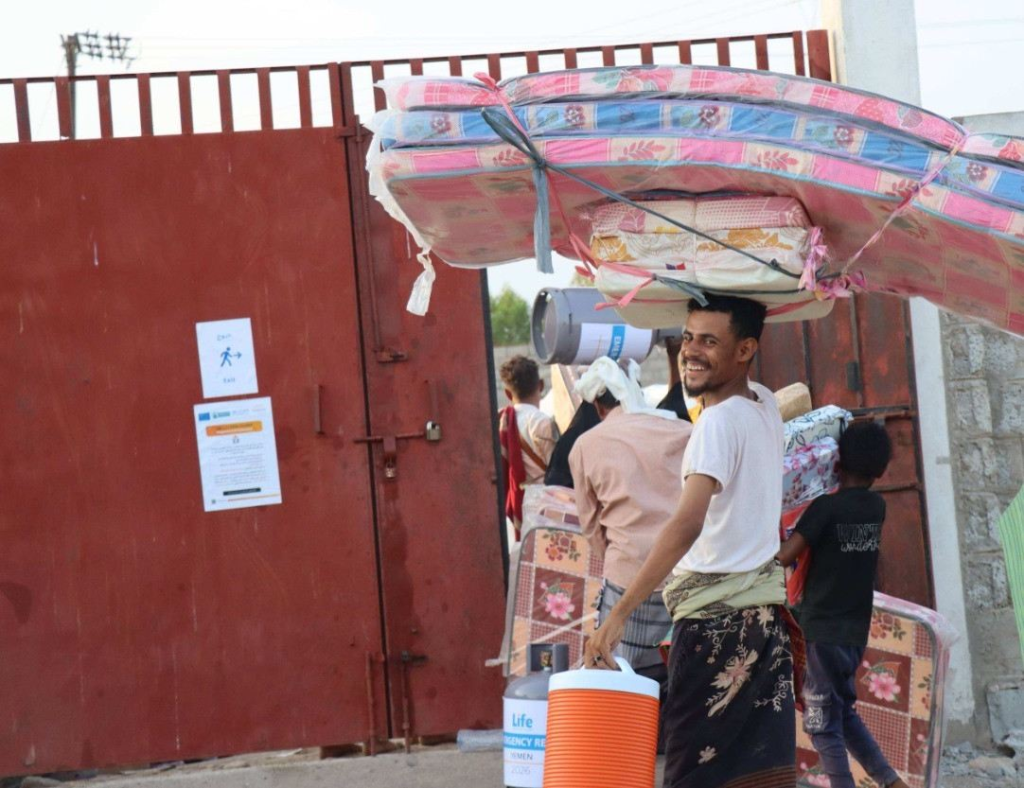
The interventions we are preparing in the governorates of Taez and Lahj concern camps for internally displaced persons and include the distribution of essential household equipment. These include foam mattresses and pillows, large sleeping mattresses, mats, two-burner gas stoves with kitchen utensils, plates, two-gallon water containers, 20-litre water buckets and 25-litre gas bottles.
In the first phase, we worked to care for about 600 families. We are continuing the census of the poorest households in order to broaden our intervention and reach an even larger number of beneficiaries.
In your capacity as Director of the LIFE for Relief andDevelopmentwhat are the main challenges facing you in Yemen?
Some challenges go beyond the capabilities of a single humanitarian organisation and require collective mobilization and cooperation among all relevant actors. The need is considerable because of the increasing number of people affected by the enlargement of the conflict.
It is therefore essential to combine efforts to reach the poorest and most vulnerable families, to verify and update beneficiary lists in order to exclude those not directly affected by the crisis, and to ensure the direct delivery of assistance to beneficiaries on the ground.
However, we believe that these challenges can be overcome.
LIFE has been working in Yemen for 34 years. This long experience has enabled us to gain a thorough knowledge of the country, its realities and the nature of the humanitarian needs of its people.
That is why we operate in parallel in different regions, thanks to our teams in several governorates. These teams work in close coordination to accelerate needs assessment and ensure the timely implementation of humanitarian interventions.
For more information:
https://lifeussa.org/#social-media





Comments