

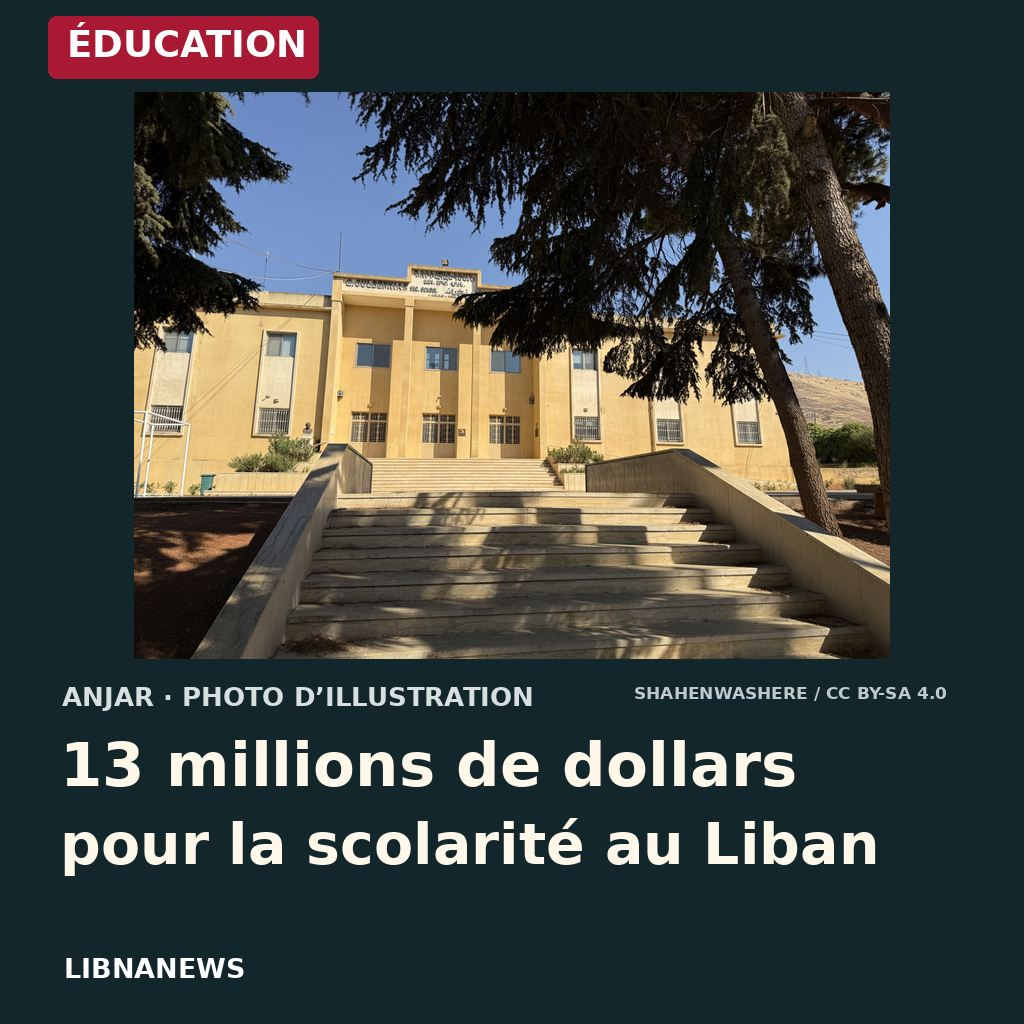
On 20 November, the United Nations Education Cannot Wait announced a three-year programme for children affected by the crisis in Lebanon. The $13 million envelope must support the enrolment, remedial and accessibility of 50 public schools. This is not a balance sheet of payments or work done.
For a child who has missed several months of class, finding a place in school is not always enough. Still, it is necessary to be able to get there, to have the equipment and to resume learning at the right level. The programme announced by Education Cannot Wait brings together these three forms of assistance. The fund plans to reach about 59,000 children directly, whether they are already out of school or at risk of dropping out. The figure is a three-year target, not the number of pupils already registered.
From school to catch-up
The Lebanese fact sheet provides educational material and transport assistance to facilitate registration and attendance. The remedial courses must be adapted to the level of each child. The programme also includes psychosocial support, spaces for adolescent girls and individualized educational plans and technical aids for children with disabilities.
In 50 public schools, the scheme provides for safer classrooms and better access to water, sanitation and hygiene. This figure concerns the development component; It does not correspond to the total number of schools covered by all actions or to the reopening of 50 schools. The fund cites eight governorates, from the South and Nabatiyah to Akkar, through Bekaa, Baalbek-Hermel, the North, Beirut and Mount Lebanon. A national school return campaign is planned. The fund does not specify which institutions will benefit from these facilities or how families will be able to register.
An active reserve in the event of a new crisis
The Lebanese Association Ana Aqra and the International Rescue Committee co-direct the programme, in which First Step Together Association and the Imam Sadr Foundation participate. The scheme works with the Lebanese Ministry of Education and Higher Education. National organizations must manage 74.4% of funding. The new programme is based on a multi-year scheme supported by the same fund from 2022 to 2024. Among the children covered, the card includes at least half girls and at least 10% children with disabilities. It also indicates 28 per cent of refugees and 14 per cent of internally displaced children.
Of the $13 million announced, $1.3 million is earmarked for rapid response if agreed warning thresholds are met. The fund does not announce that it has used this reserve or has published a payment schedule. The 52 million issued on the same day covered three countries: Lebanon, Myanmar and South Sudan. They do not constitute an envelope reserved for Lebanon.





Comments