

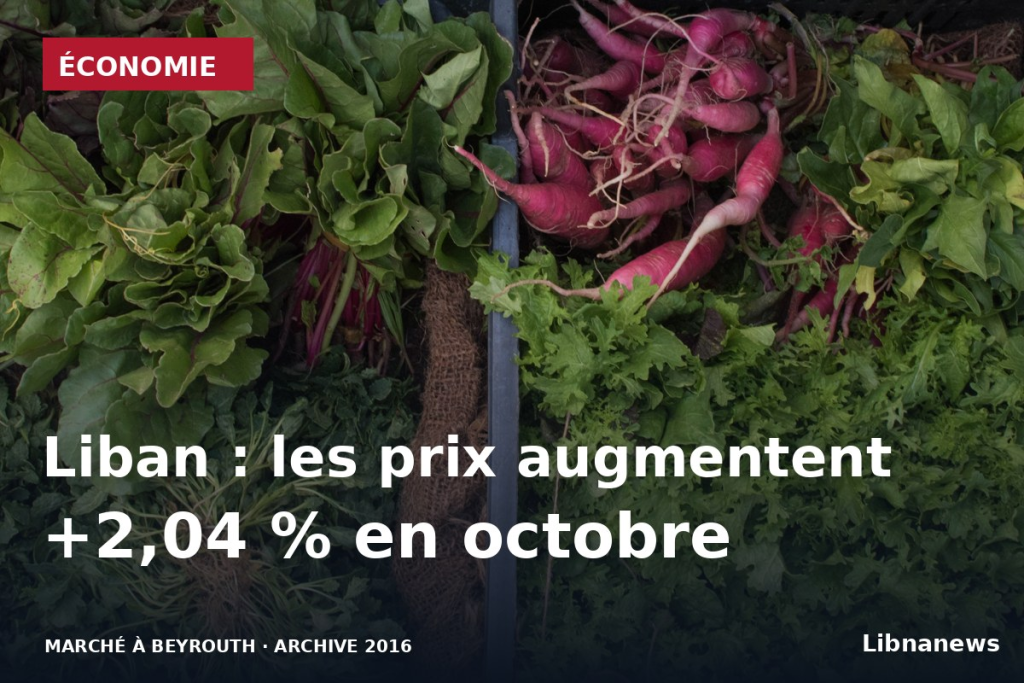
Consumer prices in Lebanon increased by 2.04% between September and October 2026, according to the Central Statistical Office. Over 12 months, the increase was 16.17%, compared with 17.53 % in September. Annual inflation is therefore slowing down, even though prices have risen faster from one month to the next.
The two figures do not compare the same periods. 2.04 % measure the gap between two successive months; 16.17% compare the price level of October 2026 to October 2025. By September, the monthly increase had been 1.35%. The increase from 17.53 per cent to 16.17 per cent over one year does not mean that prices fell in October. By way of illustration, a basket identical to that of the index, worth £1 million a year earlier, would have cost about 1.162 million in October 2026.
Education increases by 8.68 % over the month
Education is reflected in October data: its index is 8.68 per cent higher than in September. This figure alone does not indicate how much the cost of each school has increased or what has been the effect on the budget of each family. A household that pays for education and a household that does not pay for it do not have the same spending structure, even if they live in the same city.
Mount Lebanon posted the highest monthly increase
Among the six governorates for which the administration gives a monthly rate, Mount Lebanon recorded the highest increase (+2.32%). The North follows (+1.92%), Beirut (+1.87%), Bekaa (+1.71%), Nabatiyah (+1.68%) and the South (+1.56%). These differences relate to price variation, not to their absolute level: they do not make it possible to say that the same basket is more expensive in Mount Lebanon than in Beirut.
The administration reported a limit to Nabatiyah: it could not raise most of the real prices and had to estimate a large number of them to establish the index. The published rate for the governorate should therefore be read with this reserve, especially when compared closely with that of the South or the Bekaa.





Comments