


Price charged, price signed, liquidity: investigation of the hidden spread of a market where value can rise while buyers disappear
Economic file — data available on 1 October 2026
1. The $300,000 apartment may not be worth 300,000
Imagine a $300,000 apartment. The owner is in no hurry. One buyer offers $220,000, then another 235,000. Both offers are refused and the announcement remains at 300,000 for one year. How much is the real good? This question summarizes the Lebanese real estate paradox: a price displayed is not a transaction, an estimate is not cash and a property value is not necessarily a liquidation value.
At the end of August 2026, the number of sales recorded decreased to 34,549 over eight months, compared with 45,313 a year earlier, or -23,75 per cent. However, their cumulative value is down by only 3.76% to about $3.74 billion. The implicit average ticket increases from about $85,900 to over $108,000, almost +26%. This does not mean that each dwelling earned 26%: the register mixes different assets. But this shows that a market can lose buyers much faster than it loses nominal value.
The real spread is the difference between the expected price, the price charged, the price accepted, the registered price and the fast-moving price. The narrower the market, the more distant these values can be. For an emergencyless owner, this gap can remain invisible. For those who must get cash in thirty days, it becomes brutally concrete.
The relevant question is no longer only « how much is my apartment worth? ». It becomes: how much can I actually get, within what time, from how many buyers and with what certainty of payment? In Lebanon of 2026, liquidity is no longer a secondary characteristic of the asset. It is part of its value.
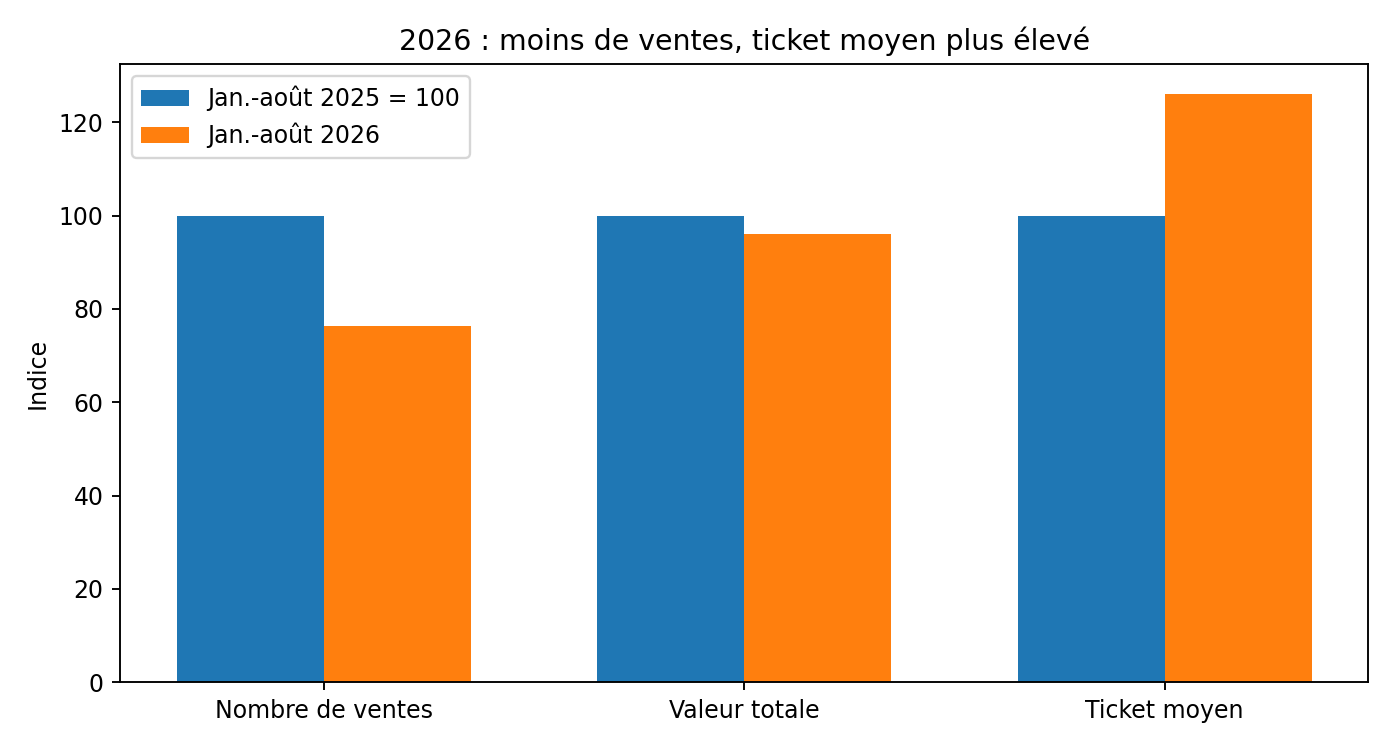
Figure 1 — Base 100 in January-August 2025. Sources: Directorate-General for Land Affairs and Land Registry; Lebanese credit. Calculations: Libnanews.
2. Almost a quarter of sales disappears
Between January and August 2026, almost 10,800 fewer transactions were recorded than in the same period of 2025. However, the total financial mass is falling by only about $150 million. The market therefore contracts much more in number of buyers than in exchanged dollars.
This divergence may reflect the withdrawal of households that would have needed a loan, better upscale resistance, the weight of the diaspora, more land or large assets in the transaction mix, or a concentration of purchases among cash holders. The data in the register do not allow each of these causes to be measured separately. On the other hand, they allow for a simplistic reading that an almost stable total value would prove a robust overall demand.
As of July 2026, 5,308 sales represented approximately $628 million and an average ticket close to $118,400. In August, the number of transactions decreased by only 3 per cent, but their value fell by about 21 per cent, bringing the average ticket back to $96,600. Some large files can therefore move the average significantly without the price of a typical apartment changing.
You should also use 2025 with caution. Land records processed a large inventory of files accumulated during closures and strikes, including in Mount Lebanon. Thus, registration statistics do not coincide perfectly with the economic date on which the purchase decision was taken.
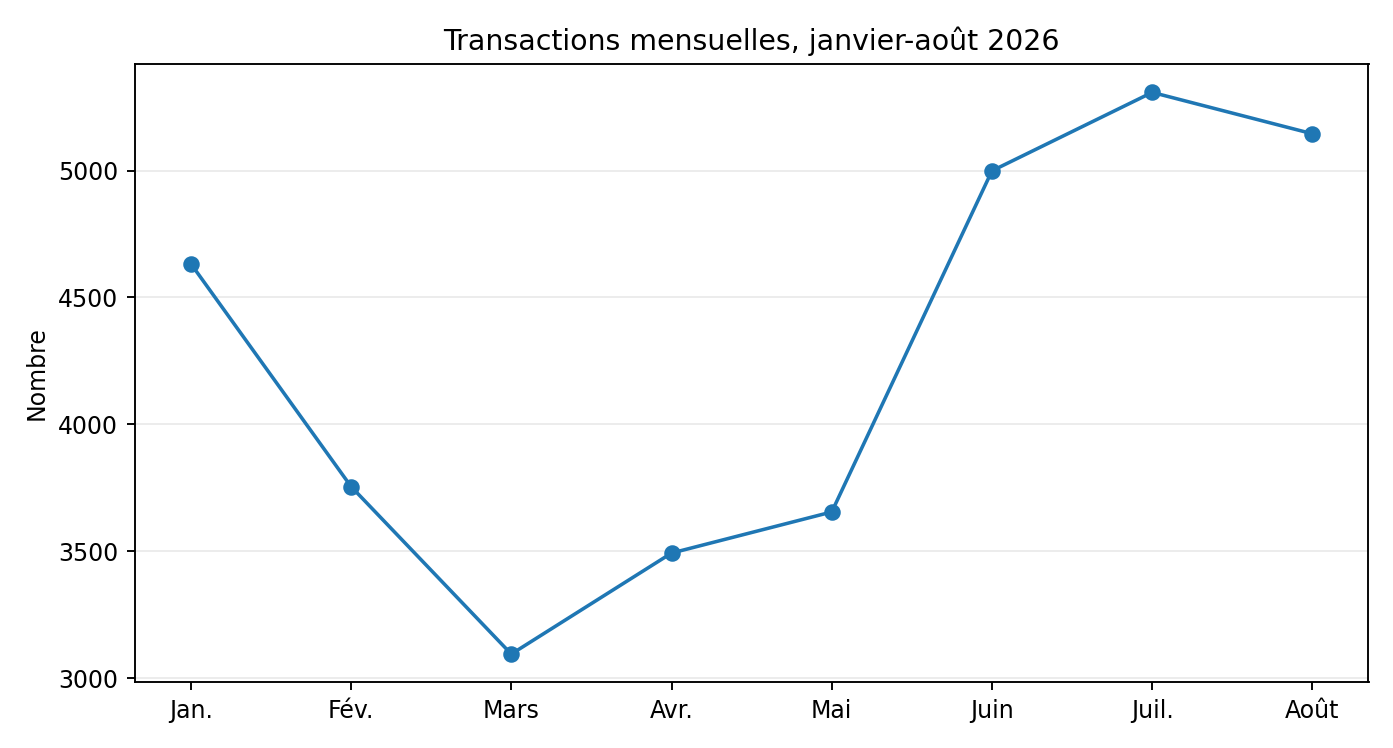
Figure 2 — Monthly transactions recorded in 2026. Sources: Land register; Lebanese credit; Byblos Bank/Lebanon This Week.
3. The missing credit reduced the number of possible buyers
Before 2019, the bank transformed twenty or thirty years of future revenue into immediate purchasing power. A household did not need $250,000 to purchase $250,000 in housing. He needed a contribution and a capacity to repay. This mechanism greatly expanded solvent demand.
In 2018, the Bank Association in Lebanon reported that more than 132,000 families had received housing loans for a portfolio of more than $13 billion. Since the bank collapse, this financing machine has virtually disappeared. The IMF continues to present banking restructuring and credit recovery to the private sector as essential standards.
The Habitat Bank revived subsidized loans in 2024, with limits of between $40,000 and $50,000 depending on income. It is useful socially but insufficient to reconstitute a mass mortgage demand on apartments at $200,000, $300,000 or $500,000. For an apartment of $300,000, funding of $50,000 covers only one sixth of the price.
The seller can therefore maintain its price, but the population able to pay it in cash is much smaller than the one who could once mobilize a contribution and borrow the rest. The shock first hits the depth of the buyer’s notebook, before necessarily hitting the price displayed.
4. Cash changed price formation
The World Bank already estimated the dollarized cash economy at $9.9 billion in 2022, or 45.7 per cent of GDP. Lebanon has reorganized around cash and fresh dollars without regaining the pre-crisis financial intermediation. The IMF further emphasizes in 2026 that banking confidence and credit remain to be rebuilt.
In a credit system, purchasing capacity depends on future income, rate, duration and contribution. In a cash system, it depends much more brutally on the liquid assets already available. A family can have a decent income but be excluded from a $250,000 apartment if it has only $60,000 savings and no lender to finance the balance.
The market therefore focuses on the diaspora, expatriates, entrepreneurs, high-income professions and households that have retained external savings. Part of the increase in the average ticket can be a selection effect: small buyers exit the market faster than the big ones.
A cash buyer also has a specific advantage: certainty of execution. It does not depend on a credit committee and can conclude quickly. This certainty has an implicit price. The more liquidity the seller needs, the more this advantage becomes trading power.
5. Price charged, price signed, liquidation price
The price charged expresses an ambition. The expected price may be lower: a seller displays $320,000 while knowing that he would accept 290,000. The signed price corresponds to the agreement. The quick settlement price is the one he would accept to obtain cash within a short time. These numbers can be the same in a very liquid market; they can diverge greatly in a narrow market.
There is no comprehensive public basis for measuring a reliable average discount between displayed and final prices in Lebanon, let alone a standard discount of 30 days. Inventing 10%, 20% or 30% would be attractive but statistically false. The absence of this statistic is itself important: it shows market opacity.
The right reflex is therefore to measure the number of serious tenders, their level, the time spent on the market, the successive declines in the price requested and the cost of waiting. An apartment that has been posted $300,000 for 18 months without an offer above 230,000 does not have the same liquidity as another one sold in two weeks at 290,000.
For a heritage balance, it would even be rational to display two values: a long-term conservation value and a short-term liquid value. This would avoid confusing theoretical wealth with immediately mobilizable capital.
6. Prices can remain high precisely because sales do not take place
A low market does not automatically produce low prices. It produces low prices if sellers are forced to accept available offers. If owners can wait, the adjustment goes first through volumes and deadlines. The seller refuses $230,000 for a displayed property 300,000: no sale takes place, so no new lower price is included in the statistics.
On a large scale, this rigidity creates an illusion of stability. Nearby ads serve as a reference to each other, even when they do not find a customer. The price displayed then becomes a heritage agreement more than an verified market price.
The phenomenon is reinforced by the new low mortgage debt. The lack of credit reduces demand, but it also reduces certain forced sales due to a default. The market can therefore simultaneously become less liquid and more rigid.
This mechanism explains why a decline in volume is a major economic information. If prices remain high but trade disappears, apparent stability may hide an increase in the spread of liquidity.
7. The stone carries a bonus of distrust towards the bank
After 2019, many Lebanese discovered that a nominal bank balance was not equivalent to cash freely available. Real estate has acquired a function that exceeds its return: that of a tangible asset that can be lived in, transferred or retained off the balance sheet of a bank.
This preference helps to understand the surge in transactions in 2020 and 2021: 82,202 sales in 2020 and 110,094 in 2021, compared to 60,714 in 2018 and 50,352 in 2019. Some of the depositors sought to transform blocked bank claims into real assets. However, transactions in « lollars » are not directly comparable to current sales in fresh dollars.
The psychological legacy remains. An owner can refuse an economically reasonable price because he compares the sale not to another abstract investment, but to the risk he associates with the financial system. This distrust premium supports reserve prices.
It also has a paradoxical consequence: an asset can maintain a high heritage value while providing poor rental performance and low liquidity. The owner accepts this inefficiency because he values the tangibility of the asset.
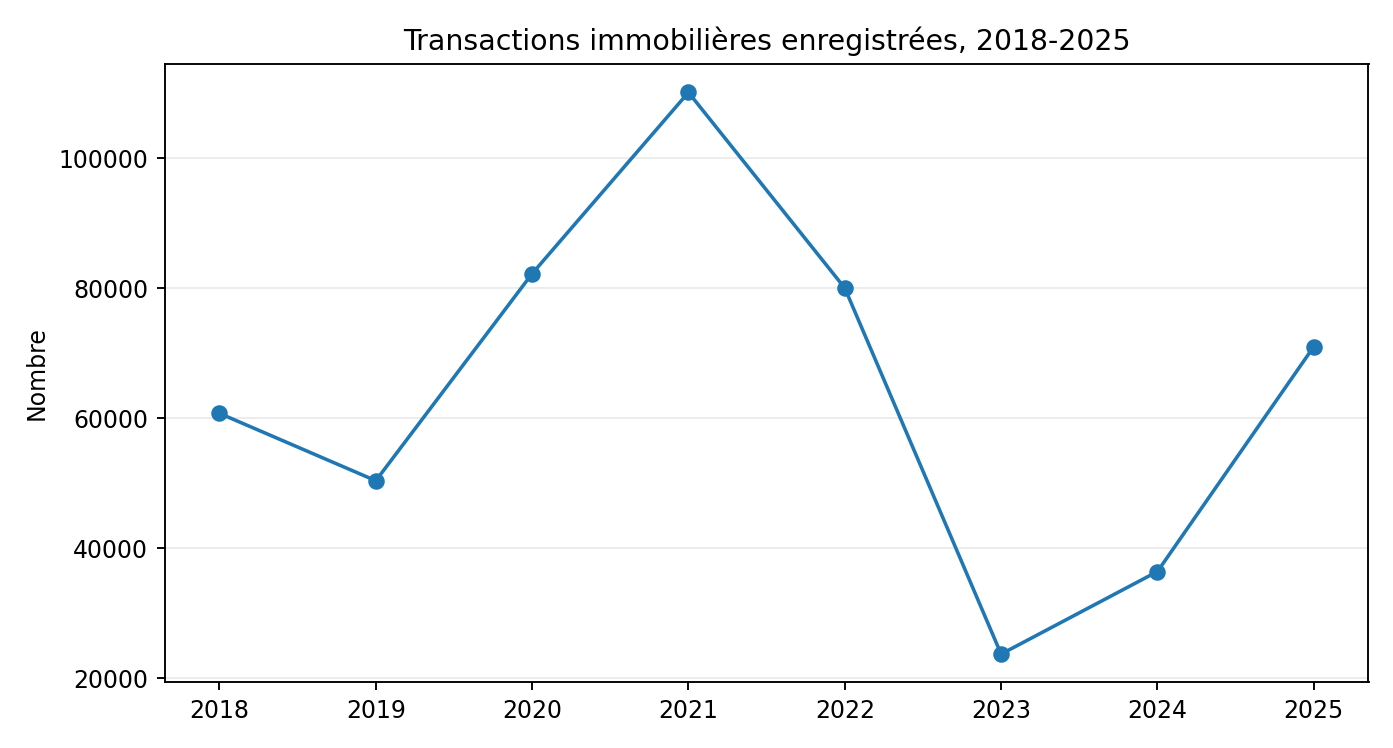
Figure 3 — The 2020-2021 peak should be read in the context of converting blocked deposits into real assets. Sources: Land register; Bank Audi; Lebanese credit.
8. Beirut: When the price charged moves away from fundamentals
In August 2026, Ramco Real Estate Advisors described prices in Beirut that had become increasingly disconnected from security, banking and economic realities, while transactions remained sporadic. This observation joins the mechanism described here: the optimism of the owners can raise the displayed offer without creating buyers able to validate it.
The market remains highly segmented. In the spring of 2026, transactions in Ashrafieh ended around $1,500 per square metre for an old apartment requiring major work and around $3,000 for an old apartment with limited terrace and repairs. At the beginning of 2026, some premium segments remained quoted around $5,000 per square metre on the seafront and more around Saint George Bay.
These examples are not a general index. On the contrary, they show why it is dangerous to speak of the « Beirut price » as a single number. View, parking, condition, floor, building quality, size, title, loads, energy and product scarcity can create considerable differences.
So a liquid apartment is not just a well located apartment. It is a product whose characteristics correspond to a population of buyers that actually exists at the price charged.
9. Inflation, dollars and illusion of wealth
Annual inflation as measured by the Central Statistical Office reached 16.66 per cent in August 2026. An owner who sees his apartment grow from $250,000 to $275,000 may feel like he’s 10 per cent richer. But real wealth depends on what these dollars allow to buy, the cost of maintaining the property and the possibility of converting the asset into cash.
In a highly dollarized country, inflation in pounds is not a perfect deflator of real estate quoted in dollars. However, it recalls that nominal value and purchasing power are two different concepts. The increase in a posted price becomes a realized wealth only when a buyer actually pays that price.
Invisible costs must be included: vacancy, co-ownership charges, maintenance, generator, elevator, facade, waterproofing, insurance, taxation and future work. A property that « values » $300,000 but costs several thousand dollars a year to wear for three years without a buyer can have an economic value that is significantly lower than its facial price.
10. Construction is not enough to prove a recovery
Construction permits issued by the Bank of Lebanon remain volatile: 504,723 m2 in January 2025, 823 111 in February, 404,764 in March; 716 669 m2 in January 2026, 825 564 in February and 439 751 in March. These figures indicate intentions and projects, not some sales.
A limited new offer can support the prices of certain products. But physical rarity does not automatically create solvency. The market can lack good new apartments and simultaneously miss buyers able to finance them.
This is a fundamental distinction: product scarcity and financial liquidity are not the same. A rare asset may remain unsold if its price exceeds the capital available to buyers.
11. The 30-Day Test
To know the economic value of an apartment, one can ask a deliberately brutal question: how much would you get if you were to sell in thirty days? The answer does not exist on an official basis. It requires looking at the real market: bids received, comparables actually sold, depth of demand and buyer’s ability to pay in fresh dollars.
The test does not mean that any owner must value his wealth at the price of a forced sale. A patient investor can legitimately retain a higher long-term value. But he must know that he then holds two values: a heritage value and a liquid value.
This distinction is familiar in finance. Two assets can display the same theoretical value while having very different cash conversion risks. Lebanese real estate must be read with the same discipline.
12. What a 30% increase would really mean
An increase forecast of up to 30% cannot be correctly interpreted without specifying the price involved. Are these prices charged, signed transactions, the nine premium in Beirut, a national basket or an expert estimate? Without methodology, a spectacular figure can hide more than it explains.
A 30% increase with a sharp increase in volumes, a return to credit and a reduction in sales delays would signal a much deeper market than a 30% increase in seller claims with decreasing volumes. In the first case, the request validates the price. In the second, the price can simply reflect an increase in the reserve value.
The 2026 data specifically suggest this caution: volume declines sharply while the average value of operations increases. So we need to talk about a market that selects, not a uniform rise in wealth.
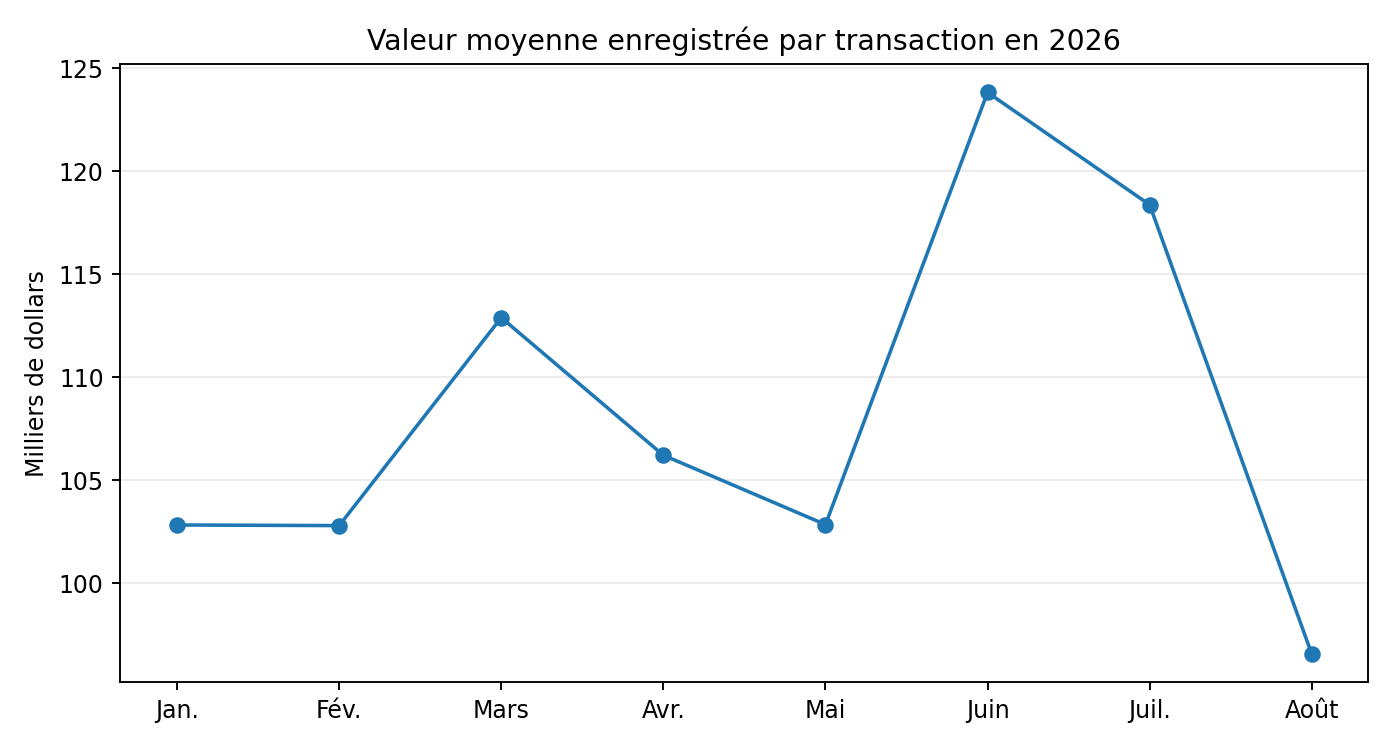
Figure 4 — Monthly average ticket: composition indicator, no homogeneous price index. Sources: Land register; Libnanews calculations.
13. Value is a function of time
An apartment does not have a value independent of time. An owner who can wait three years does not face the same market as an owner who must sell before the end of the month. The first can wait for the rare buyer; the second must meet the demand available today. This difference turns the delay into a financial variable.
This distinction obliges us to abandon the temptation of the single number. The value must be read with its horizon, liquidity and the quality of the information available. In a transparent market, these parameters are documented by average sales bases and deadlines. In Lebanon, their measurement remains partial, increasing the margin of error of estimates and increasing the weight of negotiation.
For the economist, therefore, the most useful signal is not only the facial level of prices, but the combination of volume, sales time and financing. A price rising with rising volumes and credit is very different from a price rising as volumes contract. The 2026 data are closer to the second case: they describe a selection of transactions and strong resistance to average values.
For the owner, the consequence is practical. The market needs to be tested instead of just an estimate. The number of qualified buyers, the quality of offers and the speed at which they appear are price information. The weaker they are, the more the asset value depends on the vendor’s patience. The wealth remains real, but its conversion into cash becomes uncertain.
14. The opportunity cost of waiting
Denying $260,000 today to hope 300,000 in two years is not free. The owner bears the charges, maintenance, risk of vacancy and security risk; It also renounces the return that the $260,000 could have produced elsewhere. The correct calculation therefore compares the expected price supplement to the total cost of waiting.
This distinction obliges us to abandon the temptation of the single number. The value must be read with its horizon, liquidity and the quality of the information available. In a transparent market, these parameters are documented by average sales bases and deadlines. In Lebanon, their measurement remains partial, increasing the margin of error of estimates and increasing the weight of negotiation.
For the economist, therefore, the most useful signal is not only the facial level of prices, but the combination of volume, sales time and financing. A price rising with rising volumes and credit is very different from a price rising as volumes contract. The 2026 data are closer to the second case: they describe a selection of transactions and strong resistance to average values.
For the owner, the consequence is practical. The market needs to be tested instead of just an estimate. The number of qualified buyers, the quality of offers and the speed at which they appear are price information. The weaker they are, the more the asset value depends on the vendor’s patience. The wealth remains real, but its conversion into cash becomes uncertain.
15. Why the square meter can deceive
The price per square metre facilitates comparisons but can give false accuracy. Two apartments of 200 m2 in the same street can differ greatly depending on the light, view, floor, distribution, parking, condition of the condominium, electricity, elevator, quality of title and necessary works. The narrower the market, the more important these idiosyncratic features are.
This distinction obliges us to abandon the temptation of the single number. The value must be read with its horizon, liquidity and the quality of the information available. In a transparent market, these parameters are documented by average sales bases and deadlines. In Lebanon, their measurement remains partial, increasing the margin of error of estimates and increasing the weight of negotiation.
For the economist, therefore, the most useful signal is not only the facial level of prices, but the combination of volume, sales time and financing. A price rising with rising volumes and credit is very different from a price rising as volumes contract. The 2026 data are closer to the second case: they describe a selection of transactions and strong resistance to average values.
For the owner, the consequence is practical. The market needs to be tested instead of just an estimate. The number of qualified buyers, the quality of offers and the speed at which they appear are price information. The weaker they are, the more the asset value depends on the vendor’s patience. The wealth remains real, but its conversion into cash becomes uncertain.
16. Diaspora does not replace credit system
The diaspora brings currency and supports certain segments, but it does not replace a domestic mortgage market. An expatriate buyer can be powerful individually; It does not create the same depth as a banking system capable of financing tens of thousands of households. External demand can support the best products without making the entire park liquid.
This distinction obliges us to abandon the temptation of the single number. The value must be read with its horizon, liquidity and the quality of the information available. In a transparent market, these parameters are documented by average sales bases and deadlines. In Lebanon, their measurement remains partial, increasing the margin of error of estimates and increasing the weight of negotiation.
For the economist, therefore, the most useful signal is not only the facial level of prices, but the combination of volume, sales time and financing. A price rising with rising volumes and credit is very different from a price rising as volumes contract. The 2026 data are closer to the second case: they describe a selection of transactions and strong resistance to average values.
For the owner, the consequence is practical. The market needs to be tested instead of just an estimate. The number of qualified buyers, the quality of offers and the speed at which they appear are price information. The weaker they are, the more the asset value depends on the vendor’s patience. The wealth remains real, but its conversion into cash becomes uncertain.
17. Foreign is not the main engine
The share of foreigners in recorded sales fell to about 1.5 per cent at the end of August 2026, compared with 2.09% in 2025 and 2.36% in 2024. This does not measure the Lebanese diaspora, but it shows that the resistance of values is not based on a wave of foreign buyers. The market remains primarily linked to Lebanese capital, residents or expatriates.
This distinction obliges us to abandon the temptation of the single number. The value must be read with its horizon, liquidity and the quality of the information available. In a transparent market, these parameters are documented by average sales bases and deadlines. In Lebanon, their measurement remains partial, increasing the margin of error of estimates and increasing the weight of negotiation.
For the economist, therefore, the most useful signal is not only the facial level of prices, but the combination of volume, sales time and financing. A price rising with rising volumes and credit is very different from a price rising as volumes contract. The 2026 data are closer to the second case: they describe a selection of transactions and strong resistance to average values.
For the owner, the consequence is practical. The market needs to be tested instead of just an estimate. The number of qualified buyers, the quality of offers and the speed at which they appear are price information. The weaker they are, the more the asset value depends on the vendor’s patience. The wealth remains real, but its conversion into cash becomes uncertain.
18. The register measures what is sold, not what fails
Any transaction statistic suffers from a survivor bias: it observes the sales that have been successful. It does not see the thousands of negotiations interrupted, advertisements withdrawn, sellers who refuse all offers or buyers who give up. But it is precisely in these transaction failures that part of the liquidity spread is hidden.
This distinction obliges us to abandon the temptation of the single number. The value must be read with its horizon, liquidity and the quality of the information available. In a transparent market, these parameters are documented by average sales bases and deadlines. In Lebanon, their measurement remains partial, increasing the margin of error of estimates and increasing the weight of negotiation.
For the economist, therefore, the most useful signal is not only the facial level of prices, but the combination of volume, sales time and financing. A price rising with rising volumes and credit is very different from a price rising as volumes contract. The 2026 data are closer to the second case: they describe a selection of transactions and strong resistance to average values.
For the owner, the consequence is practical. The market needs to be tested instead of just an estimate. The number of qualified buyers, the quality of offers and the speed at which they appear are price information. The weaker they are, the more the asset value depends on the vendor’s patience. The wealth remains real, but its conversion into cash becomes uncertain.
19. A two-speed market
Rare, well-maintained, properly documented and adapted to cash budgets can maintain true liquidity. Oversized, energy-intensive goods requiring heavy work or offered on the basis of old references may remain blocked. Talking about a single Lebanese real estate market therefore masks a mosaic of micro-markets.
This distinction obliges us to abandon the temptation of the single number. The value must be read with its horizon, liquidity and the quality of the information available. In a transparent market, these parameters are documented by average sales bases and deadlines. In Lebanon, their measurement remains partial, increasing the margin of error of estimates and increasing the weight of negotiation.
For the economist, therefore, the most useful signal is not only the facial level of prices, but the combination of volume, sales time and financing. A price rising with rising volumes and credit is very different from a price rising as volumes contract. The 2026 data are closer to the second case: they describe a selection of transactions and strong resistance to average values.
For the owner, the consequence is practical. The market needs to be tested instead of just an estimate. The number of qualified buyers, the quality of offers and the speed at which they appear are price information. The weaker they are, the more the asset value depends on the vendor’s patience. The wealth remains real, but its conversion into cash becomes uncertain.
20. Security risk is not capitalized uniformly
Security affects demand, but its effect depends on location, buyer profile and horizon. An opportunistic investor can accept a high risk against an attractive price; On the contrary, a family seeking their principal residence may require a security premium. The same geopolitical event does not produce a uniform discount.
This distinction obliges us to abandon the temptation of the single number. The value must be read with its horizon, liquidity and the quality of the information available. In a transparent market, these parameters are documented by average sales bases and deadlines. In Lebanon, their measurement remains partial, increasing the margin of error of estimates and increasing the weight of negotiation.
For the economist, therefore, the most useful signal is not only the facial level of prices, but the combination of volume, sales time and financing. A price rising with rising volumes and credit is very different from a price rising as volumes contract. The 2026 data are closer to the second case: they describe a selection of transactions and strong resistance to average values.
For the owner, the consequence is practical. The market needs to be tested instead of just an estimate. The number of qualified buyers, the quality of offers and the speed at which they appear are price information. The weaker they are, the more the asset value depends on the vendor’s patience. The wealth remains real, but its conversion into cash becomes uncertain.
21. Heritage Value and Bank Value
In a normal financial system, real estate expertise can serve as collateral to a loan and turn part of the asset’s value into liquidity without sale. In Lebanon, this function is greatly diminished. Property is therefore less easily monetizable: one can be rich in assets and poor in cash.
This distinction obliges us to abandon the temptation of the single number. The value must be read with its horizon, liquidity and the quality of the information available. In a transparent market, these parameters are documented by average sales bases and deadlines. In Lebanon, their measurement remains partial, increasing the margin of error of estimates and increasing the weight of negotiation.
For the economist, therefore, the most useful signal is not only the facial level of prices, but the combination of volume, sales time and financing. A price rising with rising volumes and credit is very different from a price rising as volumes contract. The 2026 data are closer to the second case: they describe a selection of transactions and strong resistance to average values.
For the owner, the consequence is practical. The market needs to be tested instead of just an estimate. The number of qualified buyers, the quality of offers and the speed at which they appear are price information. The weaker they are, the more the asset value depends on the vendor’s patience. The wealth remains real, but its conversion into cash becomes uncertain.
22. Taxation can reveal the conflict between value and cash
Any taxation based on theoretical value poses a difficulty when the asset is illiquid. An owner may own an expensive apartment but have little income. This issue becomes particularly sensitive if the budget debate introduces new taxes on unoccupied property or housing: the tax base and capacity to pay do not necessarily coincide.
This distinction obliges us to abandon the temptation of the single number. The value must be read with its horizon, liquidity and the quality of the information available. In a transparent market, these parameters are documented by average sales bases and deadlines. In Lebanon, their measurement remains partial, increasing the margin of error of estimates and increasing the weight of negotiation.
For the economist, therefore, the most useful signal is not only the facial level of prices, but the combination of volume, sales time and financing. A price rising with rising volumes and credit is very different from a price rising as volumes contract. The 2026 data are closer to the second case: they describe a selection of transactions and strong resistance to average values.
For the owner, the consequence is practical. The market needs to be tested instead of just an estimate. The number of qualified buyers, the quality of offers and the speed at which they appear are price information. The weaker they are, the more the asset value depends on the vendor’s patience. The wealth remains real, but its conversion into cash becomes uncertain.
23. How to seriously estimate a property in 2026
A credible estimate should be based on recent transactions actually concluded, adjusted for surface, state, floor, view, parking and building quality. It should then incorporate the observed sales time and the level of tenders received. Comparable ads are useful but should never be confused with comparable sales.
This distinction obliges us to abandon the temptation of the single number. The value must be read with its horizon, liquidity and the quality of the information available. In a transparent market, these parameters are documented by average sales bases and deadlines. In Lebanon, their measurement remains partial, increasing the margin of error of estimates and increasing the weight of negotiation.
For the economist, therefore, the most useful signal is not only the facial level of prices, but the combination of volume, sales time and financing. A price rising with rising volumes and credit is very different from a price rising as volumes contract. The 2026 data are closer to the second case: they describe a selection of transactions and strong resistance to average values.
For the owner, the consequence is practical. The market needs to be tested instead of just an estimate. The number of qualified buyers, the quality of offers and the speed at which they appear are price information. The weaker they are, the more the asset value depends on the vendor’s patience. The wealth remains real, but its conversion into cash becomes uncertain.
The question that changes everything
If you own a $300,000 apartment, its heritage value can actually be close to 300,000 if you can wait for the right buyer. But if you have to sell it in 30 days, the only relevant value is the price a solvent buyer is willing to pay now. Between the two is the hidden spread of Lebanese real estate.
This distinction obliges us to abandon the temptation of the single number. The value must be read with its horizon, liquidity and the quality of the information available. In a transparent market, these parameters are documented by average sales bases and deadlines. In Lebanon, their measurement remains partial, increasing the margin of error of estimates and increasing the weight of negotiation.
For the economist, therefore, the most useful signal is not only the facial level of prices, but the combination of volume, sales time and financing. A price rising with rising volumes and credit is very different from a price rising as volumes contract. The 2026 data are closer to the second case: they describe a selection of transactions and strong resistance to average values.
For the owner, the consequence is practical. The market needs to be tested instead of just an estimate. The number of qualified buyers, the quality of offers and the speed at which they appear are price information. The weaker they are, the more the asset value depends on the vendor’s patience. The wealth remains real, but its conversion into cash becomes uncertain.
Statistical references
| Indicator | Period | Value | Reading |
| Transactions | Jan-August 2026 | 34 549 | -23.75% year-on-year |
| Value of sales | Jan-August 2026 | $ 3.74 billion | -3.76% year-on-year |
| Implicit Average Ticket | Jan-August 2026 | $ 108,000 | +26% over one year; possible compositional effect |
| Share of foreigners | August 2026 | 1.50% | 2.09 per cent in 2025 |
| Inflation | August 2026 | +16.66 % a/a | CAS |
| Transactions | 2021 | 110,094 | conversion peak to real assets |
| Transactions | 2025 | 70 981 | strong administrative catch-up effect |
Methodology and limitations
The transaction data are obtained from the Directorate-General for Land Affairs and Land Registry as reported by Crédit Libanese, BLOM/BRITE and Byblos Bank. Minor differences exist between publications for certain cumulative values; the text favours the consistent series of Lebanese Credit for comparisons 2025-2026.
The average ticket is obtained by dividing the total value recorded by the number of transactions. It is not a price index: the composition of goods sold varies from one period to another.
Dollar figures since 2024 use the official rate of 89,500 LBP for one dollar in the quoted series. Long value comparisons are difficult due to changes in conversion rates and the monetary crisis.
There is no comprehensive public series of the signed price/price ratio requested or the average sales time in Lebanon. Sales scenarios of $300,000, $230,000 or $220,000 are analytical illustrations, not observed statistics.
Main sources
- General Directorate of Land Affairs and Cadastre / Crédit Libanese, 14 September 2026: transactions at the end of August 2026.
- BLOMINvest / BRITE : Number and Value of Real Estate Transactions, data until August 2026.
- Bank of Lebanon: Construction Permits; banking statistics.
- Central Statistical Administration: Consumer Prices, August 2026.
- IMF: Missions to Lebanon, June 2025 and February 2026, on bank restructuring and credit.
- World Bank: Lebanon Economic Monitor and dollarized cash economy estimate.
- Bank Association in Lebanon: Historical data on housing loans (2018).
- Ramco Real Estate Advisors, market data and observations taken by L-Orient-Le Jour/L-Orient Today in 2025-2026.
Practical case: family apartment from 250 to 350 m2
For a large family apartment, the first mistake is to take the price charged as an objective data. The value depends first of all on the depth of the clientele that can pay in fresh dollars. Its main support can be high costs, large acquisition budget and limited number of cash buyers. But this support is only valid if there are several buyers who can recognize it at the same time. An asset can be excellent and remain illiquid simply because its ticket exceeds the available demand budget.
The second step is to build a range from sales actually concluded and not advertised. Comparables must be corrected for the surface, condition, floor, neighbourhood and especially impossible fractionation and cost of renovation. An apparently secondary difference can be tens of thousands of dollars when the market is shallow. The rarer the comparables, the greater the margin of uncertainty; Displaying an estimate to the nearest dollar then gives a fictitious accuracy.
The third step is to test three horizons: fast selling, normal selling and conservation. Quick selling measures immediate liquidity; the normal sale assumes several months of exposure; conservation allows the owner to wait for an improvement of the context or the particular buyer who will best value the property. These three scenarios are not three contradictory views: these are three prices associated with three different time constraints.
Finally, the owner must calculate the cost of carrying while waiting. Charges, maintenance, taxation, works, vacancy and opportunity cost of capital must be deducted from the expected price surcharge. Refusing today a supply slightly lower than the target price can be rational; to refuse it for three years is only if the expected future gain actually offsets these costs and the additional risks.
Practical case: the small liquid apartment
For a small apartment, the first mistake is to take the requested price as an objective data. The value depends first of all on the depth of the clientele that can pay in fresh dollars. Its main support can be lower entry ticket and wider potential customers. But this support is only valid if there are several buyers who can recognize it at the same time. An asset can be excellent and remain illiquid simply because its ticket exceeds the available demand budget.
The second step is to build a range from sales actually concluded and not advertised. Comparables must be corrected for surface, condition, floor, neighborhood and above all building quality, parking and rental efficiency. An apparently secondary difference can be tens of thousands of dollars when the market is shallow. The rarer the comparables, the greater the margin of uncertainty; Displaying an estimate to the nearest dollar then gives a fictitious accuracy.
The third step is to test three horizons: fast selling, normal selling and conservation. Quick selling measures immediate liquidity; the normal sale assumes several months of exposure; conservation allows the owner to wait for an improvement of the context or the particular buyer who will best value the property. These three scenarios are not three contradictory views: these are three prices associated with three different time constraints.
Finally, the owner must calculate the cost of carrying while waiting. Charges, maintenance, taxation, works, vacancy and opportunity cost of capital must be deducted from the expected price surcharge. Refusing today a supply slightly lower than the target price can be rational; to refuse it for three years is only if the expected future gain actually offsets these costs and the additional risks.
Practical case: the nine premium
For a new premium apartment, the first mistake is to take the requested price as an objective data. The value depends first of all on the depth of the clientele that can pay in fresh dollars. Its main support can be rarity of the new product and quality of services. But this support is only valid if there are several buyers who can recognize it at the same time. An asset can be excellent and remain illiquid simply because its ticket exceeds the available demand budget.
The second step is to build a range from sales actually concluded and not advertised. Comparables must be corrected for the surface, condition, floor, neighbourhood and especially the developer’s reserve price and real customer depth. An apparently secondary difference can be tens of thousands of dollars when the market is shallow. The rarer the comparables, the greater the margin of uncertainty; Displaying an estimate to the nearest dollar then gives a fictitious accuracy.
The third step is to test three horizons: fast selling, normal selling and conservation. Quick selling measures immediate liquidity; the normal sale assumes several months of exposure; conservation allows the owner to wait for an improvement of the context or the particular buyer who will best value the property. These three scenarios are not three contradictory views: these are three prices associated with three different time constraints.
Finally, the owner must calculate the cost of carrying while waiting. Charges, maintenance, taxation, works, vacancy and opportunity cost of capital must be deducted from the expected price surcharge. Refusing today a supply slightly lower than the target price can be rational; to refuse it for three years is only if the expected future gain actually offsets these costs and the additional risks.
Practical case: old to renovate
For an old apartment to be renovated, the first mistake is to take the price charged as an objective data. The value depends first of all on the depth of the clientele that can pay in fresh dollars. Its main support can be haircut apparent to purchase but works payable in cash. But this support is only valid if there are several buyers who can recognize it at the same time. An asset can be excellent and remain illiquid simply because its ticket exceeds the available demand budget.
The second step is to build a range from sales actually concluded and not advertised. Comparables must be corrected for the surface, state, floor, neighbourhood and above all uncertainty about the final cost and condition of the common parts. An apparently secondary difference can be tens of thousands of dollars when the market is shallow. The rarer the comparables, the greater the margin of uncertainty; Displaying an estimate to the nearest dollar then gives a fictitious accuracy.
The third step is to test three horizons: fast selling, normal selling and conservation. Quick selling measures immediate liquidity; the normal sale assumes several months of exposure; conservation allows the owner to wait for an improvement of the context or the particular buyer who will best value the property. These three scenarios are not three contradictory views: these are three prices associated with three different time constraints.
Finally, the owner must calculate the cost of carrying while waiting. Charges, maintenance, taxation, works, vacancy and opportunity cost of capital must be deducted from the expected price surcharge. Refusing today a supply slightly lower than the target price can be rational; to refuse it for three years is only if the expected future gain actually offsets these costs and the additional risks.
Practical case: apartment with sea view
For a good with sea view, the first mistake is to take the price charged as an objective data. The value depends first of all on the depth of the clientele that can pay in fresh dollars. Its main support can be physical rarity that can preserve a bonus. But this support is only valid if there are several buyers who can recognize it at the same time. An asset can be excellent and remain illiquid simply because its ticket exceeds the available demand budget.
The second step is to build a range from sales actually concluded and not advertised. Comparables must be corrected for the surface, condition, floor, neighborhood and above all the really protected view, accessibility and quality of the building. An apparently secondary difference can be tens of thousands of dollars when the market is shallow. The rarer the comparables, the greater the margin of uncertainty; Displaying an estimate to the nearest dollar then gives a fictitious accuracy.
The third step is to test three horizons: fast selling, normal selling and conservation. Quick selling measures immediate liquidity; the normal sale assumes several months of exposure; conservation allows the owner to wait for an improvement of the context or the particular buyer who will best value the property. These three scenarios are not three contradictory views: these are three prices associated with three different time constraints.
Finally, the owner must calculate the cost of carrying while waiting. Charges, maintenance, taxation, works, vacancy and opportunity cost of capital must be deducted from the expected price surcharge. Refusing today a supply slightly lower than the target price can be rational; to refuse it for three years is only if the expected future gain actually offsets these costs and the additional risks.
Practical case: property without parking
For an apartment without parking, the first mistake is to take the requested price as an objective data. The value depends first of all on the depth of the clientele that can pay in fresh dollars. Its main support can be functional handicap in many neighbourhoods of Beirut. But this support is only valid if there are several buyers who can recognize it at the same time. An asset can be excellent and remain illiquid simply because its ticket exceeds the available demand budget.
The second step is to build a range from sales actually concluded and not advertised. Comparables must be corrected for the surface, condition, floor, neighborhood and especially real possibility to rent or buy a place nearby. An apparently secondary difference can be tens of thousands of dollars when the market is shallow. The rarer the comparables, the greater the margin of uncertainty; Displaying an estimate to the nearest dollar then gives a fictitious accuracy.
The third step is to test three horizons: fast selling, normal selling and conservation. Quick selling measures immediate liquidity; the normal sale assumes several months of exposure; conservation allows the owner to wait for an improvement of the context or the particular buyer who will best value the property. These three scenarios are not three contradictory views: these are three prices associated with three different time constraints.
Finally, the owner must calculate the cost of carrying while waiting. Charges, maintenance, taxation, works, vacancy and opportunity cost of capital must be deducted from the expected price surcharge. Refusing today a supply slightly lower than the target price can be rational; to refuse it for three years is only if the expected future gain actually offsets these costs and the additional risks.
Practical case: the field
For a field, the first mistake is to take the price charged as an objective data. The value depends first of all on the depth of the clientele that can pay in fresh dollars. Its main support may be lack of building to maintain and optional development. But this support is only valid if there are several buyers who can recognize it at the same time. An asset can be excellent and remain illiquid simply because its ticket exceeds the available demand budget.
The second step is to build a range from sales actually concluded and not advertised. Comparables must be corrected for surface, state, floor, neighbourhood and above all construction, zoning, access, topography and project horizon. An apparently secondary difference can be tens of thousands of dollars when the market is shallow. The rarer the comparables, the greater the margin of uncertainty; Displaying an estimate to the nearest dollar then gives a fictitious accuracy.
The third step is to test three horizons: fast selling, normal selling and conservation. Quick selling measures immediate liquidity; the normal sale assumes several months of exposure; conservation allows the owner to wait for an improvement of the context or the particular buyer who will best value the property. These three scenarios are not three contradictory views: these are three prices associated with three different time constraints.
Finally, the owner must calculate the cost of carrying while waiting. Charges, maintenance, taxation, works, vacancy and opportunity cost of capital must be deducted from the expected price surcharge. Refusing today a supply slightly lower than the target price can be rational; to refuse it for three years is only if the expected future gain actually offsets these costs and the additional risks.
Practical case: commercial premises
For a commercial premises, the first mistake is to take the requested price as an objective data. The value depends first of all on the depth of the clientele that can pay in fresh dollars. Its main support can be value linked to economic flow more than the construction cost alone. But this support is only valid if there are several buyers who can recognize it at the same time. An asset can be excellent and remain illiquid simply because its ticket exceeds the available demand budget.
The second step is to build a range from sales actually concluded and not advertised. Comparables must be corrected for the surface, condition, floor, neighborhood and above all for the tenant’s vacation, location, visibility and credit. An apparently secondary difference can be tens of thousands of dollars when the market is shallow. The rarer the comparables, the greater the margin of uncertainty; Displaying an estimate to the nearest dollar then gives a fictitious accuracy.
The third step is to test three horizons: fast selling, normal selling and conservation. Quick selling measures immediate liquidity; the normal sale assumes several months of exposure; conservation allows the owner to wait for an improvement of the context or the particular buyer who will best value the property. These three scenarios are not three contradictory views: these are three prices associated with three different time constraints.
Finally, the owner must calculate the cost of carrying while waiting. Charges, maintenance, taxation, works, vacancy and opportunity cost of capital must be deducted from the expected price surcharge. Refusing today a supply slightly lower than the target price can be rational; to refuse it for three years is only if the expected future gain actually offsets these costs and the additional risks.
Practical case: the rented apartment
For a busy person, the first mistake is to take the price charged as an objective data. The value depends first of all on the depth of the clientele that can pay in fresh dollars. Its main support can be rent flow that can support an investment value. But this support is only valid if there are several buyers who can recognize it at the same time. An asset can be excellent and remain illiquid simply because its ticket exceeds the available demand budget.
The second step is to build a range from sales actually concluded and not advertised. Comparables must be corrected for the surface, condition, floor, neighbourhood and above all the real level of rent, currency, duration of lease and risk of being paid. An apparently secondary difference can be tens of thousands of dollars when the market is shallow. The rarer the comparables, the greater the margin of uncertainty; Displaying an estimate to the nearest dollar then gives a fictitious accuracy.
The third step is to test three horizons: fast selling, normal selling and conservation. Quick selling measures immediate liquidity; the normal sale assumes several months of exposure; conservation allows the owner to wait for an improvement of the context or the particular buyer who will best value the property. These three scenarios are not three contradictory views: these are three prices associated with three different time constraints.
Finally, the owner must calculate the cost of carrying while waiting. Charges, maintenance, taxation, works, vacancy and opportunity cost of capital must be deducted from the expected price surcharge. Refusing today a supply slightly lower than the target price can be rational; to refuse it for three years is only if the expected future gain actually offsets these costs and the additional risks.
Practical case: secondary residence
For a secondary residence, the first mistake is to take the requested price as an objective data. The value depends first of all on the depth of the clientele that can pay in fresh dollars. Its main support can be personal use value which can justify low liquidity. But this support is only valid if there are several buyers who can recognize it at the same time. An asset can be excellent and remain illiquid simply because its ticket exceeds the available demand budget.
The second step is to build a range from sales actually concluded and not advertised. Comparables must be corrected for the surface, condition, floor, neighbourhood and especially the annual cost of detention and frequency of use. An apparently secondary difference can be tens of thousands of dollars when the market is shallow. The rarer the comparables, the greater the margin of uncertainty; Displaying an estimate to the nearest dollar then gives a fictitious accuracy.
The third step is to test three horizons: fast selling, normal selling and conservation. Quick selling measures immediate liquidity; the normal sale assumes several months of exposure; conservation allows the owner to wait for an improvement of the context or the particular buyer who will best value the property. These three scenarios are not three contradictory views: these are three prices associated with three different time constraints.
Finally, the owner must calculate the cost of carrying while waiting. Charges, maintenance, taxation, works, vacancy and opportunity cost of capital must be deducted from the expected price surcharge. Refusing today a supply slightly lower than the target price can be rational; to refuse it for three years is only if the expected future gain actually offsets these costs and the additional risks.
Practical Case: Diaspora Good
For a good targeting the diaspora, the first mistake is to take the price charged as an objective data. The value depends first of all on the depth of the clientele that can pay in fresh dollars. Its main support can be buyers with often foreign currency revenues. But this support is only valid if there are several buyers who can recognize it at the same time. An asset can be excellent and remain illiquid simply because its ticket exceeds the available demand budget.
The second step is to build a range from sales actually concluded and not advertised. Comparables must be corrected for surface, condition, floor, neighbourhood and especially seasonal demand and high quality requirements. An apparently secondary difference can be tens of thousands of dollars when the market is shallow. The rarer the comparables, the greater the margin of uncertainty; Displaying an estimate to the nearest dollar then gives a fictitious accuracy.
The third step is to test three horizons: fast selling, normal selling and conservation. Quick selling measures immediate liquidity; the normal sale assumes several months of exposure; conservation allows the owner to wait for an improvement of the context or the particular buyer who will best value the property. These three scenarios are not three contradictory views: these are three prices associated with three different time constraints.
Finally, the owner must calculate the cost of carrying while waiting. Charges, maintenance, taxation, works, vacancy and opportunity cost of capital must be deducted from the expected price surcharge. Refusing today a supply slightly lower than the target price can be rational; to refuse it for three years is only if the expected future gain actually offsets these costs and the additional risks.
Practical case: inherited property
For property inherited in indivision, the first error is to take the price charged as an objective data. The value depends first of all on the depth of the clientele that can pay in fresh dollars. Its main support may be a possible absence of debt and a high reserve price. But this support is only valid if there are several buyers who can recognize it at the same time. An asset can be excellent and remain illiquid simply because its ticket exceeds the available demand budget.
The second step is to build a range from sales actually concluded and not advertised. Comparables must be corrected for the surface, state, floor, neighbourhood and above all agreement between rights holders, titles and emergency different from each seller. An apparently secondary difference can be tens of thousands of dollars when the market is shallow. The rarer the comparables, the greater the margin of uncertainty; Displaying an estimate to the nearest dollar then gives a fictitious accuracy.
The third step is to test three horizons: fast selling, normal selling and conservation. Quick selling measures immediate liquidity; the normal sale assumes several months of exposure; conservation allows the owner to wait for an improvement of the context or the particular buyer who will best value the property. These three scenarios are not three contradictory views: these are three prices associated with three different time constraints.
Finally, the owner must calculate the cost of carrying while waiting. Charges, maintenance, taxation, works, vacancy and opportunity cost of capital must be deducted from the expected price surcharge. Refusing today a supply slightly lower than the target price can be rational; to refuse it for three years is only if the expected future gain actually offsets these costs and the additional risks.
Practical case: aging building
For an apartment in an old building, the first mistake is to take the price charged as an objective data. The value depends first of all on the depth of the clientele that can pay in fresh dollars. Its main support can be facial price sometimes lower than nine. But this support is only valid if there are several buyers who can recognize it at the same time. An asset can be excellent and remain illiquid simply because its ticket exceeds the available demand budget.
The second step is to build a range from sales actually concluded and not advertised. Comparables must be corrected for surface, condition, floor, neighborhood and especially future capex on facade, elevator, waterproof, structure and equipment. An apparently secondary difference can be tens of thousands of dollars when the market is shallow. The rarer the comparables, the greater the margin of uncertainty; Displaying an estimate to the nearest dollar then gives a fictitious accuracy.
The third step is to test three horizons: fast selling, normal selling and conservation. Quick selling measures immediate liquidity; the normal sale assumes several months of exposure; conservation allows the owner to wait for an improvement of the context or the particular buyer who will best value the property. These three scenarios are not three contradictory views: these are three prices associated with three different time constraints.
Finally, the owner must calculate the cost of carrying while waiting. Charges, maintenance, taxation, works, vacancy and opportunity cost of capital must be deducted from the expected price surcharge. Refusing today a supply slightly lower than the target price can be rational; to refuse it for three years is only if the expected future gain actually offsets these costs and the additional risks.
Practical case: energy-dependent good
For a well equipped solar and storage, the first error is to take the price charged as an objective data. The value depends first of all on the depth of the clientele that can pay in fresh dollars. Its main support can be reduced by a user cost which has become decisive in Lebanon. But this support is only valid if there are several buyers who can recognize it at the same time. An asset can be excellent and remain illiquid simply because its ticket exceeds the available demand budget.
The second step is to build a range from sales actually concluded and not advertised. Comparables must be corrected for surface, condition, floor, neighbourhood and above all technical quality, battery life and equipment transferability. An apparently secondary difference can be tens of thousands of dollars when the market is shallow. The rarer the comparables, the greater the margin of uncertainty; Displaying an estimate to the nearest dollar then gives a fictitious accuracy.
The third step is to test three horizons: fast selling, normal selling and conservation. Quick selling measures immediate liquidity; the normal sale assumes several months of exposure; conservation allows the owner to wait for an improvement of the context or the particular buyer who will best value the property. These three scenarios are not three contradictory views: these are three prices associated with three different time constraints.
Finally, the owner must calculate the cost of carrying while waiting. Charges, maintenance, taxation, works, vacancy and opportunity cost of capital must be deducted from the expected price surcharge. Refusing today a supply slightly lower than the target price can be rational; to refuse it for three years is only if the expected future gain actually offsets these costs and the additional risks.
Practical case: the « exceptional » good
For a rare or atypical asset, the first mistake is to take the requested price as an objective data. The value depends first of all on the depth of the clientele that can pay in fresh dollars. Its main support may be no direct comparable that can support a bonus. But this support is only valid if there are several buyers who can recognize it at the same time. An asset can be excellent and remain illiquid simply because its ticket exceeds the available demand budget.
The second step is to build a range from sales actually concluded and not advertised. Comparables must be corrected for surface, state, floor, neighbourhood and above all inverse risk: absence of comparable also means lack of depth. An apparently secondary difference can be tens of thousands of dollars when the market is shallow. The rarer the comparables, the greater the margin of uncertainty; Displaying an estimate to the nearest dollar then gives a fictitious accuracy.
The third step is to test three horizons: fast selling, normal selling and conservation. Quick selling measures immediate liquidity; the normal sale assumes several months of exposure; conservation allows the owner to wait for an improvement of the context or the particular buyer who will best value the property. These three scenarios are not three contradictory views: these are three prices associated with three different time constraints.
Finally, the owner must calculate the cost of carrying while waiting. Charges, maintenance, taxation, works, vacancy and opportunity cost of capital must be deducted from the expected price surcharge. Refusing today a supply slightly lower than the target price can be rational; to refuse it for three years is only if the expected future gain actually offsets these costs and the additional risks.
A method of valuation in seven questions
- 1. What is the latest price actually signed for a comparable property, not the last price published in an advertisement?
- 2. How many solvent buyers have visited or made an offer in the last six months?
- 3. What part of the price can be financed and what part must be paid in fresh dollars?
- 4. How much does it cost each year if it remains unsold: charges, maintenance, works, taxation, insurance and vacancy?
- 5. What discount would it take to sell in 30 days, then in 90 days? This discount must be tested by the market, not invented.
- 6. Does the property have a rare feature that is actually sought after or only one that the owner personally values?
- 7. What is the difference between the heritage value for a long horizon and the liquid value for immediate use?
This grid does not replace expertise. However, it corrects the main bias of the current Lebanese market: to confuse the seller’s will with the buyer’s ability to pay. The price arises when the two meet. As long as they do not meet, there is a supply, demand and spread, but no validated market price.
It also allows us to understand why two owners can give different answers to the question « how much is this apartment worth? » without one of them necessarily being irrational. The one who can wait values a time option. The one who has to sell values liquidity. The problem appears only when the long-term value is presented as if it were immediately available in cash.
For an economy where the bank no longer plays its role as a credit savings processor, this distinction is central. The return of significant mortgage financing would probably reduce the spread on a part of the market by increasing the number of solvent buyers. Conversely, further security or financial degradation could expand this spread without an equivalent drop being immediately visible in advertisements.





Comments