

Leasehold reform was placed on the House of Commons agenda on Thursday, November 19. London wants to facilitate access to an unlimited property in England and Wales. But the project does not cap fees today: its adoption and implementation are yet to come.
The Commonhold and Leasehold Reform Bill is one of the texts scheduled for Thursday, under the name of Angela Rayner. This stage must take place without debate, in accordance with the parliamentary procedure set out in the agenda. It does not constitute a vote on the substance or a final adoption.
The government detailed its intentions on 18 November. He announced an annual ceiling of £250 for land royalties in 2028 and a facilitated conversion of buildings to commonhold. These changes concern a property system that affects about five million dwellings in England and Wales. They do not automatically extend to Scotland or Northern Ireland.
Leasehold: buy a limited right in time
The leasehold does not correspond to the purchase of real estate without a time limit that is often suggested by the word « owner ». The purchaser buys a right in a dwelling for the remainder of a long lease. This contract can run for decades or even centuries. Its meter does not go back to zero during a resale.
An apartment sold with 99 remaining years thus retains this contractual maturity after its acquisition. The contract also sets out obligations relating to work, use of property and payments. The freeholder usually holds the land and structure of the building. This separation explains disputes over fees, authorizations or renewal of leases.
Three positions must be distinguished. The ground rent is a leasehold charge. The charges services finance inter alia maintenance and common services. Administration charges cover certain procedures or authorizations. Placing the first item therefore does not cap the entire real estate bill.
250 pounds: a proposed measure, not an immediate decrease
The 250-pound ceiling covers the charges for leases affected by the future reform. The government then plans to zero after 40 years. He announced an application of the ceiling in 2028, without setting in his press release of 18 November a specific day of entry into force.
This proposal should not be confused with the rules applicable to recent leases. Since 30 June 2022, most of the new residential leases concerned already impose a symbolic fee, without financial value. For new housing for pensioners, this rule generally applies since 1 April 2023. The current reform deals in particular with situations left out of the system.
A political announcement alone does not alter an existing contract. The final modalities, exceptions and triggering of the new rules will depend on the adopted text and its implementing measures.
Commonhold: owning your apartment without maturity
The commonhold allows for the individual holding of a dwelling without limit of duration. The owners participate in an association that owns and manages the common parts. The building no longer depends on an outside landowner under the same conditions as a leasehold building.
This scheme has existed since 2002. It does not remove maintenance expenses or collective responsibilities. Roof, elevator, insurance and repairs remain to be financed. The association may constitute reservations for important work. Owners remain subject to common rules concerning, for example, transformations or nuisances.
London wants to make it the benchmark for most new apartments. For existing buildings, the government proposes to reduce the support for conversion from 100% to 50%. Owners opposed to the change could retain modified leases until sale. This is the advertised device, not an already usable right.
990-year extensions still to be implemented
The new bill must also correct technical flaws in the 2024 Act. This includes standard lease extensions of 990 years and the abolition of marriage value. This component of the calculation may increase an extension when the remaining lease reaches 80 years or less.
The Act received Royal Assent on May 24, 2024, but several provisions are still awaiting implementation. Two changes have already taken place: the withdrawal of the two-year detention period before certain steps were taken on 31 January 2025, and the relaxation of the collective right of management on 3 March 2025. These existing rights do not make the other measures immediately available.
A separate schedule for charges in England
A regulation published in October sets parallel English deadlines for provisions of the 2024 Act. Since November 6, 2026, several powers have been used to prepare the necessary regulations. This empowerment does not mean that all new individual rights have already entered into force.
The timetable provides for 1 April 2027 for enhanced information rights and the reform of certain litigation costs. November 1, 2027 must follow the standardization of documents on expenses, accounts and insurance. The extension of certain documentary obligations to social donors is set for 1 November 2028. These English dates must not be mechanically transposed in Wales.
The Minister of Housing tabled five additional documents on November 12. Three are subject to a procedure requiring parliamentary approval before they come into force. The announced scheme would regulate the recovery of legal costs by donors and improve the information provided to owners. It also plans to replace certain insurance commissions with authorised and transparent payments.
For the new Commonhold and Leasehold Reform Bill, the stage on Thursday remains a parliamentary presentation. The final text, its review and the dates of application will determine precisely which owners will benefit from each change.
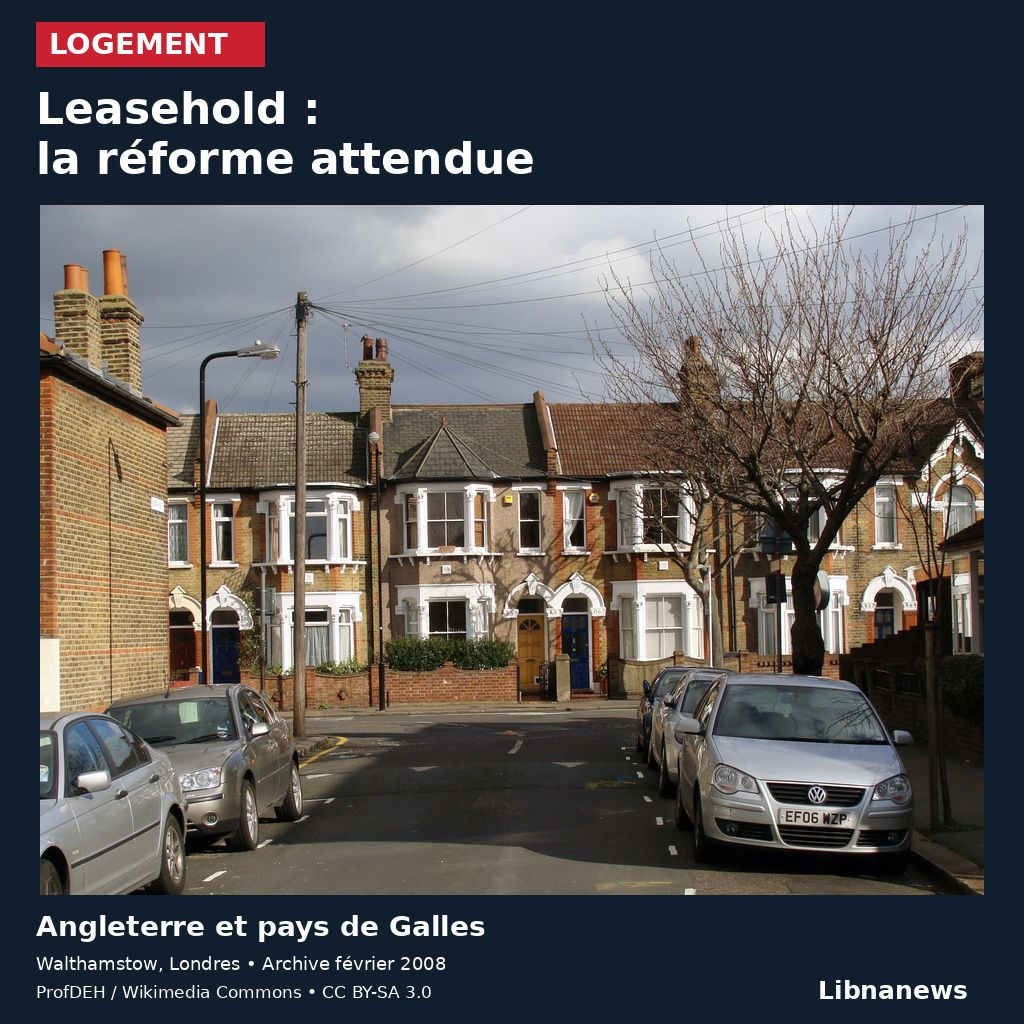
Picture of illustration: Walthamstow houses, London, February 2008. ProfDEH / Wikimedia Commons, CC BY-SA 3.0. Reduced whole picture, Libnanews dressing. Composite coverage under the same licence; no special legal regime is granted to the houses photographed.






Comments