

Iran started to ration electricity on 22 November, due to lack of sufficient fuel for its power plants, according to Tavanir. But the country was already suffering recurrent cuts long before the conflict of 2026. The U.S. Energy Information Agency and World Bank balance sheets show why the abundance of gas is not enough to guarantee year-round power supply.
Summer Breaks Long Before Winter’s Difficulties
In 2022, natural gas supplied 85% of Iran’s electricity generation, according to the balance sheet published in October 2024 by the US Energy Information Agency. It is a share of electricity produced that year, not a measure of current capacity or gas availability in November 2026.
The same balance sheet reported turning cuts affecting households and industries almost every summer since 2020. By the summer peak of 2023, demand had exceeded 12 gigawatts of available supply. It is a power gap at a time of high consumption, not an annual amount of electricity missing or a figure for the current winter.
The ageing of some equipment and underinvestment already reduced the capacity actually available. In April 2025, the World Bank also described frequent interruptions in gas and electricity and their consequences for non-oil production. These diagnoses precede the damage invoked today by the authorities.
In winter, heating and power plants demand the same resource
Electricity is lacking in the summer when the grid has to absorb a high demand. In winter, another pressure is added: households and businesses use more gas to heat up. Storage capacity was insufficient to respond to seasonal variations in the 2024 balance sheet. Therefore, holding reserves in the basement does not guarantee that the plants receive all the fuel they need at the appropriate time.
President Massoud Pezeshkian attributed part of the winter’s difficulties to the damage to gas infrastructure. The World Bank observed in October 2026 that the war had reduced production capacity, including damage to energy infrastructure. Neither this finding nor Tavanir’s announcement can quantify the share of November’s cuts attributable to this damage rather than previous imbalances.
This would make it possible to judge the effect of rationing
The announced cut-off schedule provides information on a planned regime, not on electricity actually distributed. In order to determine whether the situation is improving, figures should be available over the same period on available production, the total supply of the plants and the actual duration of interruptions. The statements consulted do not yet provide this assessment. The figures of 2022 and 2023 explain the fragility of the pre-war system; they do not replace winter 2026 measures.
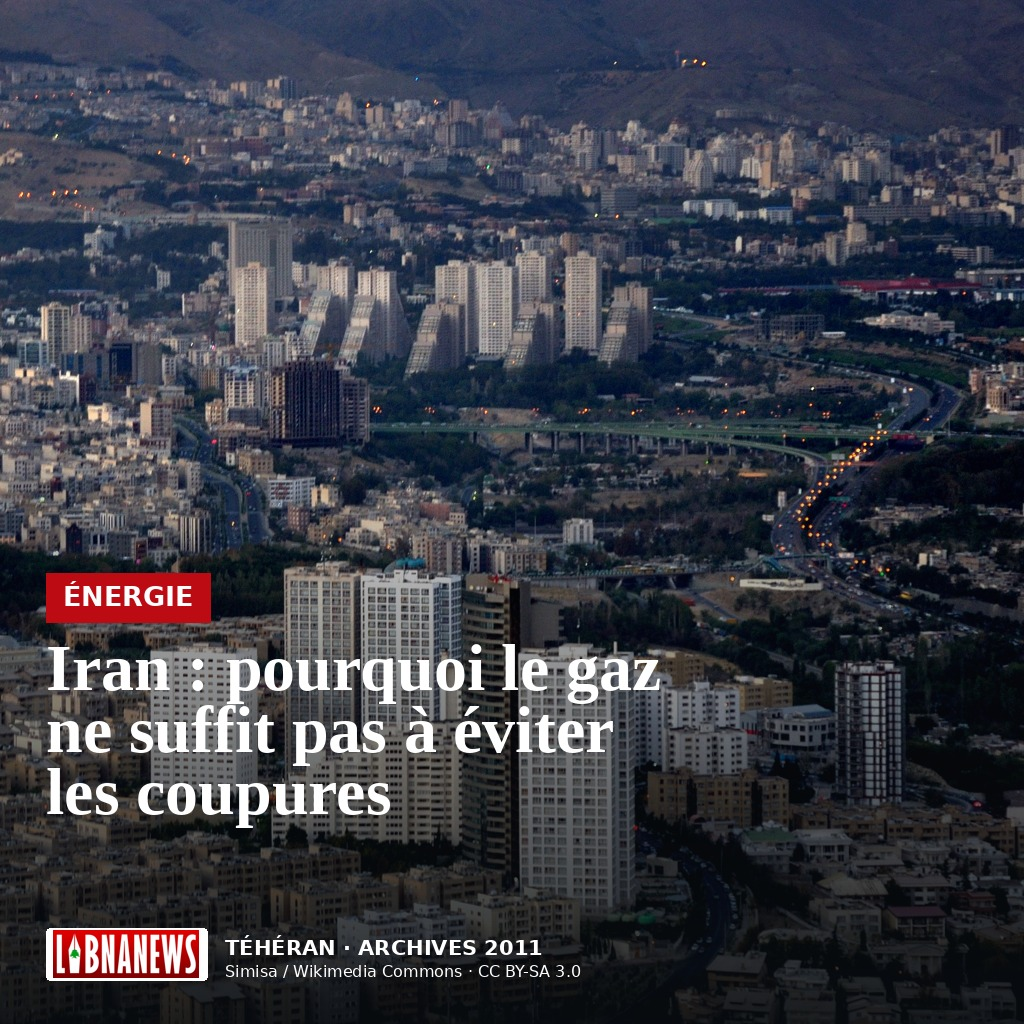
Archive: Tehran buildings seen from the Milad Tower in September 2011, unrelated to the cuts announced in November 2026. Simisa / Wikimedia Commons, CC BY-SA 3.0. Composition Libnanews.





Comments