

The stories of the elderly in Lebanon: health care and psychological support as an urgent humanitarian priority
With the rise in age, the health, social and psychological needs of older persons are increasing, especially in societies facing poverty, conflict or natural disasters. In Lebanon, the need to strengthen protection and care for this category of population is becoming all the more important as the number of older persons increases and some of them face difficult economic conditions.
Based on data fromUnited Nations Population FundLebanon has about765,000 persons aged 60 and overeither11.2% of the total population. Projections indicate that this number is expected to reach about1.7 million people, or 27.1 per cent of the population in 2025.
The data also highlight the extent of the economic difficulties faced by older persons.15.4% of women and 13% of men live on incomes below half the national averagewhile poverty rates among older persons reach33.7% among women and 35.8% among men.
Increasing health, psychological and social challenges
The difficulties faced by older persons are not limited to economic problems. Aging is accompanied by many health challenges, including reduced visual and hearing acuity, joint problems and mobility, as well as an increased risk of chronic diseases such as diabetes, hypertension and cardiovascular disease.
These physical difficulties are compounded by psychological and social problems that can be particularly severe, particularly after the loss of the spouse or the removal of children. These situations can increase feelings of loneliness, isolation and the need for support.
Some seniors also face limited financial resources or inadequate access to the care they need. In this context, the provision of health and food services, as well as psychological and social support, is an essential element in enabling them to live in safety and dignity.
Health care and psychological support at the heart of humanitarian priorities
In countries facing poverty, war or natural disasters, the needs of older persons can increase considerably, even though humanitarian efforts are often focused on situations deemed most urgent.
In this context,Life for Relief and Development (LIFE)stresses the importance of integrating older people into humanitarian response and community development programmes.
Vicki Roob, Director of the organisation’s national and international programmes, explains:
« According to reports from the United Nations Population Fund, people aged 60 and over now account for about 8% of the world’s population. In the Arab world, their number is expected to rise from about 27 million in 2015 to 50 million in 2030, and to exceed 80 million by 2045.
It is also expected that by the middle of the century the proportion of older persons will exceed that of children under the age of 15 in several Arab countries, including Lebanon, some Gulf countries and several Maghreb countries.
Through the LIFE programmes implemented in 60 countries over the past 34 years, we have ensured that older people are included among our priorities in various areas of intervention: emergency response, support for refugees and displaced persons, sustainable development programmes and community development.
These actions include medical care, access to drinking water, seasonal aids, family support programmes, sponsorship and education programmes. »
In displacement camps, needs that cannot wait
In Lebanon,Mohammad Al-Sharif, Director of LIFE Lebanon OfficeSome of the programmes for the most vulnerable elderly are mentioned. He explained that the organization supported this category of the population in reception facilities, regardless of their religious affiliation.
» We have ensured that older people have a space for dialogue where they can share their experiences and stories, because the knowledge and memories they carry are a true human wealth.
Our activities also include the distribution of adapted meals and symbolic gifts, as well as a regular assessment of their needs.
We also organize workshops on the basic concepts of the use of technology to keep them in contact with their families. We also offer educational and leisure activities tailored to their abilities, while valuing their experiences and skills in activities serving the community. »
Support is not limited to social support. It also includesprovision of medicines, regular medical examinations and monitoring of treatmentsupport for nursing services and mobile medical teams for those in need of special care.
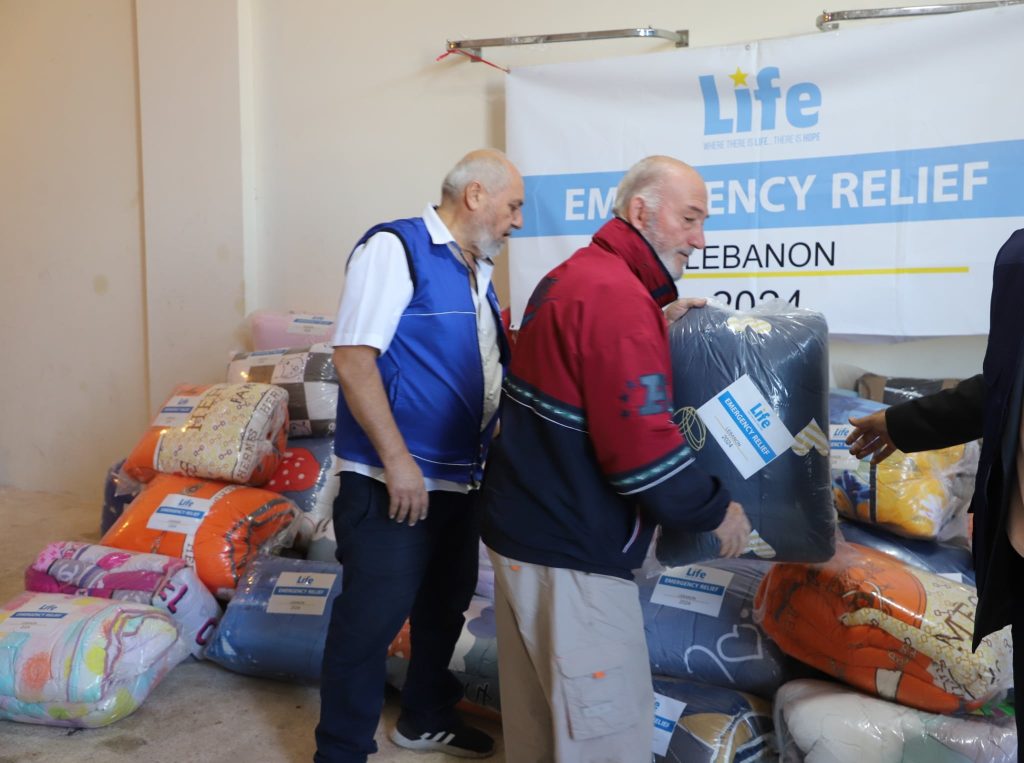
Assistance also includes regular distribution of food, clothing and blankets, particularly during the winter, as well as financial assistance to cover basic needs, particularly for the elderly who take responsibility for the care of orphans.
Psychological support: fighting loneliness and isolation
The psychological dimension is also essential in the care of the elderly. The programmes include listening sessions, counselling and social activities designed to help maintain links with their environment and reduce the effects of isolation.
According to Mohammad Al-Sharif, the participation of older persons in community activities contributes to their sense of value and role in society, while promoting a culture of respect and recognition for them.
He adds:
« Some older people are very attached to their dignity and may not seek help despite their needs. It is therefore essential to meet them and assess their needs, especially when living with a disability or a chronic disease. »
War increases the burden on older people
During periods of war and displacement, the lives of older people become even more complex. Some may lose their children or sources of income and suddenly find themselves responsible for their grandchildren or children who have lost their parents.
According to Mohammad Al-Sharif, humanitarian teams worked during the war to transportfood and medical aid and seasonal suppliesto the most severely affected families in displacement camps. These families often include elderly people with chronic diseases or lost children.
Thus, an elderly person who would need to be cared for himself can suddenly find himself responsible for children and grandchildren in extremely difficult conditions.
Human testimonies that reveal the needs of older people
The needs of the elderly are not always expressed in the form of direct demand for assistance. Some daily stories testify to a silent suffering that only appears when these people have a space to express what they are living.
Simon, 65, from Lebanontestimony:
« To be able to meet my needs so as to preserve my dignity was one of the greatest challenges I faced. Thanks to the provision of the necessary medical supplies, things have become easier and I no longer feel the same discomfort in front of my people. »
Abu Nasser, 71, says:
» The war did not leave me the opportunity to live my old age calmly. After my son and his wife died, I found myself responsible for six children. The distribution of food baskets, personal hygiene products and water made it possible no longer to live in permanent fear that one of my young grandchildren would have to go out to look for what we needed. The provision of sanitary facilities in the camp also brought great relief to my wife and myself. »
Fatima, 73, tells his experience after the destruction of his home:
« I was terrified and unable to move or speak normally. LIFE provided us with a suitable accommodation and we also received medical care after what we had undergone. »
Displacement and exile: changing needs without ever disappearing
Aisha, 67 years old, found itself confronted with a new reality after the war:
» We found ourselves outside, confronted with fear and cold ice. After our trip, LIFE continued to follow us and provided us with basic needs, from accommodation and medicine to clothing and food baskets. The organization continued to monitor our situation until we found more stability. »
After disasters, older people need security and care
Iman, 59, found himself with her pregnant daughter and grandchildren facing a difficult journey due to the war:
« I just needed a safe shelter and medicine. »
ForAbu Mahmoud, 54The experience was different. After recently joining a nursing home, he says:
» At first, it was mostly the silence that made me suffer in this establishment. But the team of volunteers brought me a lot of comfort by talking with me and listening with attention and respect, without interrupting. »
On his side,Amjad, 71, found a new reason to rejoice after the rehabilitation by LIFE of the school attended by its grandchildren, allowing them to return to class.
This initiative had an impact that exceeded the school’s only reopening, since it also reduced the burden on the grandfather to seek help himself from other people in order to support his orphaned grandchildren.
Protecting the elderly: a shared human responsibility
These testimonies show that the needs of the elderly are not limited to drugs and food. They also concern security, dignity, social ties, psychological support and access to essential services in times of crisis.
As the number of older persons in Lebanon, in the Arab world and globally increases, their integration into health policies, disaster response and social programmes is becoming increasingly important, especially when ageing is accompanied by poverty, displacement, illness or loss of family members.
Preserving the dignity of older persons, therefore, is not simply about helping them when they need it. It is also a question of providing them with support to live in safety, autonomy and dignity, recognizing the contribution of those who have devoted many years to their families and communities.
For more information:





Comments