

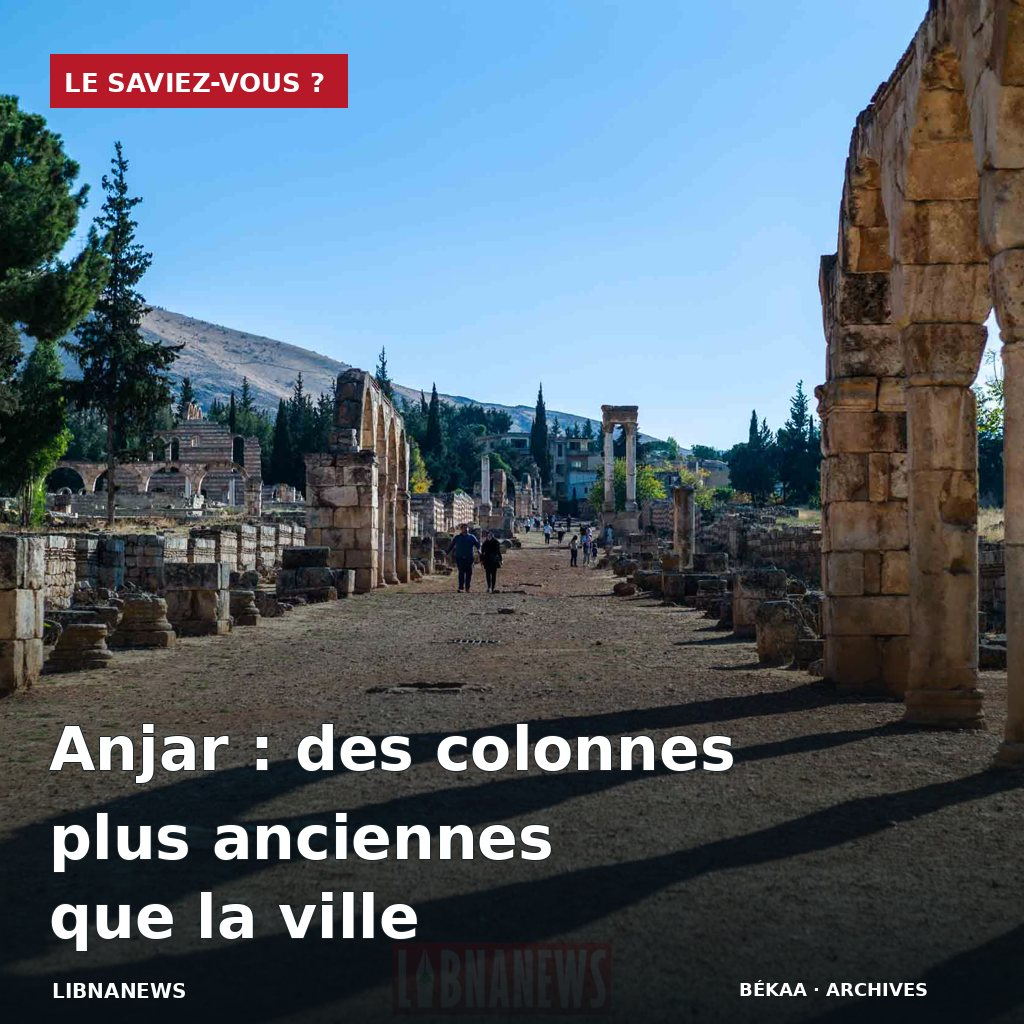
In Anjar, Bekaa, the Umayyad builders erected ancient columns on both sides of two large streets. Not all the drums, bases and capitals came out of the same workshop: rooms from older buildings were alongside elements carved for the new city. It was also this mixture that deceived the first observers of the ruins.
Ancient columns in a city of the eighth century
In 1933, German architects Daniel Krencker and Willy Zschietzschmann spotted remains north of Majdal Anjar. The enclosure and the column then visible reminded them of a Roman camp. Historian Jean Sauvaget later recognized a site of the beginnings of Islam. The excavations carried out in the middle of the twentieth century confirmed that the city had been founded under the Omayyads in the early eighth century during the reign of Caliph Al-Walid I.
The research of the architectural historian Bea Leal, which is based in particular on Barbara Finster’s field studies, describes the re-use of many bases, drums and capitals in the portals. The phenomenon is found even in the large palace, where the researchers identified a limestone column bearing a Christian inscription. The stone had been incorporated into a building other than the one for which it had been cut. It does not allow to locate this original building under the city.
A door at the crossroads, a city designed to travel
A door opened in the middle of each of the four sides of the enclosure. Two colonnade tracks, a little less than twenty meters wide according to Leal, connected the opposite doors. At the crossing, the tetrapyle marked the centre of the city: its four sides responded to the four directions. The portals ran along rows of shops. Closer lanes served the courtyard houses, especially in the western part of the site.
The right corner street model extends Roman and Byzantine usages. In Anjar, it serves buildings in a Umayyad city: a palace, a mosque, baths and commercial spaces. The excavations and restorations of the 20th century made this plan legible, but some colonnades visible today were raised. UNESCO listed the site on the World Heritage List in 1984, especially for what it reveals about urban planning at the beginning of the Islamic period.
View of the remains of Anjar. Photo: François El Bacha / Libnanews. Cropping and editorial dressing.





Comments