

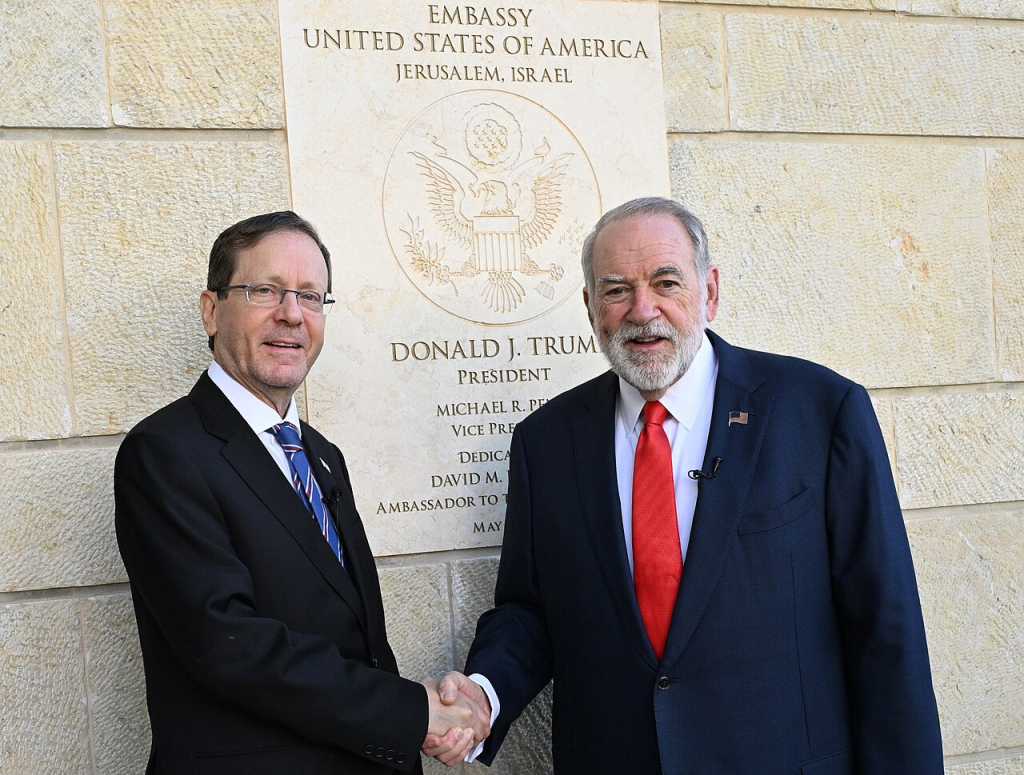
Isaac Herzog called on Sunday, November 8, 2026, to advance negotiations with Lebanon, when Gadi Eisenkot was given the mandate to form a government. On the same day, the Yashar party denied that Eisenkot was conducting discussions with foreign interlocutors on an Israeli withdrawal from Lebanese territory.
Herzog’s call for negotiations
In thespeech issued by the israeli presidencyHerzog calls for progress in « negotiations with Lebanon and our other neighbours ». He associates this priority with the implementation of the US 20-point plan for Gaza, supported by Donald Trump, and the work of the Peace Council.
This is a direction for future government. The passage does not present any new agreement, withdrawal schedule or negotiating team. Syria is not named separately: the official formulation concerns Lebanon and other neighbouring countries.
Iran and crime among presidential priorities
Herzog also insisted on Iranian threats, which he described as permanent. He called for combating crime and violence, with particular emphasis on those affecting Arab society in Israel. This is reflected in his presidential speech.
The President has linked these challenges to the need for a stable executive, capable of acting over time and serving the entire population. Theynet reportthis is distinguished from that of Eisenkot, which focuses on restoring trust in institutions, the responsibility of leaders and the constitution of a new majority.
Yashar denies discussions on withdrawal
The controversy over Lebanon is part of a news aired Sunday morning on Channel 14. Journalist Shlomo Rizel said that Eisenkot was discussing an Israeli withdrawal with foreign actors. In his answer,reported on 8 November by LBCIYashar rejected this claim and assured that these negotiations had not taken place.
The party requested the withdrawal of the journalist’s report and public apology. He also accused the chain of seeking to fuel fear and divisions to hinder the formation of a new government. These charges fall under Yashar’s response to Channel 14.
This denial is therefore aimed at talks personally attributed to Eisenkot. It alone does not constitute an announcement of refusal of any future withdrawal. Conversely, Herzog’s call to negotiate does not prove that the contacts described by Channel 14 took place.
A training mandate, not yet a government
As in theofficial delivery of the mandateThe institutional distinction remains essential: Eisenkot has 28 days to try to form a government, with a possible extension of 14 days. The 67 recommendations collected from parliamentarians are not a coalition agreement. Benjamin Netanyahu remained prime minister until the inauguration of a new executive.
For the Lebanese case, the established elements are thus a presidential appeal to pursue the diplomatic path and a denial of the party responsible for forming a majority. They do not make it possible to announce a withdrawal decided by Eisenkot or a new arrangement with Beirut.





Comments