

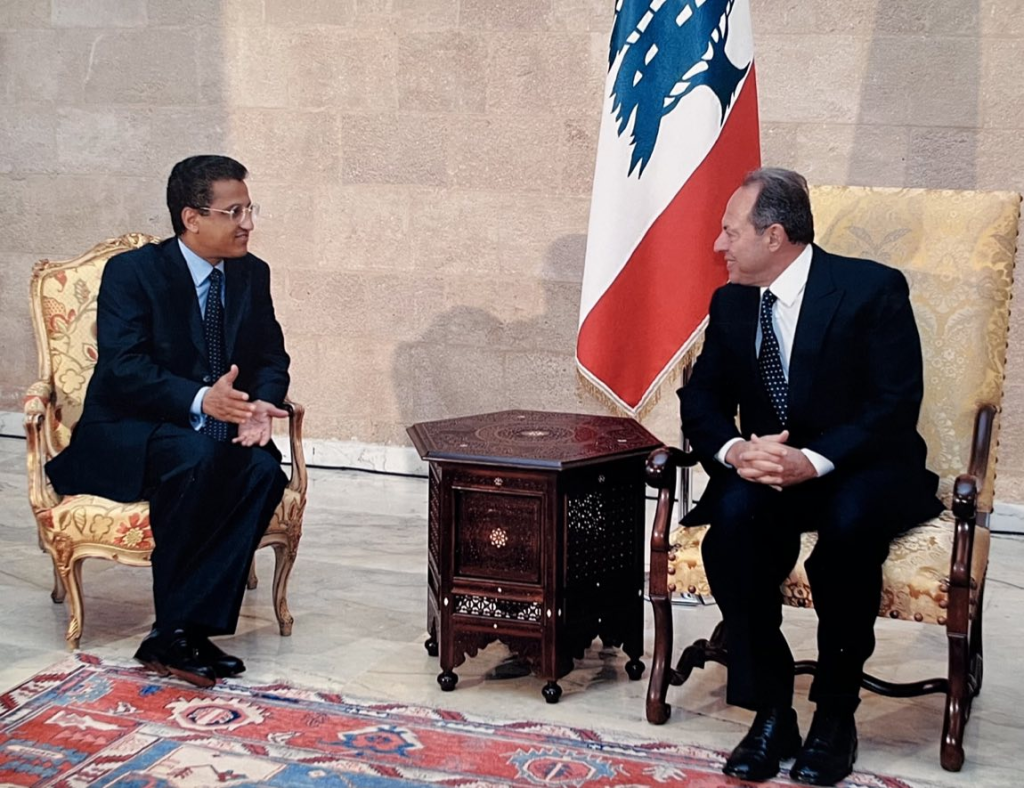
On 9 January 2025, Joseph Aoun became the fifth former leader of the Lebanese Army to become President. Parliament’s archives and constitutional texts show that not all of its predecessors have followed the same path. In 1958 the two-year eligibility period did not yet exist; In 1998, a constitutional law opened an exception. This is neither the mechanism chosen in Doha in 2008 nor the path of Michel Aoun in 2016.
1958, the vote precedes the rule of ineligibility
Fouad Chehab is still head of the army when the House elected him on 31 July 1958. In a country in crisis, he gathered 48 votes to 7 from Raymond Eddé, according to the army archives. He was sworn in on 23 September, after remaining at the head of the military institution until the day before he took office. Rule 49 already provided for an election by deputies. It did not yet include the two-year period that applies today to magistrates and senior officials of the first category or similar. This deadline appears in the version of the 1990 constitutional revision.
1998 and 2008: a written exception and then a political agreement
In 1998, Émile Lahoud commanded the army when his candidacy was prepared. Constitutional Law No. 687 of 13 October then adds to article 49 an exceptional provision, applicable only once, which allows for the election of a magistrate or high official who is normally ineligible. Lahoud took office the same year. The derogation concerns this election; it does not remove the two-year rule for subsequent elections.
In 2008, the agreement reached in Doha on 21 May identified Michel Sleiman as a consensus candidate and provided for the convening of the Chamber. The text transmitted to the United Nations presents this path as appropriate in the exceptional circumstances of the time. However, it does not appear as a new constitutional law. The deputies elected Sleiman on 25 May, the day after the end of his command according to the army register. The agreement resolves the candidate’s question and terminates the vacancy; it does not rewrite Article 49.
Two Aoun presidents, two paths
Michel Aoun led the army in the 1980s. When he was elected President on 31 October 2016, he long left the command. Returning to Lebanon in 2005 after his exile in France, he was elected MP in the same year and re-elected in 2009. Article 49 does not impose a life ineligibility on a former commander: the period associated with his military function had expired.
Joseph Aoun, however, still commanded the army when the deputies met on 9 January 2025. The record of the Chamber refers to the reading of Article 49 and the interventions on the application of the Constitution. He also fixed the results: 71 votes in the first round, a two-hour suspension and then 99 votes in the second round. The Speaker of the House declares him elected. No separate constitutional review vote is reported. Reaching a majority by ballot and changing a condition of eligibility are two separate acts.
The Head of State does not exercise the same command
Article 49 gives the President the title of Commander-in-Chief of the Armed Forces while placing them under the authority of the Council of Ministers. The presidency and command of the army therefore remain two distinct functions. The five elections tell how Parliament has taken military or former military personnel to the supreme judiciary, but they do not create an automatic access route for an incumbent commander.





Comments