

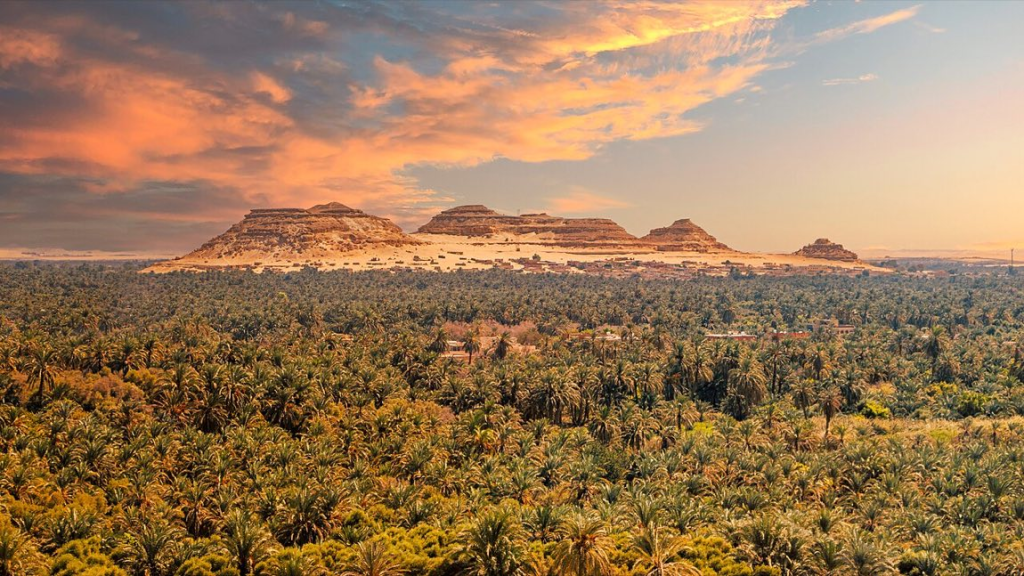
Egypt harvests more than 1.8 million tons of dates per year, according to its investment ministry. In 2025, it declared 39,431 tonnes for export as fresh or dry dates. Shipments are increasing, but selling abroad also requires market-friendly varieties, packaging stations and regular lots.
Exports are growing, but on a narrow basis
The customs data transmitted by Egypt to the United Nations Comtrade database recorded $146.9 million in exports of fresh or dry dates in 2025, compared with $105.6 million in 2024. Volumes increased from 22,546 tonnes to 39,431 tonnes, an increase of approximately 75 %, with an increase of 39 %. These figures compare two calendar years for the same product. They do not measure sales on the Egyptian market or all date preparations.
Morocco absorbed 18,703 tons in 2025, almost half of the declared volume. Together with Turkey, both markets account for more than two thirds of shipments. Indonesia then arrives with 5,555 tons. Egyptian declarations also number 107 tons to Lebanon, for nearly $398,000. As a result, the overall increase did not translate into an increase in all destinations: volumes reported to Indonesia fell slightly from 2024.
What happens after harvest
The amount harvested does not indicate how much fruit will come out of a station with the size, appearance and shelf life required by a buyer. A visible defect in the packaging can occur during collection or transport. In April, FAO described training with Egyptian institutions in ten production and processing areas for 150 participants. It covers sorting from the field, transport, grading of fruit and controlling temperature and humidity during storage.
For farmers, the challenge is to limit the part of the crop that degrades before sale and to separate outlets. Fruit meeting an importer’s specifications may be sold whole, while processing into paste or molasses is a separate circuit. The average value of whole fruit shipments, however, is not sufficient to say what the producer’s share is, nor to measure the profitability of an investment in a cold room.
The choice of variety depends on the target market
A study by the United Nations Industrial Development Organisation on the Fayoum and Giza sectors identifies Medjool as a variety designed to open up higher-value outlets. This choice does not make local varieties interchangeable: in Siwa, FAO recognizes an agricultural system based on palm trees adapted to the oasis and the variety of crops around them. The question for an exporter is not to abandon local varieties, but to know which varieties can be sorted, preserved and delivered regularly for a specific outlet.
The three measures to follow are therefore the volumes harvested, the volumes sold abroad and the value to producers. For fresh and dry dates, the 2025 customs balance confirms the increase in shipments and their concentration in a few countries. It alone does not measure the results of the 2026 harvest, nor does it measure the additional income generated by the operators.





Comments